
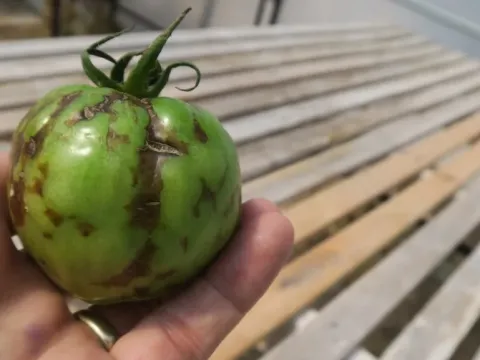
Tomato spotted wilt virus
Orthotospovirus tomatomaculae
The causative agent of the disease is the Orthotospovirus tomatomaculae virus, which belongs to the Tospoviridae family. It is a highly significant pathogen known for its wide host range including many vegetables and ornamentals.
What the section contains
Tomato spotted wilt virus
As an obligate parasite, this virus relies entirely on the host plant for replication and on specific insect vectors for transmission between plants.
Thrips, particularly the Western flower thrips, serve as the primary vector. The virus is acquired by larvae feeding on infected tissue and is transmitted by adults, maintaining a persistent relationship with the vector.
Mechanical transmission also occurs when sap from infected plants is transferred to healthy ones through contaminated tools, hands, or direct plant-to-plant contact.
The virus is systemic, meaning it spreads throughout the plant's vascular system, affecting foliage, stems, roots, and developing fruit.
Initial symptoms often appear as chlorotic spots, ringspots, or mosaic patterns on younger leaves, frequently accompanied by localized necrosis.
Stems may exhibit dark streaks or necrotic lesions, leading to wilting, drooping, or the collapse of the growing tips in susceptible plants.
Fruit shows clear signs of infection, including distorted shapes, irregular colors, and prominent necrotic rings or spots that render the produce unmarketable.
Overall plant growth is significantly stunted, with a general decline in vigor that makes the affected specimens stand out in a uniform crop stand.
- Stunting of terminal growth
- Bronze-colored leaf spotting
- Distortion and curling of leaves
- Abortion of flowers and immature fruit
High temperatures accelerate the life cycle of thrips, increasing the frequency of feeding and, consequently, the rate of viral spread within the field or greenhouse.
The presence of wild reservoir hosts, such as common weeds, allows the virus to survive between crop seasons and serves as a source for thrips to acquire the pathogen.
Dense plant canopies create favorable microclimates for insect activity and movement, making it easier for vectors to bridge the gap between infected and healthy plants.
Improper greenhouse management, such as poor ventilation or failure to exclude pests with insect-proof netting, significantly increases the risk of an outbreak.
Weather patterns that promote the migration of thrips from neighboring fields can introduce the virus into clean crops unexpectedly.
Economic losses can be catastrophic, with some instances resulting in the total loss of marketable fruit due to severe cosmetic damage and stunting.
The disease limits the yield potential significantly, as infected plants cease productive growth and may die prematurely if they are juvenile at the time of infection.
Managing the disease is costly because there is no direct cure for viral infections; growers are forced to remove and destroy plants to contain the outbreak.
The cosmetic symptoms on fruits make them completely unsuitable for sale in fresh markets, leading to high rejection rates during harvest.
In addition to direct yield loss, the necessity for frequent insecticide applications to manage vectors adds to the overall cost of production.
The most effective strategy is the rigorous management of thrips populations using a combination of biological controls and targeted insecticide applications.
Good sanitation practices, including the prompt removal of infected plants and weeding of surrounding areas, are critical to reducing viral inoculum.
Planting resistant or tolerant cultivars is the best long-term strategy for minimizing the impact of the virus on tomato production.
Using physical barriers like fine mesh screens on greenhouse vents prevents thrips from entering and initiating an infection cycle.
Cleaning tools and disinfecting equipment after working with suspected plants prevents the mechanical spread of the virus by human intervention.