
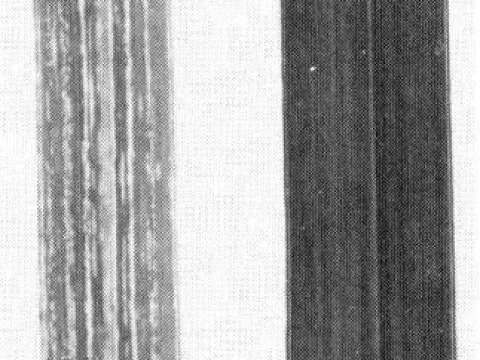
Chloris striate mosaic virus
Mastrevirus chloris
The Chloris striate mosaic virus (CSMV) is the causal agent of this disease, classified within the genus Mastrevirus and the family Geminiviridae. The virus particles feature a distinct twinned (geminate) icosahedral morphology.
What the section contains
Chloris striate mosaic virus
The viral genome consists of a single-stranded circular DNA molecule. This pathogen is highly specialized, primarily infecting members of the Poaceae family, including various cereal crops and grasses.
CSMV causes systemic infection within the host plant's vascular tissue. It is not mechanically transmissible, meaning it does not spread through simple contact between foliage, but relies strictly on insect vectors.
The primary vector for the transmission of this virus in nature is the leafhopper, particularly the species Nesoclutha pallida. Once a leafhopper feeds on an infected plant, it acquires the virus.
The transmission is persistent, meaning the virus circulates and replicates within the insect vector. Once acquired, the leafhopper remains capable of transmitting the virus to healthy plants for the remainder of its life.
The clinical signs of infection begin with chlorotic striations occurring along the leaf veins. These streaks can be intermittent or continuous, eventually covering a large portion of the leaf surface.
Affected plants often show a marked reduction in growth rates. The loss of chlorophyll in the streaked areas leads to an overall pale appearance and reduced photosynthetic capacity of the plant.
Deformation of the leaf blades is a common symptom in later stages. Leaves may become narrow, twisted, or stunted, significantly altering the canopy structure of the infected crop.
Reproductive development is frequently impaired. Infected plants often produce poorly filled ears or panicles, resulting in low grain yield and quality, with many grains being shriveled or empty.
- Chlorotic striping along leaf veins
- General stunting of plant growth
- Leaf deformation and twisting
- Reduced grain filling and yield
The development and spread of the virus are heavily dependent on the population dynamics of the leafhopper vector. Warm and dry weather conditions generally favor high insect activity and movement.
The presence of perennial grasses, which act as alternative hosts and reservoirs for the virus, is crucial for the persistence of the pathogen in agricultural landscapes between crop cycles.
Poor field sanitation, including the presence of weeds and wild grasses within or around the fields, creates ideal habitats for the leafhoppers to survive and thrive near crops.
Agricultural practices that promote high densities of weeds significantly increase the risk of rapid virus dissemination from the reservoirs to the target cereal crop.
Timing of the crop sowing is a vital factor. Crops emerging during the peak flight season of the leafhoppers are at a much higher risk of widespread primary infection.
CSMV poses a significant threat to cereal production because it interferes with the plant's metabolic efficiency, specifically the light-dependent reactions of photosynthesis.
The reduction in biomass and grain weight directly translates into substantial economic losses for farmers, as the quality of the harvested grain often fails to meet market standards.
If infection occurs at an early seedling stage, the plants often remain severely stunted, potentially failing to produce a harvestable head, leading to significant stand loss.
The physiological stress caused by the virus makes the crop more susceptible to secondary stressors, such as drought, nutrient deficiencies, and opportunistic pathogens.
Because there are no direct chemical treatments to cure an infected plant, the virus remains a latent threat that requires proactive management to minimize its impact.
Integrated pest management focusing on the control of the leafhopper vector is the most effective approach. Timely insecticide applications can reduce the number of insects spreading the virus.
Strict weed control in and around cereal fields is essential to remove the reservoir hosts that allow the virus to persist in the local environment between crop seasons.
The use of resistant or tolerant cultivars represents the most sustainable and efficient strategy for mitigating damage from this viral pathogen in endemic regions.
Adjusting planting dates to avoid synchronizing the vulnerable seedling stage with the peak migration periods of leafhopper populations is a key preventive measure.
Regular monitoring of leafhopper populations using yellow sticky traps allows for early detection of vector movement, enabling farmers to make informed decisions regarding field protection.