
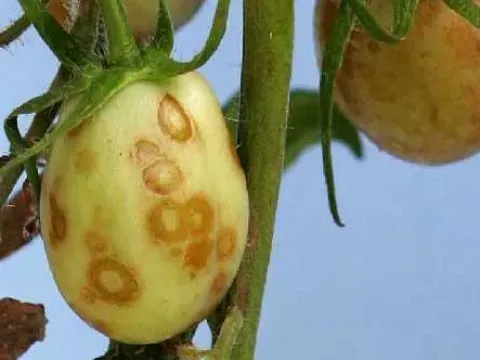
Tobacco necrosis virus
Ilarvirus tomnsv
Tobacco necrosis virus (TNV) is the causative agent of this disease, classified within the Albusvirus genus. It is a small, icosahedral virus containing single-stranded RNA, which demonstrates high environmental stability.
What the section contains
Tobacco necrosis virus
The virus possesses a vast host range, affecting various economically important crops including tobacco, potatoes, beans, cucumbers, and several ornamental bulbous plants such as tulips and lilies.
A crucial biological feature of TNV is its dependence on a fungal vector for transmission. The chytrid fungus Olpidium brassicae acts as the primary carrier, harboring the virus within its resting spores.
These fungal spores can persist in the soil for several years, allowing the virus to survive even in the absence of a host crop. This makes soil sanitation a primary concern for growers.
Mechanical transmission is also possible during routine agricultural operations. If infected soil particles or plant sap come into contact with wounded tissues, the virus can readily initiate a local infection.
Symptoms typically begin as localized necrotic spots or lesions on parts of the plant in direct contact with the soil. These spots often appear brown, black, or greyish in color.
As the infection progresses, these lesions can expand and cause the surrounding tissue to turn yellow (chlorosis). In severe cases, the leaf lamina may become distorted or wrinkled.
In tulips, the infection is often referred to as "Augusta disease." It manifests as stem necrosis, twisting of leaves, and failure of the flower bud to develop or open properly.
Systemic symptoms occur less frequently than localized ones, but they can be severe in younger, more susceptible tissues. This may include stunting and reduced overall plant vigor.
In many cases, the virus remains localized near the infection point, but the combined effect of multiple lesions can lead to the premature death of the foliage and reduced plant growth.
The development of the disease is highly dependent on soil moisture. Free water is essential for the mobility of the Olpidium brassicae zoospores, which swim to the roots to transmit the virus.
The optimal temperature range for the virus-fungus complex development is between +15°C and +22°C. Cool, wet conditions are particularly favorable for rapid disease spread.
Poorly drained, heavy clay soils provide an ideal habitat for the fungal vector, significantly increasing the risk of virus persistence and transmission within the field.
In greenhouse settings, overhead irrigation or recirculating water systems contaminated with fungal spores can lead to a rapid and widespread outbreak across the entire facility.
Continuous cropping of susceptible species on the same land facilitates the buildup of the viral inoculum in the soil, making it increasingly difficult to manage over time.
The primary economic impact is the loss of commercial quality. For crops like tobacco, necrosis on leaves significantly degrades the raw material, rendering it unsuitable for high-grade processing.
The disease reduces the photosynthetic capacity of the plant due to foliage damage, resulting in stunted growth, lower biomass accumulation, and decreased overall crop yield.
Ornamental plants, especially bulbs, lose their marketability due to visible lesions, twisted stems, and failure to bloom, leading to total loss of the decorative value of the crop.
For potato crops, infection leads to reduced tuber formation and decreased tuber size, negatively impacting the total harvest volume and the quality of planting stock.
Increased operational costs arise from the need for soil fumigation, rigorous sanitation protocols, and the labor required to rogue infected plants, all of which reduce the profitability of the farm.
- Utilization of clean, certified, and virus-free seeds or planting stock to prevent initial outbreaks.
- Steam sterilization or chemical fumigation of soil and growing media to eradicate the Olpidium brassicae fungal vector.
- Implementation of crop rotation using non-host species to break the life cycle of the fungal vector in the soil.
- Maintaining optimal soil moisture levels and improving drainage to limit the activity of fungal zoospores.
- Rigorous disinfection of tools, pots, and machinery to prevent mechanical transmission of the virus between plants.