
Tobacco streak virus
Ilarvirus bsv
The Tobacco streak virus, classified within the Ilarvirus genus, is the causal agent of this disease. It is a plant pathogen primarily transmitted through mechanical contact and infected planting materials.
What the section contains
Tobacco streak virus
Biologically, the virus consists of isometric particles containing a single-stranded RNA genome. It is known for its environmental stability and can persist in crop residues for extended periods.
Weed species surrounding cultivated fields serve as the primary reservoir for the virus. It systemically infects plant tissues, moving rapidly through the vascular system of the host.
Infection occurs when the leaf epidermis is damaged, allowing viral particles to enter the plant cells. Once inside, the virus undergoes rapid replication, disrupting normal cellular function.
In natural settings, the virus can be spread by certain insect species feeding on plant sap. Additionally, transmission through pollen during pollination remains a documented risk factor.
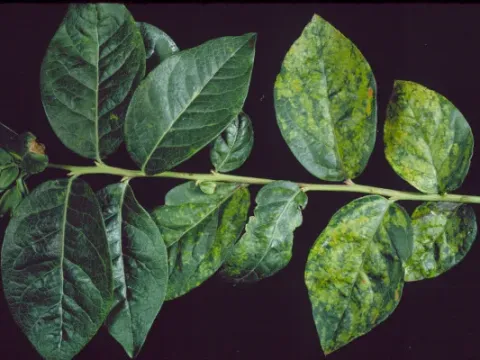
The primary symptom of the disease is the appearance of characteristic streaks and spots on the leaves. These streaks often manifest as discolored bands ranging from pale green to light yellow.
In the early stages of development, symptoms may be subtle or manifest as a mild mosaic pattern. As the disease progresses, the streaking becomes more pronounced and clearly defined.
Deformation of the leaf blade is frequently observed, where edges may curl or develop a crinkled appearance. This indicates severe disruption of the plant's internal metabolic processes.
In cases of severe infection, overall plant growth is significantly stunted. Affected plants appear dwarfed, with shortened internodes, which leads to a reduction in total biomass.
Damage to reproductive organs can lead to abnormal flower development. Furthermore, fruit production is impaired, resulting in smaller, lower-quality fruits.
The development of the virus is favored by weather conditions suitable for active crop growth. High humidity and moderate temperatures significantly accelerate the spread of the infection.
Routine agricultural practices, such as pruning or mechanical cultivation, facilitate the spread of the virus via contaminated tools. Improper hygiene during fieldwork is a major risk.
High-density planting creates a specific microclimate that encourages leaf contact between plants. This environment drastically increases the ease of mechanical transmission of the pathogen.
The presence of weeds in the immediate vicinity of the field acts as a constant source of infection. These weeds allow the virus to survive throughout the off-season.
Environmental stress and nutrient deficiencies weaken the plant's immune system. Stressed plants are notably more susceptible to successful viral invasion and rapid colonization.
The economic impact of the virus is characterized by substantial yield losses and diminished quality of raw materials. Affected leaves lose their elasticity and become brittle.
Reduced photosynthetic activity leads to lower accumulation of essential sugars and compounds. This negatively affects the flavor and aromatic profile of the final tobacco product.
Massive outbreaks can result in yield losses ranging from 30% to 50%. This poses a significant threat to the profitability of commercial farming operations.
The virus induces premature wilting and death, which disrupts the natural growth cycle. This forces earlier harvests and reduces the potential economic return per hectare.
Due to the lack of curative treatments for viral diseases, management is difficult. The resulting damage to crop appearance and leaf quality makes the harvest unfit for premium markets.
The use of certified, virus-free seeds is the most fundamental prevention strategy. This prevents the introduction of the pathogen into non-infested areas from the very start.
Strict crop rotation, with a 3-4 year interval, helps deplete the viral inoculum in the soil. This breaks the pathogen's survival cycle in previous crop residues.
Systematic weed management around field borders is essential to reduce the infection pressure. Controlling insect vectors is also a critical step in a comprehensive management program.
Regular disinfection of all gardening and farm tools is mandatory after each operation. Operators must ensure hygiene to prevent the spread of the virus between plants.
Any plant showing initial symptoms must be immediately removed and destroyed. Prompt roguing of infected plants is the most effective way to prevent localized spread within the field.