
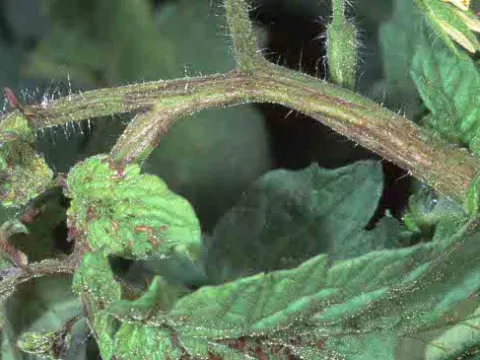
Tobacco streak virus
Ilarvirus tsv
Tobacco streak virus (TSV) is a plant pathogenic virus belonging to the genus Ilarvirus, characterized by a tripartite single-stranded RNA genome.
What the section contains
Tobacco streak virus
The virus has a very broad host range, infecting many economically important crops including tobacco, sunflower, peanut, tomato, and various legumes.
Transmission occurs primarily through thrips, which act as vectors, and through infected pollen during the fertilization process of susceptible plants.
The virus can also be mechanically transmitted through contact or contaminated tools, although vector-mediated spread is more critical in fields.
It survives in numerous weed species, which serve as perennial reservoirs, allowing the virus to persist from season to season.
Initial signs often include chlorotic spotting, mosaic patterns, and distinctive necrotic lines or streaks that appear on the leaf surfaces.
Severe infection manifests as leaf distortion, stunting of the entire plant, and the necrosis of growing tips, which halts vertical development.
Affected plants often develop excessive side branching or secondary shoots as a physiological response to the death of the primary terminal bud.
Flowers may exhibit irregular patterns of coloration, and in some species, premature flower abortion significantly reduces the overall yield.
- Necrotic leaf streaks
- Mosaic patterns
- Stunted plant growth
- Terminal bud necrosis
- Floral abnormalities
The development of the disease is highly dependent on favorable conditions for thrips activity, such as warm and dry weather periods.
Effective spread requires a sufficient reservoir of infected weeds nearby, which provides the primary source of the virus for vectors to pick up.
High population densities of vectors coupled with susceptible crop growth stages significantly increase the speed of viral spread across the field.
Cultural practices that minimize plant stress help maintain natural resistance, whereas poor nutrition or water stress can exacerbate disease symptoms.
The presence of pollen from infected plants in the environment promotes the spread of the virus to healthy flowers in neighboring fields.
The economic impact of TSV is primarily linked to significant yield losses and a reduction in the marketability of harvested produce.
Infected plants show impaired photosynthetic capacity, leading to smaller fruit sizes and lower overall biomass compared to healthy individuals.
Seed quality is severely impacted in legumes and other crops, resulting in poor germination rates and stunted early seedling growth.
Viral infection creates entry points and physiological susceptibility for secondary pathogens, often resulting in complex disease symptoms.
The lack of curative chemical treatments means that prevention is the only viable strategy to protect the agricultural investment.
The use of high-quality, virus-free seeds is the foundational strategy for preventing the introduction of the pathogen into new areas.
Strict weed management programs are essential to eliminate alternate hosts that allow the virus to survive throughout the year.
Targeted insecticidal applications against thrips populations are critical to minimize the primary transmission and subsequent spread of the virus.
Crop rotation and spatial isolation from older or symptomatic crops can significantly reduce the pressure of infection on newly planted fields.
Regular field scouting and the prompt rogueing of symptomatic plants help to contain the spread of the virus during the early vegetative stages.