
Description
Symptoms
The most prominent symptom in hops is significant stunting of the plant. Internodes become shortened, and the plants appear weak, losing their characteristic vigor and ability to climb the trellis effectively.
Leaves often show signs of deformity, appearing smaller than usual, curled, or chlorotic. Plants may exhibit excessive side-shoot development, which remain stunted, giving the plant a bushy and sickly appearance.
Infection severely impacts flower production. Hop cones are either significantly reduced in size, malformed, or fail to develop entirely, rendering the harvest useless for the brewing industry.
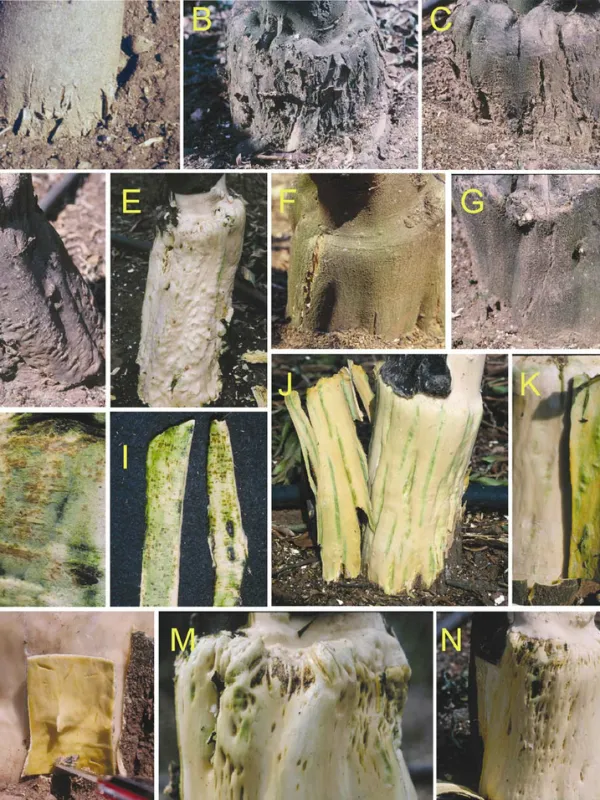
Symptoms in other hosts, such as citrus ("cachexia" disease) or grapes, can involve wood pitting, bark scaling, or overall loss of productivity, often complicating the diagnosis as they mimic nutritional deficiencies.
Visual diagnosis is unreliable due to the overlapping symptoms of other diseases or environmental stress. Definitive identification requires laboratory methods like RT-PCR or molecular hybridization.
Pathogen
Hop stunt viroid (HSVd) is the causal agent of this plant disease. It is a small, single-stranded circular RNA molecule that lacks a protein coat. Unlike viruses, it does not encode any proteins, relying entirely on host cell machinery for its replication.
The viroid is highly stable in the environment and can persist on mechanical tools, making it easily transmissible in agricultural settings. It causes systemic infection, spreading through the phloem to all plant parts.
While commonly associated with hop plants (Humulus lupulus), this pathogen has a broad host range, infecting various crops including grapes, citrus, peaches, almonds, and cucumbers. This wide range increases the risk of cross-species contamination.
The absence of a protein coat makes the viroid difficult to target with chemical substances. It effectively hijacks the plant's metabolism, causing physiological changes that often lead to stunted growth and reduced crop quality.
Because it is a latent pathogen, infected plants can remain asymptomatic for long periods, unknowingly serving as reservoirs for further spread within a farm or between neighboring plantations.
Conditions for development
Mechanical transmission is the primary driver of spread in hop yards. Pruning tools, knives, and trellis maintenance equipment act as vectors when moving from infected to healthy plants without proper sterilization.
Infection can also occur through direct physical contact between roots or aerial parts of neighboring plants. Close spacing in plantations facilitates the rapid spread of the viroid across the field.
The use of infected vegetative propagation material (cuttings or rhizomes) is the most critical factor for introducing the viroid into new areas. Once infected nursery stock is planted, the entire block is at risk.
While some insect vectors, such as aphids, are capable of transmitting the viroid, human activity remains the dominant factor. Workers moving through fields can inadvertently spread sap containing the viroid between rows.
The viroid's ability to survive on tools for extended periods under humid conditions requires strict hygiene protocols to prevent its persistence on machinery and equipment throughout the growing season.
Why it matters
The primary economic impact is the dramatic reduction in yield. Stunted plants are unproductive, and the malformed cones produced are generally unacceptable for commercial brewing quality standards.
Infected plants suffer from metabolic disruption, making them more susceptible to abiotic stressors like drought or extreme temperatures, as well as secondary biotic attacks from fungi or pests.
There is no chemical cure for Hop stunt viroid in the field. Once an area is infested, the disease tends to persist, leading to long-term productivity loss and the eventual need for complete plantation removal.
The presence of HSVd restricts trade and movement of plant material due to strict quarantine regulations in many hop-growing regions, which can negatively affect the marketability of local nurseries.
In orchard crops, the damage manifests as decreased fruit quality and shorter tree lifespan, leading to significant cumulative economic losses over the duration of the crop cycle.
Protection
The foundation of management is the exclusive use of certified, viroid-free propagation material produced through shoot-tip culture and validated by diagnostic testing.
Rigorous sanitation of all pruning and cultivation tools is mandatory. Tools must be disinfected with appropriate chemical agents (e.g., sodium hypochlorite solutions) after working on each individual plant to break the chain of transmission.
Regular field surveys and monitoring are essential to identify and rogue out symptomatic plants. Infected individuals should be carefully removed and destroyed to prevent contact with healthy neighboring plants.
Implementing strict quarantine protocols for any incoming plant material is necessary to prevent the accidental introduction of the pathogen into non-infested regions.
While pest management is useful to mitigate other risks, it is secondary to hygiene. Ensuring that workers understand the risk of mechanical spread is the most effective way to protect the integrity of the hop yard.
Pathogens and affected parts
Affects crops · 1
Discussion
No discussions yet — be the first.