
Hordeivirus
Hordeivirus
The Hordeivirus genus comprises a group of RNA-containing viruses, most notably the Barley Stripe Mosaic Virus (BSMV). These pathogens are particularly dangerous due to their ability to be transmitted through seeds, making them highly persistent in agricultural environments.
What the section contains
Hordeivirus
The virus particles have a rod-like morphology and a segmented genome. This structure allows the virus to replicate efficiently within the host cells, disrupting normal metabolic pathways and causing systemic infection throughout the plant.
Unlike many other plant viruses, Hordeiviruses are known for their high transmissibility in monoculture farming. They can remain viable in infected seed lots for long periods, ensuring the pathogen returns to the fields every season.
The biology of the pathogen is closely linked to the physiological state of cereal crops. It spreads through the phloem, infecting all parts of the plant, including reproductive tissues, which leads to degraded pollen and overall poor grain development.
Genetic diversity among virus strains poses a significant challenge for breeders. Different isolates may exhibit varying levels of virulence, depending on environmental factors and the specific genetic background of the wheat or barley cultivars grown.
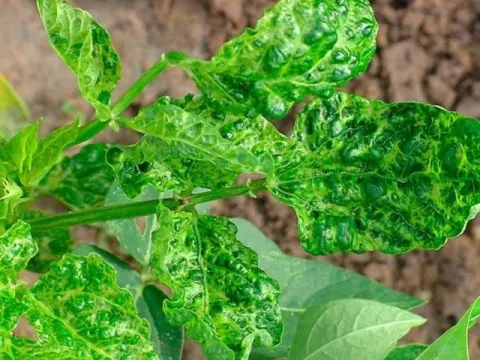
The primary symptom of infection is the development of characteristic chlorotic stripes and streaks on the leaves, which may eventually become necrotic. As the infection progresses, leaves may yellow, twist, and show stunted growth.
Early-infected seedlings appear significantly smaller than healthy ones. They often exhibit severe dwarfing and may fail to produce a productive stem, resulting in sparse stands across the field.
When reproductive organs are affected, the heads (spikes) often form poorly or become deformed. Partial or total sterility is a common outcome, leading to shriveled grain that is unfit for both consumption and seed usage.
Visual manifestations vary depending on the plant variety and environmental conditions. Symptoms can range from mild mosaic patterns to bright, prominent stripes running along leaf veins, with intensity increasing as temperatures rise.
In field conditions, the disease usually appears in patches. These affected areas can expand over time as the virus spreads through mechanical contact between neighboring plants, especially during windy days or cultivation practices.
Hordeivirus development is most rapid under moderately warm and humid conditions. An optimal temperature range for viral replication is between 15 and 25 degrees Celsius, which aligns perfectly with the active growing season of spring cereals.
The main vector for field distribution is the use of infected seeds. When infected grain is planted, the virus establishes itself early in the plant life cycle, creating primary reservoirs from which the disease can spread throughout the entire crop.
Mechanical transmission occurs during leaf damage, such as exposure to strong winds or during routine farm maintenance. Any physical contact between infected and healthy plants, especially when foliage is moist, facilitates viral transfer.
Nearby weeds can act as reservoirs for the virus during the off-season. Some weed species harbor the pathogen, which is then carried onto cereal crops by vectors or through contact once the new growing season begins.
High planting density significantly increases the risk of transmission. In dense stands, leaves frequently touch each other, creating an ideal environment for the rapid, widespread dispersal of the virus across the field within a single season.
The primary damage caused by Hordeivirus is a significant reduction in grain yield. By interfering with photosynthetic processes, the virus limits biomass accumulation, directly resulting in lower production volumes.
Grain quality is severely compromised, characterized by shriveled, lightweight seeds. Such grain is economically devalued and, if used as seed for the following year, guarantees the recurrence of the disease, perpetuating the cycle of loss.
Infected plants become more susceptible to other stress factors, including drought, extreme heat, and secondary fungal infections. This compounding effect often leads to premature plant death and a substantial thinning of the crop stand.
Economic impact is measured not only in lost yield but also in the costs associated with replacing infected seed stocks and managing outbreaks. In years of high infection, total crop losses can reach 30–50% of the field's potential.
The virus degrades the technological properties of the grain, such as protein content and germination vigor. This limits the marketability of the product for food and industrial processing, leading to further financial losses for growers.
The most effective strategy for managing Hordeivirus is the exclusive use of certified, virus-free seed material. Rigorous phytosanitary testing of seeds is essential to prevent the introduction of the virus into clean fields.
Weed control is an essential part of the defense strategy. Eliminating weeds that act as virus reservoirs both within the field and in surrounding areas significantly reduces the initial disease pressure on cereal crops.
Crop rotation is a critical preventive measure. By alternating cereals with non-host crops, farmers can break the virus life cycle and allow for a natural decline of the pathogen in the soil, provided that spatial isolation is maintained.
Optimizing agricultural practices, such as proper seeding dates and balanced fertilization, helps plants better withstand the stresses associated with viral infection. Stronger, well-nourished plants show higher tolerance and resilience to the disease.
If infection patches are identified, they should be isolated to prevent mechanical spread. All farm equipment and tools used in these areas must undergo thorough disinfection to minimize the risk of carrying the virus to other parts of the farm.