
Onion dwarf virus
Fijivirus allii
The causative agent of the disease is the Onion dwarf virus (ODV), which is classified within the Potyvirus genus. Despite historical confusion with other viral families, it is now widely recognized as a classic potyvirus.
What the section contains
Onion dwarf virus
The virus consists of filamentous particles containing single-stranded RNA. It is highly infectious and can be transmitted mechanically through contact between plant tissues, such as during cultivation or handling.
Perennial Allium species and wild relatives of onion act as the primary natural reservoir for the virus. These plants allow the pathogen to survive the winter and serve as the initial source of infection in the spring.
Aphids are the primary vectors of the virus in the field, transmitting it in a non-persistent manner. This means that an aphid acquires the virus by probing an infected plant for a few seconds and can transmit it immediately to a healthy host.
Seed transmission is not a significant concern for the Onion dwarf virus, but the use of infected onion sets or bulbs is the most common way to introduce the pathogen into new commercial plantings.
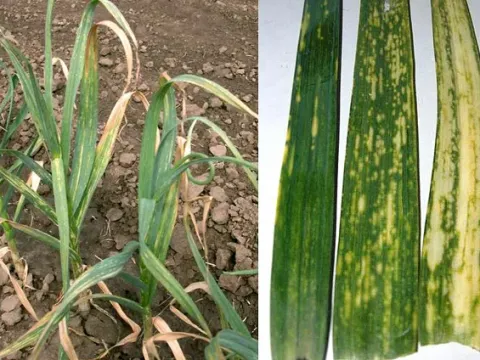
The initial symptoms include the appearance of yellow or light green streaks on the leaves. As the disease progresses, these streaks merge into a mosaic pattern, which is characteristic of many viral infections.
Infected leaves often become chlorotic, twisted, and curled, sometimes developing a fan-like distortion. This stunted appearance is the defining feature that gives the disease its common name.
Growth is severely inhibited, resulting in shortened leaves and reduced stature of the plant. If infection occurs early in the season, the plant may fail to produce a marketable bulb altogether.
In seed-producing crops, the virus causes significant distortion of the flower stalks (scapes), which negatively affects seed set and overall yield. During storage, bulbs usually do not show distinct external symptoms, making identification difficult.
Infected fields often show a patchy distribution of symptoms because the virus is rapidly spread from primary infection foci by foraging aphid colonies throughout the growing season.
The development and spread of the virus are strictly correlated with the population dynamics of its aphid vectors. Warm spring weather facilitates rapid aphid reproduction and migration, leading to increased infection rates.
The proximity of weedy areas containing wild Allium species provides a continuous supply of inoculum. Migrating aphids carry the virus from these wild reservoirs directly into commercial onion crops.
High-density plantings increase the risk of secondary spread, as leaves touch more frequently, making mechanical transmission easier during field operations or when plants brush against each other in the wind.
Improper cultural practices, such as failing to manage weeds or neglecting pest control, allow the virus to persist and amplify within the agroecosystem year after year.
Mechanical damage caused by weeding, thinning, or irrigation equipment can inadvertently spread the virus. If a few infected plants are present in a field, the sap can be transferred to healthy plants on tools or clothing.
The primary economic impact is a drastic reduction in bulb weight and quality. Stunted plants produce small, unmarketable bulbs that do not meet commercial grading standards.
Infected plants exhibit reduced vitality and are significantly more susceptible to secondary infections, particularly fungal and bacterial rots, which often develop during the storage phase.
Yield losses in commercial onion crops can reach 50% or more in severe outbreaks. This represents a significant financial loss for farmers and reduces the profitability of onion production.
Seed crops are particularly vulnerable, with both quantity and quality of seeds being negatively impacted by the virus-induced distortion of the reproductive structures.
Because there is no cure for viral diseases in crops, the damage is cumulative. A field infested with Onion dwarf virus may become unsuitable for high-quality production without a multi-year fallow or rotation break.
The foundation of effective management is the use of healthy, certified onion sets. Growers should source planting material from reputable suppliers that guarantee freedom from viral pathogens.
Regular roguing is essential: workers should be trained to identify and remove symptomatic plants immediately, including the roots, to prevent them from becoming reservoirs for aphids.
Strict aphid control using systemic insecticides is necessary during the early stages of the growing season to disrupt the transmission cycle and prevent the virus from spreading.
Maintaining spatial isolation from existing onion fields or old perennial plantings can significantly reduce the risk of primary infection from migrating aphids.
Weed management both within and around the perimeter of the field is crucial. By eliminating wild Allium hosts, farmers can significantly lower the virus's survival potential during the off-season.