
Onion yellow dwarf virus
Potyvirus ascaloniavirgae
The causal agent is the Onion yellow dwarf virus (OYDV), a member of the genus Potyvirus. This virus is characterized by flexuous filamentous particles containing single-stranded RNA.
What the section contains
Onion yellow dwarf virus
The virus has a wide host range within the Allium genus, primarily infecting bulb onions, shallots, garlic, and leeks. It survives between seasons in infected bulbs and perennial Allium species.
Transmission occurs primarily through aphid vectors, such as Myzus persicae, in a non-persistent manner. This means the virus is acquired and transmitted within a very short period of feeding time.
Mechanical transmission is another significant pathway, especially during routine agricultural operations like topping or pruning. Tools contaminated with sap from infected plants can easily spread the pathogen.
Once inside the plant, the virus spreads systemically through the phloem. It interferes with metabolic pathways and reduces chlorophyll content, which leads to stunted growth and weakened plant immunity.
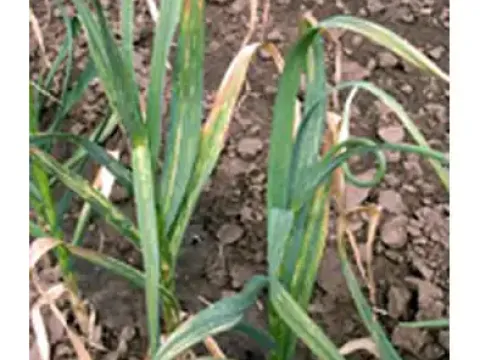
The most characteristic symptoms include chlorotic yellow stripes on the leaves. Over time, these stripes become more pronounced, leading to a general yellowing of the foliage.
Affected plants exhibit a distinct dwarf appearance due to shortened and twisted leaves that often collapse. The stunted growth makes infected plants stand out significantly from healthy ones in the field.
Seed-stalks in infected plants are often curled, stunted, and distorted. This results in reduced flowering, poor seed set, and diminished viability of the seeds produced.
Bulb development is severely compromised; bulbs become small, misshapen, and often soft. This negatively impacts the commercial value of the crop and its shelf life during storage.
Symptoms are usually more visible during cool, spring-like weather conditions. During periods of heat, symptoms might be masked, but the virus remains present and active within the plant tissues.
The economic impact of OYDV is substantial, as infected crops can suffer yield reductions of 20% to over 50%. The primary loss comes from the reduced size and weight of the bulbs.
Quality degradation is a major issue, as affected onions do not store well. Soft bulbs and poor skin quality make the product unsuitable for high-value markets or long-term storage.
In seed production, the virus drastically lowers both the quantity and quality of seeds. This creates a cycle where the virus is propagated through the seed or bulb material to the next generation.
Virus-infected plants are more susceptible to secondary infections by fungal pathogens, such as downy mildew or neck rot, which can further devastate the crop yield.
Implementing management strategies adds to the production cost, and in severe cases, entire plots must be destroyed to prevent further spread of the infection to adjacent fields.
The use of virus-free, certified planting material is the most critical strategy. Onion growers should avoid saving their own bulbs for seed if the source field had any history of viral symptoms.
Effective aphid management is essential. Regular monitoring and the application of appropriate insecticides during the aphid migration period can help limit the spread of the virus within the field.
Spatial isolation from older onion plantings or wild Allium species is highly recommended to reduce the pressure of virus-carrying aphids migrating into new crops.
Sanitation practices, including the removal and destruction of symptomatic plants, help lower the inoculum level. Always disinfect tools that have come into contact with potentially infected plant material.
Maintaining a clean field by controlling weeds is vital, as weeds often act as reservoirs for both the virus and its aphid vectors. Proper crop rotation also helps break the virus's survival cycle.