
Onion yellow dwarf virus
Potyvirus cebatatae
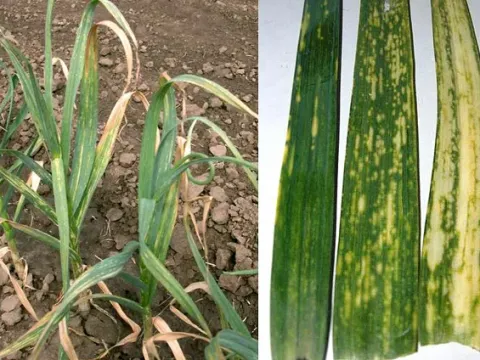
The most prominent symptom of Onion yellow dwarf virus (OYDV) is the development of yellow streaks or mosaic patterns on the leaves, which often appear stunted and twisted.
What the section contains
Onion yellow dwarf virus
Infected plants display a characteristic flattening of the leaves, which lose their upright posture and begin to droop significantly, hindering normal development.
Leaves often show crinkling or curling, and the overall plant height is drastically reduced compared to healthy counterparts in the same field.
In mature plants, the bulbs are significantly smaller, irregular in shape, and possess a shorter shelf life, which reduces their overall marketability.
Advanced stages of the disease lead to severe yellowing of the entire foliage, often mistaken for nutrient deficiency, leading to premature leaf senescence.
The pathogen responsible is the Onion yellow dwarf virus, a member of the genus Potyvirus, characterized by its non-enveloped, filamentous particle structure.
The virus acts as a systemic pathogen, invading the phloem and spreading throughout the plant, effectively manipulating host physiology for its replication.
OYDV persists in infected perennial onions, shallots, or volunteer plants left in the field from previous seasons, which act as primary inoculum reservoirs.
Transmission occurs primarily through aphid vectors in a non-persistent manner, meaning aphids can acquire and transmit the virus within seconds of feeding.
Human activity, including the use of contaminated tools or handling, can also contribute to the spread of the virus within the cultivation area.
The spread of the virus is highly dependent on the migration patterns and population density of aphid vectors, which are influenced by local weather conditions.
Warm, dry weather promotes rapid colonization by aphids, facilitating the quick transition of the virus from infected reservoirs to healthy seedling beds.
Environmental stress, such as drought or poor soil aeration, weakens the plant's natural defense mechanisms, making it more susceptible to virus infection.
The presence of wild allium species or weeds in nearby hedgerows creates a continuous cycle of reinfection that challenges the sanitation efforts of the farmer.
High planting density allows for easier movement of aphids between adjacent plants, leading to a exponential increase in the number of diseased plants.
Economic losses arise from both reduced yields and a decline in crop quality, as infected bulbs are often too small to be sold through commercial channels.
Storage life is negatively impacted by the virus, as affected bulbs are more prone to decay and fungal infections during the post-harvest period.
In seed production, the virus poses a critical threat by reducing seed vigor and ensuring that the next generation of plants is already infected from the start.
The overall reduction in photosynthetic efficiency leads to stunted growth, ensuring that even if the plants survive, they provide significantly lower returns.
Outbreaks of OYDV can result in substantial financial losses, often requiring the total destruction of infected patches to prevent further spread.
The most effective strategy for managing OYDV is the use of certified, virus-free seed stocks and sets, which prevents the introduction of the virus to new fields.
Strict spatial isolation between new plantings and older, potentially infected onion crops is crucial to minimize the chance of aphid-mediated transmission.
Integrated pest management should focus on controlling aphid populations using systemic insecticides to reduce the frequency of virus transmission events.
- Eliminate volunteer onions and weeds that act as virus reservoirs.
- Implement strict sanitation protocols for tools and machinery used in the fields.
- Rogue out and destroy symptomatic plants as soon as they are identified.
- Utilize reflective mulches to deter aphid vectors from landing on the crop.
Maintaining optimal plant health through balanced fertilization and adequate irrigation can help plants tolerate the pressure of the virus infection more effectively.