
Olive yellow
Olive yellow
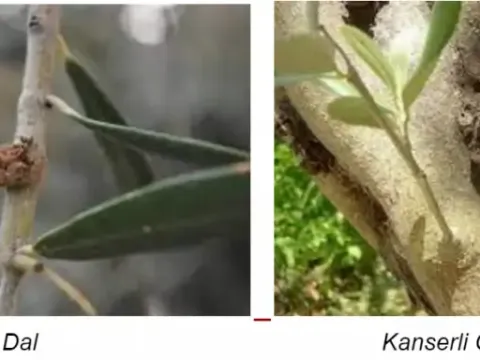
The primary symptom of the disease is a distinct chlorosis of the leaves, which begins with yellowing of the leaf margins and gradually spreads across the entire lamina.
What the section contains
Olive yellow
Infected trees exhibit significantly stunted growth, characterized by shortened internodes and the development of abnormally small, deformed leaves.
In advanced stages, progressive dieback of individual branches occurs, typically starting from the upper parts of the crown and spreading downward.
Flowering is markedly reduced in diseased trees, and any fruit that does form often drops prematurely or exhibits significant deformation and reduced quality.
As the disease progresses, the root system loses its ability to absorb nutrients efficiently, leading to the overall physiological decline and eventual death of the tree.
Olive yellow is caused by specialized cell-wall-less bacteria known as phytoplasmas (Phytoplasma), belonging to the class Mollicutes.
These microorganisms reside exclusively in the phloem sieve tubes, where they disrupt the transport of photoassimilates from the leaves to the roots and other plant tissues.
The biology of the pathogen is inextricably linked to insect vectors, particularly leafhoppers, which acquire the bacteria while feeding on infected sap and transmit it to healthy plants.
Phytoplasmas are notoriously difficult to culture under laboratory conditions, which complicates the development of effective, specific therapeutic agents for field use.
Transmission can also occur through contaminated grafting materials or the use of non-disinfected pruning tools during routine canopy management.
The spread of the disease is highly dependent on the presence of insect vectors in the agroecosystem, which serve as the primary bridge for the pathogen.
Temperature ranges between 20 and 30 degrees Celsius are optimal for the rapid multiplication of phytoplasmas within the host tree's vascular system.
High levels of humidity in the environment promote the activity and population growth of insect vectors, thereby increasing the risk of widespread secondary infections.
Poor agricultural practices, such as inadequate fertilization or improper irrigation, weaken the trees and increase their susceptibility to successful infection.
The presence of wild host plants and weeds near the olive grove acts as a reservoir for vectors, facilitating the movement of the pathogen into the orchard.
The primary economic impact of the disease is a drastic reduction in yield, often leading to total crop failure in heavily infected orchards.
Gradual depletion of the tree's health necessitates the removal and replacement of mature trees, resulting in significant long-term financial losses.
The quality of olive oil is compromised due to impaired metabolic processes, which alter the chemical composition and sensory attributes of the harvested olives.
Because the disease can remain latent for some time, it often spreads undetected, making it difficult to implement containment measures before the damage becomes extensive.
Diseased trees are also more susceptible to secondary infestations by opportunistic fungi and pests, further accelerating the degradation of the orchard.
The most effective strategy is the exclusive use of certified, disease-free planting material sourced from reputable and inspected nurseries.
Regular monitoring of insect vector populations is essential, with timely application of appropriate insecticides to suppress vectors during peak activity periods.
If symptoms of Olive yellow are identified, infected branches or entire trees must be promptly removed and destroyed by burning to eliminate the local inoculum source.
Strict sanitation protocols, including the disinfection of pruning tools with alcohol or sodium hypochlorite after every tree, are mandatory to prevent mechanical transmission.
- Maintaining optimal soil fertility and nutrient balance.
- Implementing weed management programs to reduce vector habitats.
- Preventive health programs for canopy protection.