
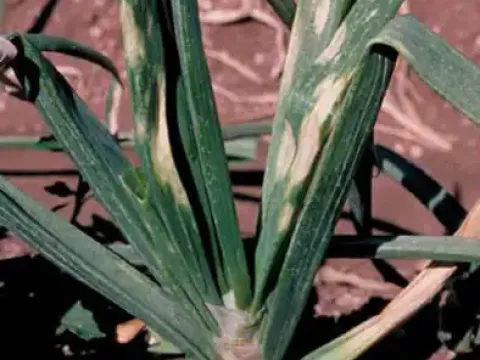
Onion yellow dwarf virus
Potyvirus alliumagrestis
The causal agent of this disease is the Onion yellow dwarf virus (OYDV), which belongs to the Potyvirus genus. This plant pathogen is transmitted both by insect vectors and mechanically through the sap of infected plant tissues.
What the section contains
Onion yellow dwarf virus
The virus consists of filamentous particles that cause systemic infection throughout the plant. The infection persists in bulbs and perennial onion species, which serve as primary reservoirs for the virus during the spring season.
Aphids are the primary vectors of the virus, with several species, including the shallot aphid and the green peach aphid, capable of transmitting it. During feeding, insects acquire the virus from infected plants and rapidly transfer it to healthy ones.
OYDV is highly persistent in field conditions and can be spread over significant distances by winged aphid migrants. The biological cycle of the virus is closely linked to the developmental phenology of onions and the activity levels of its insect vectors.
Viral replication occurs directly within the host cells, where the virus utilizes cellular structures to synthesize its genetic material, leading to a profound disruption of the plant's normal metabolic processes.
The primary symptom of the disease is a distinct mosaic pattern on the leaves, characterized by alternating light and dark green patches. Leaves often become yellowish, chlorotic, and develop longitudinal streaks.
As the disease progresses, significant deformation of the leaf blade occurs: leaves may curl, twist, or droop, losing their natural turgidity. Overall, the plant appears stunted and lags in its development compared to healthy specimens.
Bulb formation is severely impaired; bulbs become small, underdeveloped, and possess a loose scale structure. This results in a sharp decline in yield and diminishes the marketability of the produce, rendering it unsuitable for long-term storage.
In the field, infected plants are easily identifiable by their reduced height and specific mottling. The severity of these symptoms is directly proportional to the plant's age at the time of initial infection.
- yellowing of leaf tips
- presence of light stripes or streaks
- curling and drooping of leaves
- significant reduction in bulb mass
- deformation of the harvest
The development of the virus is favored by moderate temperatures, which are optimal for the mass reproduction of aphid populations. Vector activity increases significantly during warm, dry weather, often leading to viral epiphytotics.
High planting density also promotes the spread of the virus by creating a microclimate conducive to insect proliferation. Furthermore, the presence of weeds near the crop increases the likelihood of virus transmission from wild reservoirs.
The risk of infection increases drastically when using contaminated planting material derived from fields where symptoms were observed in the previous season. The virus is easily spread through bulb-sets during vegetative propagation.
Proximity to perennial onions, such as bunching onion or chives, is a critical risk factor, as these plants can act as asymptomatic carriers of the virus, providing a permanent source of infection.
Mechanical injuries caused by maintenance activities, weeding, or cutting greens can also facilitate virus transmission if infected sap is transferred via contaminated tools.
The primary damage caused by Onion yellow dwarf virus is a catastrophic reduction in yield. Infected plants fail to accumulate sufficient biomass, leading to losses of up to 50-70% of marketable onion production.
Bulbs from infected plants have poor storage quality and are prone to rapid decay during post-harvest storage, causing substantial economic losses for commercial onion producers.
The quality of onion greens also suffers, as they become coarse, discolored, and lose their nutritional value. Such products do not meet market standards and are often rejected during the grading process.
The virus weakens the plant, making it more susceptible to secondary fungal and bacterial pathogens. Consequently, the viral infection often acts as a precursor to total crop destruction by opportunistic organisms.
Continuous cultivation of onions in the same location or the use of non-certified home-grown planting material leads to virus accumulation, rendering agricultural production unsustainable over time.
The cornerstone of disease management is the use of healthy, certified planting material that has been tested for viral pathogens. Regularly sourcing fresh, virus-free sets is essential for long-term protection.
Effective control of aphid populations is a critical preventive measure. Applying insecticides during the early stages of plant growth helps reduce the number of insect vectors and slows the spread of the disease within the field.
Regular phytosanitary weeding and crop monitoring are vital. Plants displaying signs of deformation or mosaic patterns must be immediately rogued and destroyed to prevent them from acting as sources of secondary infection.
Agronomical practices, such as maintaining spatial isolation from perennial onion crops, significantly reduce the risk of virus introduction. Consistent weed management further limits the habitats available for aphid populations.
Disinfecting tools after working with suspected infected plants helps prevent mechanical transmission. Adhering to a crop rotation schedule, avoiding onion cultivation in the same area for at least 3-4 years, significantly improves the overall phytosanitary health of the site.