
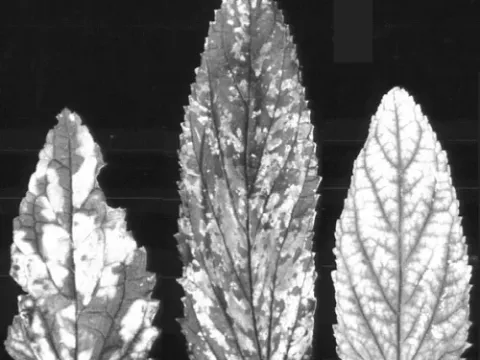
Ononis yellow mosaic virus
Tymovirus ononis
The causative agent of this disease is the Ononis yellow mosaic virus (OnYMV), a member of the Tymovirus genus. These viruses are characterized by their small, spherical virions and a positive-sense single-stranded RNA genome.
What the section contains
Ononis yellow mosaic virus
The infection is systemic, meaning the virus spreads throughout the plant's vascular system shortly after initial entry, disrupting normal physiological processes and causing chronic symptoms.
OnYMV primarily infects legumes, utilizing them as primary hosts. Its replication cycle takes place within the cytoplasm, leading to the depletion of plant resources and cellular structures.
Transmission of the virus usually occurs via insect vectors, particularly beetles. Mechanical transmission is also possible through contact between infected sap and fresh wounds on healthy plants.
The virus maintains environmental stability within host debris, allowing it to persist in the field between growing seasons, which complicates long-term management.
The most common clinical sign of infection is a bright mosaic pattern on leaves, manifesting as alternating light green, yellow, and normal green tissue patches.
Stunting of the plant is frequently observed, as the systemic infection impairs the development of new leaves and lateral shoots, leading to a diminished plant canopy.
Leaves may show significant deformation, including crinkling or curling, which occurs due to localized variations in cell growth rates across the infected blade.
In the reproductive stage, the virus can lead to poor fruit set, flower abortion, and smaller seed size, all of which contribute to a measurable decline in total crop yield.
In some varieties, the mosaic symptoms may be masked under high temperature, but the physiological damage to the plant remains, often manifesting as reduced vigor and biomass.
The economic impact of OnYMV is significant, as the infection directly reduces the yield potential of leguminous crops, often leading to total loss in heavily infested patches.
Beyond quantity, the quality of seeds is severely compromised, rendering them unsuitable for planting and potentially acting as a reservoir for further virus spread.
The systemic nature of the pathogen ensures that once a plant is infected, it cannot recover, serving as a permanent source of inoculum for other susceptible plants.
High infestation levels in a field can lead to reduced nutrient uptake and drought stress sensitivity, making the crop more vulnerable to environmental challenges.
Management costs increase significantly due to the need for continuous monitoring, insect control measures, and the potential necessity of removing infected crops to save surrounding plants.
Prevention starts with the use of virus-free seed stock. Rigorous screening of planting material is the first and most critical line of defense against the introduction of the virus.
Effective management of beetle populations is essential. Using targeted insecticides to control vector insects can drastically reduce the secondary spread of the virus within the field.
Implementing a strict rotation cycle involving non-host crops is highly recommended to disrupt the virus-vector infection chain and cleanse the soil environment.
Sanitation practices, including the removal and destruction of infected plant debris or symptomatic plants immediately upon detection, can prevent local outbreaks from becoming widespread.
Maintaining spatial isolation from perennial plants or reservoir weed hosts that might harbor the virus is crucial for protecting susceptible commercial crops.