
Coffee ringspot
Dichorhavirus coffeae
The causative agent of this disease is the virus known as Dichorhavirus coffeae, which belongs to the Kitaviridae family. This viral pathogen is capable of causing significant physiological disturbances within coffee plant tissues.
What the section contains
Coffee ringspot
The disease is classified as a systemic viral infection. Once the virus enters the plant, it travels through the vascular system, effectively colonizing the entire organism and disrupting its normal physiological functions.
Transmission of the virus occurs primarily through vegetative propagation when infected scions or cuttings are used. Additionally, the virus can be spread by specific insect vectors that feed on the sap of diseased plants and carry the virus to healthy ones.
At the cellular level, the virus utilizes the plant's resources to replicate itself, which causes damage to chloroplasts and inhibits the photosynthetic process. This results in weakened plant growth and reduced vitality.
The pathogen is known for its ability to maintain a latent state within the host plant for extended periods. This latency makes detection difficult, as plants may carry the virus without exhibiting immediate clinical symptoms.
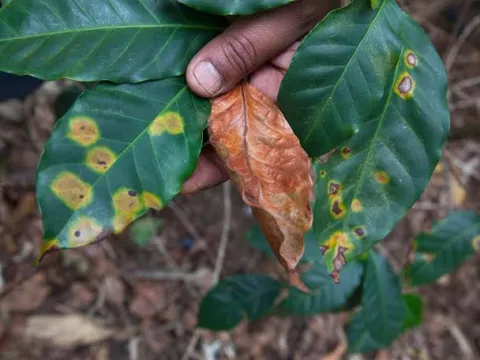
The most diagnostic symptom of the disease is the development of concentric ring patterns or chlorotic lines on the leaf surface. These spots are often pale yellow or light green in color, contrasting with the healthy green tissue.
Affected leaf tissues may undergo deformation, often leading to leaf curling or crinkling. As the disease progresses, the chlorotic areas may become more widespread, causing the leaves to lose their structural integrity.
Initially, symptoms may appear localized, affecting only a small branch or a specific portion of the crown. As the viral load increases, the infection spreads to more branches, leading to a general decline in the plant's appearance.
Plants affected by the ringspot virus typically show stunted growth. Young shoots may be shorter and thinner compared to healthy ones, and the overall canopy density may decrease significantly over time.
Severe infections are characterized by premature leaf senescence and abscission. This thinning of the foliage reduces the plant's photosynthetic surface area, directly impacting its energy production and overall long-term survival.
The virus thrives during periods of active plant growth when nutrient and sap transport is most efficient. This period is critical for the virus to migrate through the vascular tissues of the host plant.
Environmental temperatures play a crucial role in disease progression. Warmer climates are often associated with faster symptom development, as the virus can replicate more rapidly in higher temperature conditions common in tropical coffee regions.
The rate of disease spread within a plantation is heavily dependent on the presence of insect vectors. Without adequate insect control, the virus can spread throughout a plantation quite rapidly during peak growing seasons.
High plant density and proximity between trees facilitate the movement of vectors from plant to plant. In dense plantations, the virus can move across the field faster, leading to larger outbreaks of the ringspot disease.
Poor agricultural practices significantly contribute to spread. Using contaminated pruning equipment without disinfection allows the virus to be transmitted mechanically from an infected tree to a healthy one through open wounds created during maintenance.
The primary economic impact is the reduction in coffee berry production. Diseased trees exhibit decreased flowering and fruit set, which significantly lowers the total yield per hectare.
The quality of the coffee beans is also negatively affected. Due to the compromised nutrient status of the tree, the beans may be smaller, uneven in ripening, and possess inferior organoleptic characteristics, decreasing their market value.
Systemic viral pressure weakens the coffee tree, making it more susceptible to secondary fungal pathogens and infestations by other pests. The tree's overall vigor is compromised, leading to premature aging of the plantation.
Management costs increase significantly due to the need for continuous monitoring, the removal of infected trees, and the implementation of vector control programs to contain the virus.
Long-term harm often results in the need for premature replanting of entire sections of a plantation. This requires substantial financial investment and creates a gap in productivity that takes years to recover.
There are no chemical treatments available to cure a plant once it is infected with the ringspot virus. Therefore, disease management focuses exclusively on prevention and early detection.
- Utilize only clean, virus-free certified planting stock for all new plantations.
- Implement strict sanitation protocols by disinfecting pruning tools between each tree.
- Maintain robust vector management programs using integrated pest management (IPM) to reduce insect populations.
- Perform regular field scouting to identify and immediately rogue (remove and destroy) any infected trees to prevent secondary spread.
- Optimize plant nutrition and irrigation to support overall plant vigor, which may help the tree withstand environmental stresses better.