
Coffee ringspot virus
Cofodevirus
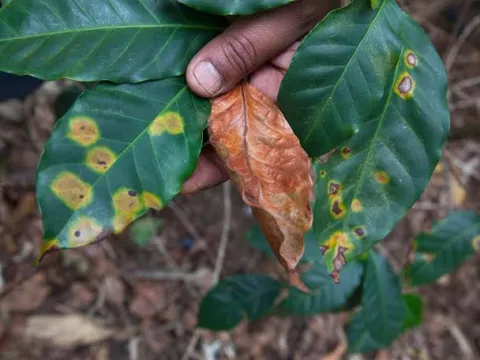
The primary symptom of the disease is the appearance of chlorotic spots that evolve into distinct, ring-like patterns on the foliage of coffee plants.
What the section contains
Coffee ringspot virus
Affected leaves often exhibit significant deformation, wrinkling, and a loss of their deep green color, which impairs the plant's photosynthetic ability.
Advanced stages of the infection frequently lead to tissue necrosis, resulting in premature leaf drop and the general decline of the tree's vigor.
A noticeable symptom includes stunted growth of internodes, giving the tree crown a sparse, unhealthy, and unbalanced appearance over time.
While fruit symptoms are less common than foliar ones, the overall physiological stress caused by the virus negatively impacts bean quality and yield.
The disease is caused by Cofodevirus, a plant-pathogenic virus specifically known to infect various coffee cultivars within the Rubiaceae family.
The virus acts as a systemic pathogen, spreading through the plant's vascular system and affecting not only leaves but also branches and stems.
Mechanical transmission is a critical pathway, occurring through the use of non-disinfected pruning tools or during grafting procedures in nurseries.
Insects with piercing-sucking mouthparts, such as aphids and leafhoppers, serve as major biological vectors for spreading the virus across plantations.
Biological studies indicate that the virus can remain viable in host tissues, making long-term plantation management a significant challenge.
The development and spread of Cofodevirus are favored by warm temperatures and high humidity levels typical of many coffee-growing regions.
Inadequate quarantine protocols when introducing new seedlings are the leading cause of initial infections within previously healthy coffee estates.
High-density planting without sufficient airflow encourages the rapid spread of the virus through physical contact between leaves and branches.
Environmental stress, such as drought or nutritional deficiencies, exacerbates the severity of symptoms and accelerates the decline of infected trees.
The presence of diverse insect populations in the plantation provides constant pressure for secondary transmission during active growth cycles.
The primary economic impact is a dramatic reduction in coffee yields caused by disrupted plant metabolism and reduced leaf surface area for growth.
Infected trees produce beans of lower quality, which often fail to meet export standards, causing substantial financial losses for coffee farmers.
The disease shortens the productive lifespan of coffee trees, necessitating premature removal and replacement of infected sections of the plantation.
Viral infection suppresses the plant's natural immune response, making it highly susceptible to opportunistic fungal and bacterial pathogens.
In severe outbreak scenarios, the virus can compromise the economic viability of an entire farm, leading to significant agricultural instability.
The cornerstone of control is the use of certified, disease-free planting material sourced from reputable nurseries with strict sanitation practices.
Rigorous disinfection of pruning shears and grafting knives after use on every single tree is mandatory to prevent cross-contamination.
Integrated Pest Management (IPM) focusing on the control of aphids and other sucking insects is vital to interrupt the transmission cycle of the virus.
Systematic scouting of the plantation is required to identify and remove symptomatic trees promptly, ensuring they are burned to eliminate the inoculum.
- Maintain optimal soil fertility to boost the tree's natural defense systems.
- Implement spatial isolation to protect new plantings from older, infected trees.
- Control weed species that may harbor the virus or its insect vectors.