
Coconut tinangaja viroid
Cocadviroid tinangajae
The causative agent of the disease is Cocadviroid tinangajae, a small, circular, single-stranded RNA molecule belonging to the genus Cocadviroid. It lacks a protein coat, classifying it strictly as a viroid.
What the section contains
Coconut tinangaja viroid
This pathogen specifically targets coconut palms (Cocos nucifera). It operates by hijacking the host's cellular machinery to replicate, causing systemic disruption of the plant's physiological functions.
Due to its minimal structure, the viroid is highly resistant to environmental stressors, allowing it to persist on surfaces and tools for extended periods, which complicates eradication efforts.
The replication process is continuous and stealthy. It spreads through the vascular system of the palm, slowly colonizing every part of the host tree before visible symptoms appear.
As a quarantine pathogen, Cocadviroid tinangajae is strictly regulated globally to prevent its introduction into healthy coconut-producing regions.
The earliest signs of Cocadviroid tinangajae infection include subtle chlorosis and thinning of the canopy. The leaves gradually lose their vibrant green color and appear stressed.
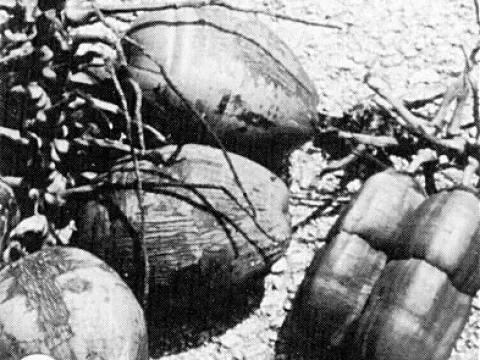
The most distinctive symptom is the progressive reduction in nut size. Infected palms produce fruits that are significantly smaller than normal, eventually leading to a complete cessation of nut production.
The fronds of the palm become stunted and exhibit signs of premature senescence. The overall structure of the canopy may become distorted as the tree loses its vigor.
As the disease progresses, the tree's ability to produce new inflorescences is halted. The decline is persistent, leading to a state of chronic ill-health until the plant is no longer productive.
Early symptoms are easily overlooked or mistaken for nutrient deficiencies, which facilitates the silent spread of the pathogen within a plantation.
Mechanical transmission is the primary driver of spread. Contaminated pruning knives, harvesting tools, and heavy machinery serve as efficient vehicles for the viroid between healthy and infected trees.
Natural transmission occurs through root-to-root contact in densely planted groves. Once a single palm is infected, the pathogen can slowly move through the root network to adjacent plants.
Potential insect vectors, such as sap-sucking pests, may contribute to the spread by transferring the viroid while feeding on wounded tissues of the palms.
Environmental conditions in tropical areas, particularly high temperatures and humidity, aid in maintaining the stability of the viroid on equipment surfaces.
Human activities, specifically the unregulated movement of seedlings or propagation material from infested areas, are responsible for long-distance dissemination of the viroid.
This viroid poses a severe threat to the coconut industry. Economic losses are driven by the total loss of nut yield and the eventual death of the productive palm trees.
Replacing infected plantations is a long and expensive process, as it takes years for newly planted palms to reach maturity and start producing significant yields.
Infected palms show increased susceptibility to secondary infections, such as lethal leaf spot or fungal rot, which further destabilizes the health of the entire plantation.
The disease impacts local food security and the livelihoods of communities that rely on coconut harvesting as their primary source of income.
- Complete crop failure.
- High costs for sanitization and tree removal.
- Potential for widespread regional outbreaks.
- Loss of valuable genetic diversity in local palm varieties.
There is no chemical cure for palms infected with Cocadviroid tinangajae. Management relies entirely on strict biosecurity, surveillance, and systematic destruction of infected material.
Once a tree is identified as positive for the viroid, it must be culled and disposed of, preferably through burning or deep burial, to eliminate the reservoir of the infection.
Strict sanitation protocols must be enforced for all tools. Sterilizing equipment with bleach or specialized virucidal agents between every single tree is mandatory to prevent cross-contamination.
Preventing the movement of coconut propagation material out of infested regions is the most effective measure to stop the disease from spreading to new locations.
Ongoing monitoring using molecular diagnostic tools like RT-PCR is essential for identifying asymptomatic carriers and managing the disease before it achieves a widespread, uncontainable status.