
Coguvirus henanense
Coguvirus henanense
Coguvirus henanense is a relatively recently described plant virus belonging to the genus Coguvirus within the family Phenuiviridae. It is a segmented RNA virus identified in plant samples exhibiting typical signs of viral infection.
What the section contains
Coguvirus henanense
This pathogen acts as an obligate parasite, requiring living host tissues to complete its replication and maintain its life cycle. Its genetic architecture is characteristic of the Bunyavirales order, which dictates its biological interactions with host plants.
The virus is classified as an agent of systemic disease, capable of rapid movement through the plant's vascular system. It actively manipulates host cell metabolism, diverting plant resources to synthesize viral proteins and replicate its RNA genome.
A crucial biological feature is its specific host range, which makes identifying susceptible plant species vital for predicting potential outbreaks. Research is ongoing to determine the full spectrum of plant species that can serve as hosts for this virus.
In the field, the virus can persist in overwintering wild plants, which act as reservoirs and pose a constant threat to new crop plantings. Studies focusing on virion morphology and cellular entry mechanisms remain a priority in modern plant virology.
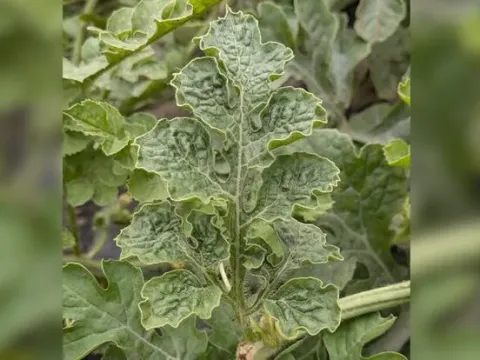
Symptoms of Coguvirus henanense infection are characterized by pronounced leaf mosaicism, where light and dark green areas alternate. Such changes severely disrupt photosynthetic efficiency in the affected tissues.
Significant leaf deformation is observed, with leaves becoming wrinkled or acquiring a thread-like, filiform shape. This structural change hampers normal vegetative development and reduces the effective leaf surface area of the plant.
Chlorosis is a common sign, often manifesting as yellow spots or marginal yellowing on leaves. In many cases, systemic growth inhibition (stunting) occurs, leading to significantly shortened internodes compared to healthy plants.
External manifestations vary depending on the stage of infection and environmental factors. Young leaves are often the most severely affected, exhibiting curling, which makes early diagnosis and detection quite challenging in agricultural settings.
- Leaf mosaic patterns
- Leaf tissue deformation
- Overall stunted growth
- Interveinal chlorosis
The spread of Coguvirus henanense is closely linked to the presence of insect vectors, which act as primary vehicles for infection in agricultural ecosystems. The virus is transmitted during the feeding process on infected plants.
Temperature plays a significant role in the viral replication rate within the host. Warmer conditions generally facilitate faster translocation of the pathogen through the vascular system, accelerating the onset of visible symptoms.
The presence of weeds near fields creates favorable conditions for the accumulation of the virus and its vectors during the off-season. Wild plants serve as the primary reservoir, allowing the infection to infiltrate commercial crops.
Planting density also influences the rate of pathogen spread. In dense stands, insect vectors can move more rapidly from one plant to another, ensuring a higher incidence of infection across the field.
Air humidity affects the activity levels of infection vectors. Periods optimal for pest reproduction frequently coincide with the highest risk of viral disease outbreaks in crop fields.
The primary economic harm caused by Coguvirus henanense is a substantial reduction in crop yield. Infected plants often fail to produce quality fruits, leading to significant financial losses for producers.
Disruption of photosynthesis leads to the depletion of the plant's metabolic reserves. This renders the crop less resistant to secondary infections and environmental stressors such as drought or extreme temperature fluctuations.
The quality of marketable produce drops sharply: fruits may be small, deformed, and unmarketable. This devalues the crop harvest even when some quantity is maintained.
The virus can be disseminated through infected planting stock, threatening long-term production plans. Infection at early developmental stages often results in the total loss of yield from affected individual plants.
The lack of curative treatments for infected plants makes managing this virus a difficult task, often requiring radical measures such as rogueing and removal of infection foci to protect healthy plants.
The primary control method is strict phytosanitary surveillance, aimed at preventing the introduction of infected material into healthy farms. It is essential to use only certified seeds and transplants.
Effective management includes controlling insect vectors using targeted insecticides. Timely applications reduce the number of vectors, effectively breaking the chain of viral transmission.
Eliminating weeds around and within fields removes virus reservoirs. Regular weeding and maintaining proper spatial isolation significantly lower the risk of primary infection entering the crop.
It is recommended to rogue and immediately destroy plants displaying viral symptoms. Such plants are constant infection sources for nearby healthy individuals, making prompt removal a necessity.
Implementing crop rotation and utilizing varieties with natural resistance to viral infections remain the most promising preventive strategies, allowing for a reduction in reliance on chemical interventions.