
Cucumber carlavirus
Carlavirus cucumis
The causative agent of this disease is Carlavirus cucumis, a plant virus within the Carlavirus genus of the Betaflexiviridae family. It is a filamentous, single-stranded RNA virus that primarily infects species within the Cucurbitaceae family.
What the section contains
Cucumber carlavirus
As an obligate parasite, the virus relies entirely on the metabolic machinery of the host plant for its replication and systemic movement within the plant tissues.
The virus is primarily transmitted by aphid vectors in a non-persistent manner, meaning the insects can acquire and transmit the virus after very short feeding periods on infected plants.
Mechanical transmission also plays a significant role in the spread of the virus within greenhouses, occurring through contaminated pruning tools, clothing, or direct plant-to-plant contact.
The virus can persist in weed hosts and crop debris, providing a reservoir for infection that initiates outbreaks at the beginning of the growing season.
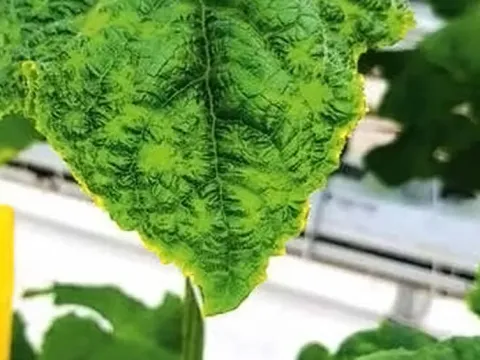
Typical symptoms of Cucumber carlavirus infection include mosaic patterns on leaves, characterized by a mix of light green and dark green mottled areas.
The foliage often shows significant distortion, with leaves becoming crinkled, stunted, or showing downward curling of the margins as the virus disrupts normal development.
Fruit set is heavily impacted, with infected cucumbers exhibiting misshapen, bumpy, or asymmetrical forms, often accompanied by chlorotic spots that make them unmarketable.
Infected plants frequently display shortened internodes, leading to a compact, bushy, or rosette-like appearance at the growing tips compared to healthy plants.
Symptoms are usually most pronounced during periods of active growth and can appear sporadically across a field before eventually affecting a larger portion of the crop.
The incidence of Cucumber carlavirus is strongly correlated with the presence and population density of aphid vectors, which thrive in favorable climatic conditions.
Warm and moderately humid weather accelerates both the lifecycle of insect vectors and the systemic spread of the virus within the plant vascular system.
Agricultural practices, such as failing to manage weed populations around greenhouse perimeters or fields, create critical reservoirs for the virus to survive and spread.
Poor greenhouse hygiene, including a lack of routine disinfection of equipment used for pruning, training, or harvesting, facilitates rapid secondary infection.
Overcrowded plantings and inadequate airflow contribute to high humidity levels, which can promote the buildup of insect pest populations and increase the risk of viral transmission.
The primary economic impact of this virus is a significant reduction in both yield quantity and fruit quality, often rendering the harvest unsuitable for commercial sale.
Plants infected early in their developmental stages may show severe stunting, drastically reducing their overall vigor and capacity to produce fruit throughout the season.
Infected plants become more susceptible to secondary pathogenic attacks, including various fungal diseases that thrive on compromised or stressed plant tissues.
The costs associated with labor for rogueing infected plants and implementing additional pest control measures place a heavy financial burden on growers.
Total loss of individual plants is common under high-pressure conditions, resulting in gaps in the field and inefficient use of land and agricultural inputs.
Managing Cucumber carlavirus requires an integrated approach focusing on vector control and strict adherence to sanitary practices to minimize transmission.
Effective management begins with the selection of resistant or tolerant cultivars and the implementation of crop rotation strategies to avoid previous infection sites.
Rigorous sanitation measures, including the regular disinfection of all tools using sanitizing solutions, are essential to prevent mechanical spread between plants.
Promptly identifying and removing symptomatic plants (roguing) helps to limit the localized source of inoculum and prevents further spread within the crop.
- Monitor aphid populations and apply appropriate biological or chemical insecticides.
- Control weed species that serve as alternative viral hosts.
- Ensure proper greenhouse ventilation and hygiene during all maintenance operations.