

Disease · viral
Cucumber green mottle mosaic virus
Tobamovirus viridimaculae
Description
Symptoms
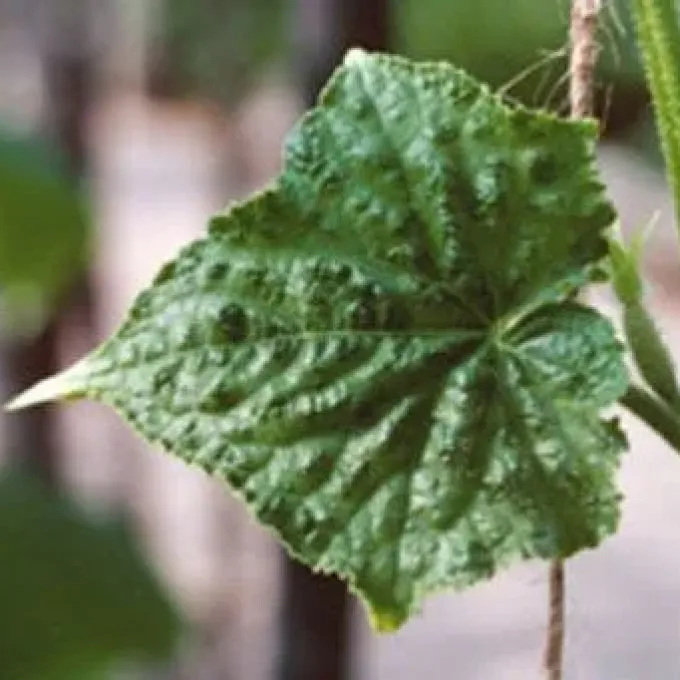
The most common symptoms include a distinct mosaic pattern on leaves, characterized by light and dark green mottling. Leaves may become puckered, distorted, and stunted in growth.
Fruits exhibit visible symptoms such as yellow-green mottling, mosaic patterns, and surface irregularities. Severe infections lead to fruit deformation and stunted development.
Infected plants show shortened internodes, leading to a bush-like, stunted appearance. The overall vigor of the plant is significantly reduced, affecting flowering and fruit set.
Internal fruit symptoms can include discolored, brownish tissues within the seed cavity. In some cases, the pulp may exhibit abnormal coloration and poor texture, rendering the produce unmarketable.
- Mosaic mottling on leaves
- Fruit distortion and mottling
- Shortened internodes
- Stunted plant growth
Pathogen
The causative agent is the Cucumber green mottle mosaic virus (CGMMV), a member of the Tobamovirus genus. This virus is characterized by extreme stability and durability in the environment.
The virus consists of rod-shaped particles that can persist for years in contaminated soil, seed coats, plant debris, and on various greenhouse structures or farm tools.
Transmission occurs primarily through mechanical contact. Infected sap easily enters healthy plants through microscopic wounds caused during pruning, harvesting, or regular crop maintenance.
Seed transmission is a major concern, as the virus can reside both on the surface and within the embryo of the seed, facilitating the spread of the disease into new production areas.
As a systemic pathogen, it infects the vascular tissues, interfering with physiological processes such as photosynthesis and drastically altering the plant's metabolism.
Conditions for development
High temperatures within greenhouses, often exceeding 25-30°C, provide optimal conditions for the rapid multiplication and systemic spread of the virus within the host tissues.
High-density planting and humid environments facilitate the mechanical transfer of the virus between plants during daily agricultural tasks, especially when hands and tools are not disinfected.
Hydroponic systems can act as a reservoir for the virus, as the recirculating nutrient solution can contain infectious particles, distributing them to all plants connected to the system.
Lack of sanitation between cropping cycles allows the pathogen to remain in the substrate or structural components of the greenhouse, leading to immediate reinfection of the next crop.
The absence of strict biosecurity protocols when bringing in new supplies, seedlings, or equipment from other areas is a primary route for introducing the virus into a facility.
Why it matters
The economic impact of CGMMV is severe, as it can lead to massive losses in marketable fruit yield, sometimes resulting in total failure of the crop in heavily infested greenhouses.
Since there are no curative chemical treatments for viral infections, infected plants represent a total loss and must be eradicated to prevent further spread.
The produce harvested from infected plants is of poor quality, unattractive, and often lacks the sensory properties required by consumers and retail standards.
Contamination of the seed stock poses a long-term risk, as it carries the infection over seasons and contributes to the global spread of the pathogen through international trade.
The virus weakens the plant's overall system, making it more susceptible to secondary pathogenic attacks by fungi or bacteria, which complicates the overall diagnostic process.
Protection
Strict biosecurity and sanitation are the primary lines of defense. All tools, gloves, and clothing should be disinfected frequently using appropriate chemical agents to inactivate viral particles.
Sourcing seeds that are certified virus-free is the most critical step. Seed disinfection treatments may be used as a secondary preventative measure before sowing.
Immediate removal and destruction of symptomatic plants, along with the surrounding substrate, are necessary to limit the spread of the virus within a healthy population.
Integrated pest management includes controlling weeds within and around the greenhouse, as many wild Cucurbitaceae species can act as symptomless hosts for the virus.
Implementation of resistant or tolerant cultivars, where available, remains the most effective strategy for managing the risk of damage in high-pressure environments.
Content graph
Connections · Cucumber green mottle mosaic virus
Most often together:
Marketplace
Products · 1
Community
Discussion
No discussions yet — be the first.