
Rice yellow mottle virus
Bymovirus oryzae
The causative agent of the disease is the Rice yellow mottle virus (RYMV), which belongs to the genus Sobemovirus. It is a highly variable virus with multiple strains identified across different rice-growing regions.
What the section contains
Rice yellow mottle virus
This is an obligate parasite that does not spread through seeds but relies on vectors. The virus particles are highly stable and can persist in crop residues and soil, maintaining infectivity for long periods.
Transmission occurs primarily through insect vectors, such as beetles of the family Chrysomelidae. The virus is also easily transmitted mechanically through physical contact with infected foliage or contaminated tools.
Water is a key medium for the survival of the virus, allowing it to persist in irrigation channels and drainage systems. Infected wild grasses serve as reservoirs that maintain the virus during fallow periods.
The virus replicates within the phloem and spreads systemically throughout the plant, interfering with essential physiological functions such as chlorophyll synthesis and nutrient transport.
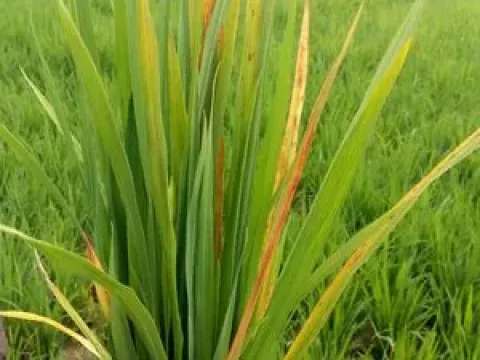
The primary symptom is the appearance of chlorotic streaks and spots on the leaves, which quickly turn bright yellow or orange. In severe cases, the entire leaf blade may become completely discolored.
Stunting is a hallmark of the infection, characterized by significantly shortened internodes. Affected plants look considerably smaller and weaker compared to healthy rice plants in the same field.
Infection often causes malformation of the panicles. They may fail to emerge from the leaf sheath properly, or the spikelets may be sterile, resulting in poor or non-existent grain filling.
Field observation typically reveals the disease in patches, as the virus spreads from the initial point of infection. These symptomatic areas are highly visible due to the stark yellowing of the foliage.
Additionally, infected plants show poor root development, which compromises their ability to uptake nutrients and water, often leading to lodging and premature death of the plant.
Warm and humid environments are ideal for the development of RYMV epidemics. Temperatures between 25 and 30 degrees Celsius significantly boost the metabolism of both the virus and its insect vectors.
Irrigation systems play a dual role: they provide water for the rice crop while also harboring weeds that act as virus reservoirs. High water levels can facilitate the movement of infected plant debris.
Continuous cropping of rice on the same land facilitates the buildup of the viral inoculum. This practice allows for a continuous "green bridge," ensuring that the virus remains active throughout the year.
Mechanical operations, such as weeding or moving heavy equipment through the field, promote the transmission of the virus. Contaminated tools and clothing are common culprits in spreading the infection.
High planting densities create a microclimate that is conducive to the activity of beetle vectors. This density increases the ease with which these insects can move between neighboring plants.
The economic impact of the virus is devastating, with yield losses ranging from 20% to 100% depending on the timing of infection. Early-stage infection usually results in complete crop failure.
Grain produced from infected plants is of poor quality, characterized by low weight and poor viability, which makes it unsuitable for storage or as seeds for future planting.
Plants affected by the virus exhibit weakened defenses, making them significantly more susceptible to secondary infections by fungal pathogens, further exacerbating the yield loss.
Due to the disruption of normal physiological processes, infected rice plants are unable to utilize nitrogen fertilizers efficiently, resulting in wasted input costs for the farmer.
The costs associated with managing the disease, including localized destruction of infected crops and insecticide applications, place a heavy financial burden on rice-producing enterprises.
- Deployment of rice varieties with confirmed resistance or tolerance to RYMV.
- Rigorous weed management in and around the rice fields to eliminate viral reservoirs.
- Establishing spatial isolation between different planting dates to prevent vector movement between cohorts.
- Strategic application of insecticides to control beetle populations during peak activity periods.
- Strict sanitation protocols for farm machinery and equipment to prevent mechanical transmission.