
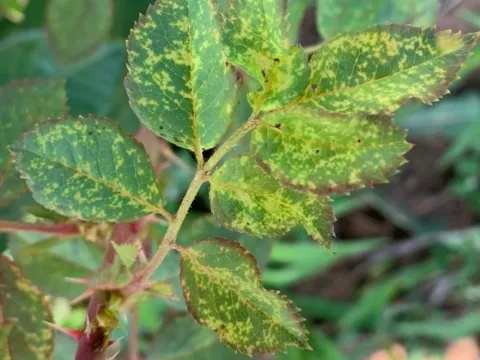
Rose leaf curl virus
Closterovirus rosafolium
The causative agent of this disease is a virus belonging to the Closterovirus genus, specifically Closterovirus rosafolium.
What the section contains
Rose leaf curl virus
The virus is a long, thread-like particle that infects the plant's phloem, causing systemic issues in nutrient transport.
As an obligate parasite, it relies entirely on the host's cellular machinery to replicate its genetic material.
The pathogen does not survive for long outside of living host tissue, making direct contact or vector transmission the primary modes of spread.
Transmission primarily occurs through grafting using infected scions or through the feeding activity of phloem-sucking insect vectors.
The most distinctive symptom is the downward or inward curling of leaflets, which often become thickened and brittle.
Foliage may exhibit chlorotic patterns, including mosaic spots, yellow vein banding, or translucent streaks.
Infected plants display reduced growth rates, resulting in stunted shoots and an overall loss of vigor.
Flowers are often distorted, showing reduced size and poor color development, which impacts the plant's ornamental quality.
The symptoms often appear progressively, starting on older leaves and eventually affecting the entire plant canopy.
Rose leaf curl virus causes long-term decline, leading to a significant reduction in the lifespan and health of the bushes.
Plants weakened by the virus become more susceptible to environmental stressors such as drought and extreme temperatures.
The reduction in photosynthetic area due to leaf curling negatively impacts the plant's energy reserves and overall vitality.
For commercial growers, this virus represents a major phytosanitary threat that can lead to the loss of entire crop cycles.
There is no known chemical cure for the virus, making the damage caused by it largely irreversible for individual specimens.
Effective management begins with the use of certified, virus-free propagation material sourced from reputable nurseries.
Controlling vector populations, such as aphids and leafhoppers, is essential to interrupt the transmission cycle within the garden.
Sanitation practices, including the thorough disinfection of pruning tools between every single plant, must be strictly followed.
Once a plant is diagnosed with the virus, it should be immediately rogued and removed to prevent the spread to neighboring roses.
Providing optimal growing conditions through proper fertilization and watering helps plants maintain better resistance against secondary infections.