
Viroids
Viroids
Viroids (Viroids) are the smallest known infectious pathogens, consisting exclusively of short, circular, single-stranded RNA molecules without any protein coat or encoding capacity.
What the section contains
Viroids
These subviral agents rely entirely on the host cell's machinery to replicate. By hijacking the plant's RNA polymerase, they disrupt normal cellular processes and gene expression.
Viroids are categorized into two families, Pospiviroidae (replicating in the cell nucleus) and Avsunviroidae (replicating in the chloroplasts), which defines their specific pathogenic strategy.
They are primarily transmitted through mechanical damage, contaminated agricultural tools, infected seeds, pollen, or vegetative propagation of clonal crops.
Unlike viruses, viroids have a very simple structure, yet they are responsible for devastating systemic diseases in numerous economically important agricultural plants.
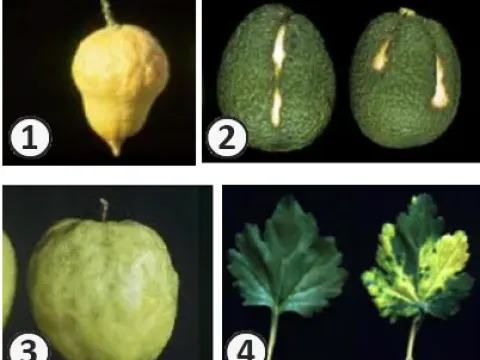
Stunting is the most common symptom of viroid infection, often resulting in severe growth retardation and the reduction of the size of leaves and stems in affected plants.
Leaves often exhibit morphological changes such as curling, wrinkling, or epinasty. Chlorosis and necrosis are also frequent symptoms seen on the foliage of infected specimens.
Fruit symptoms are highly characteristic for many species, including deformation, surface browning, scarring, or a dramatic reduction in fruit size and quality.
In some plants, viroids can cause a "witches' broom" appearance, characterized by excessive, disorganized branching of shoots due to the activation of dormant buds.
As many infections may remain asymptomatic for extended periods, molecular diagnostic tools like RT-PCR are necessary to confirm the presence of the pathogen accurately.
The spread of viroids is strongly correlated with agricultural practices that involve wounding plant tissues, such as pruning, thinning, or mechanical harvesting.
High planting density in greenhouses facilitates the rapid transmission of the pathogen through contact between adjacent plants or through shared equipment surfaces.
Temperature plays a crucial role in disease development, as higher temperatures often enhance the replication rate of viroids and intensify the expression of systemic symptoms.
Viroids can persist in the environment for extended periods, particularly in crop residues and soil, posing a significant risk of infection to subsequent planting cycles.
The lack of rigorous sanitation protocols when handling plant material during propagation is a primary factor in the international movement of these infectious agents.
Viroids cause substantial economic losses by significantly reducing crop yields, sometimes decreasing productivity by over 50% in sensitive cultivars and environments.
The marketability of produce is severely impacted because the resulting fruits or tubers are often deformed, undersized, or exhibit poor shelf life and nutritional quality.
For perennial crops like trees or vines, viroid infections can lead to premature decline, necessitating the costly removal and replanting of entire agricultural blocks.
Infected plants exhibit reduced vigor and weakened immune responses, making them more susceptible to secondary pests and environmental stressors like drought or frost.
The accumulation of viroids in seed or stock material can compromise entire breeding programs, leading to the permanent loss of unique, high-value plant genetic traits.
The use of certified, virus-free and viroid-free plant material obtained through tissue culture or meristematic propagation is the most effective preventative measure.
Strict sanitation of all tools is essential; blades and pruning equipment must be disinfected with bleach or other potent antiviral agents between every single plant.
Prompt identification and systematic removal of infected plants, including their root systems, is crucial to eliminate reservoirs and prevent further field transmission.
International and local quarantine regulations are vital to prevent the introduction of new viroid species into non-infested regions or clean agricultural operations.
Comprehensive weed management and adherence to long-term crop rotation cycles help minimize the risk of viroids lingering in the soil environment between seasons.