
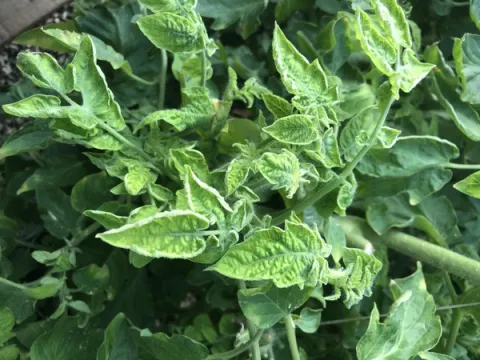
Tomato leaf curl virus
Begomovirus solanumvariati
The causative agent of the disease is a virus belonging to the genus Begomovirus. These are single-stranded DNA viruses known for their rapid adaptation and persistence in agricultural ecosystems.
What the section contains
Tomato leaf curl virus
The primary vector for the transmission of this virus is the whitefly (Bemisia tabaci). The insect acquires the virus while feeding on infected plant sap and remains infectious for the remainder of its lifespan.
Once introduced into the host plant, the virus moves through the phloem to all parts of the plant, disrupting the transport of photosynthates and vital nutrients.
This disease is strictly viral, meaning there are no curative chemical treatments available once the symptoms of infection have manifested in the plant.
The virus is resilient and can survive in weed hosts or within the whitefly population, acting as a recurring source of infection for subsequent planting seasons.
The most characteristic symptom is the upward curling of leaves, which often become thickened, leathery, and brittle compared to healthy foliage.
Leaves exhibit yellowing (chlorosis), often appearing as a mosaic or interveinal yellowing pattern that inhibits the plant's photosynthetic capacity.
Infected plants display significant stunting with shortened internodes, giving the plant a shrubby or dwarf-like appearance, especially when infected early.
Flowering and fruit set are severely affected, with many flowers dropping prematurely, leading to a drastic reduction in the total number of fruits produced.
The fruits that do reach maturity are frequently deformed, undersized, and lack the uniform coloration required for market standards.
The development of the virus is directly linked to the density of the whitefly population, which thrives in warm, arid environments.
Greenhouse environments offer a stable climate that allows both the virus and the whitefly vector to proliferate year-round if proper quarantine is not enforced.
Weeds surrounding the field act as reservoirs, providing a habitat for the virus during the off-season when no crop plants are available.
Poor agricultural practices, such as overlapping planting cycles and lack of sanitary procedures, facilitate the rapid spread of the virus within and between neighboring fields.
Plants under environmental stress, such as water deficit or extreme temperature fluctuations, are more susceptible to becoming victims of whitefly-borne infections.
Tomato leaf curl virus is considered a devastating pathogen, potentially causing yield losses of up to 100% if the infection occurs early in the growing season.
Infected crops lose their commercial value entirely due to poor development, fruit deformation, and reduced quality of the harvest.
The necessity of removing and destroying infected plants causes significant labor costs and disrupts production schedules, negatively impacting farm profitability.
Management efforts require intensive use of insecticides, which can increase production costs and potentially lead to resistance issues in the whitefly population.
Fields with a history of this viral infection may become unsuitable for growing highly susceptible varieties, forcing farmers to choose less productive, albeit resistant, alternatives.
The primary defense strategy involves strict management of the whitefly population through the consistent use of systemic insecticides and biological control agents.
Sanitation is critical, including the removal of weeds and alternative host plants from around the periphery of fields and greenhouses.
Physical barriers, such as the use of insect-proof nets in greenhouses, are highly effective in limiting the access of vectors to the crops.
- Monitoring whitefly populations using yellow sticky traps to time insecticide applications accurately.
- Promptly rogueing and disposing of plants that show symptoms of infection to prevent further spread.
- Choosing resistant or tolerant cultivars developed for specific regional virus strains.
- Implementing a break in planting cycles to reduce the virus reservoir in the local area.
Integrating these methods into a cohesive pest management strategy is the only reliable way to maintain productivity in regions prone to this viral disease.