
Tomato ringspot virus
Orthotospovirus tomatozonae
Description
Symptoms
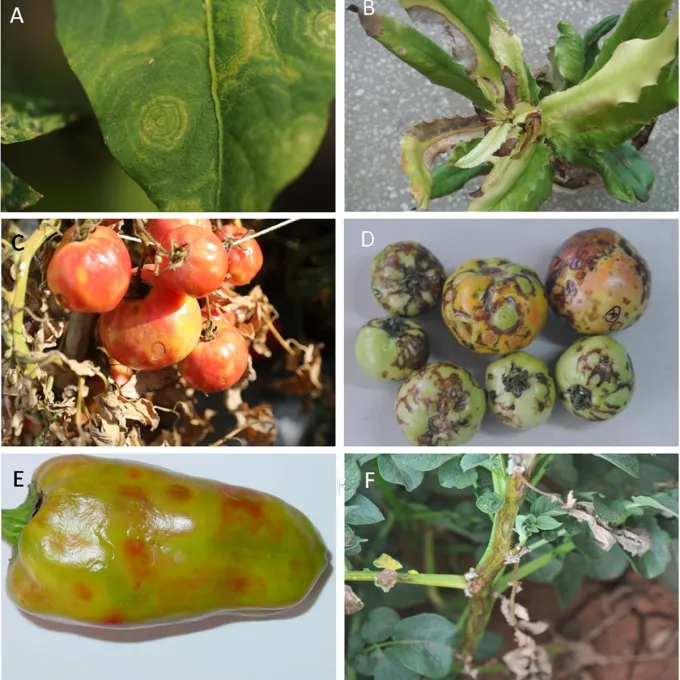
The primary symptom of the Tomato ringspot virus is the development of characteristic concentric rings or chlorotic spots on the foliage and developing fruits.
Affected leaves often show a mosaic pattern, vein clearing, and significant curling or distortion, which hampers normal photosynthetic activity.
As the infection progresses, necrotic ring spots appear on the tomato fruits, leading to rough, uneven surfaces and overall fruit malformation.
Plants infected early in the growing season exhibit stunted growth, shortened internodes, and a bushy appearance, which significantly affects their yield potential.
In advanced stages of the disease, foliage may undergo premature senescence or necrosis, eventually leading to the death of the plant parts or the entire individual.
Pathogen
The pathogen is Orthotospovirus tomatozonae, a complex viral agent known for its ability to infect a diverse range of plant species in various families.
Transmission of the virus is primarily mediated by insect vectors, specifically certain species of thrips, which acquire the virus while feeding on infected plant tissues.
Once ingested, the virus undergoes multiplication within the vector, ensuring that the insect remains a carrier and an active spreader of the pathogen throughout its lifespan.
This is a systemic disease, meaning the virus moves through the phloem of the plant to reach all organs, causing chronic disruption to the host's physiological functions.
The virus acts by diverting the plant's resources to replicate viral proteins, which depletes energy reserves and causes irreversible cellular damage.
Conditions for development
Epidemics of the Tomato ringspot virus are closely correlated with the population dynamics of its insect vectors, which thrive in warm and stable climate conditions.
Temperatures ranging from 20 to 28 degrees Celsius are considered optimal for both the high-speed reproduction of thrips and the rapid progression of the viral infection.
The presence of perennial weed species in or near the cultivated field serves as a crucial reservoir for the virus, facilitating its survival during the off-season.
High humidity levels and lack of proper ventilation in greenhouse structures further promote the movement and feeding intensity of thrips, increasing the spread.
Agricultural practices that involve poor sanitation, such as failing to remove crop residues, contribute significantly to the overwintering of the pathogen.
Why it matters
The disease is highly destructive as there is no chemical cure for systemic viral infections in plants, making management strictly preventive.
Marketable yield is severely reduced because the symptomatic fruits are aesthetically unacceptable, leading to high rejection rates at harvest time.
Infected plants become highly susceptible to secondary pathogens, as the compromised immune system fails to withstand fungal or bacterial opportunistic infections.
The overall vigor and productivity of the entire crop can be compromised if an outbreak occurs during the early stages of plant development.
Financial losses for growers are significant, including the costs of managing the vector population and the loss of premium-grade produce.
Protection
Effective management focuses on aggressive control of insect vectors, utilizing systematic insecticide programs and biological control methods where applicable.
Strict sanitation protocols must be maintained, including the removal of all infected plants and surrounding weed populations to eliminate potential virus sources.
- Utilizing blue or yellow sticky traps to monitor and reduce thrips populations.
- Ensuring that all nursery stock is certified disease-free before planting.
- Implementing regular disinfection of tools to prevent mechanical transmission.
Choosing resistant or tolerant cultivars is a primary strategy for long-term reduction of the risk associated with this viral disease.
Crop rotation and spacing out new plantings from older, potentially infected sites serve as essential spatial barriers to mitigate the spread of the virus.
Discussion
No discussions yet — be the first.