
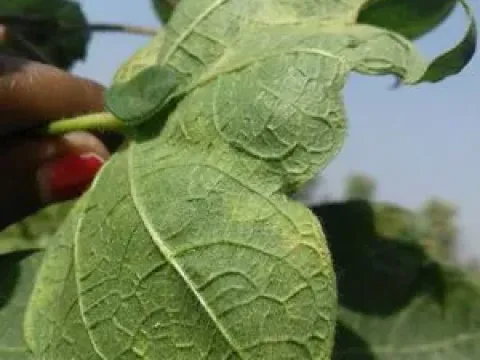
Cotton leaf curl virus
Begomovirus gossypimultanense
The causative agent of the disease is the Cotton leaf curl virus (CLCuV), belonging to the genus Begomovirus, family Geminiviridae. It is a virus with a single-stranded circular DNA genome, known for its high genetic diversity and rapid evolution.
What the section contains
Cotton leaf curl virus
The virus infects mainly species of the genus Gossypium, including both commercial cultivars and wild cotton relatives. Additionally, various weed species within the Malvaceae family serve as reservoirs, maintaining the virus during off-seasons.
The biology of the virus is inextricably linked to its primary vector, the tobacco whitefly (Bemisia tabaci). The vector acquires the virus by feeding on infected plants and remains capable of transmitting the pathogen throughout its lifespan.
The virus transmission mechanism is characterized as persistent and circulative. Viral particles enter the insect's hemolymph, accumulate in the salivary glands, and are then inoculated into the tissues of healthy cotton plants during feeding.
The density of the whitefly population is a critical factor for disease development. Under conditions with high vector populations, the virus can spread rapidly, potentially infecting entire cotton fields.
The first symptoms appear as a characteristic upward or downward curling of the leaf margins. The leaf blade becomes wrinkled, deformed, and takes on a sickly, stunted appearance.
Hypertrophy of the veins is frequently observed on the underside of the leaves. The veins become thickened, swollen, and dark green. In severe cases, vein enations (small leaf-like outgrowths) may develop.
Plants infected at early stages of development show significant growth retardation. Internode length is reduced, resulting in a stunted and bushy appearance of the cotton plant.
Flowering is severely disrupted in infected plants. The number of flower buds and bolls decreases sharply, and many that do form are shed prematurely before reaching maturity.
Bolls on infected plants are often malformed, small, and fail to open properly, which leads to a substantial decline in both lint quality and total seed cotton yield.
Disease progression is favored by high air temperatures, which provide optimal conditions for the reproduction and migration of whiteflies. Hot and dry summers are particularly conducive to major outbreaks.
The presence of weeds surrounding the fields accelerates the infection process. If perennial Malvaceae species grow nearby, the virus persists in them year-round, acting as a constant source of primary infection.
Monoculture cropping systems contribute to the accumulation of the virus within the region. The continuous presence of a host crop supports a high population density of the vector throughout the entire growing season.
Poor adherence to planting schedules can increase vulnerability. Early plantings, when conditions favor the vector, may suffer from massive infestation as soon as the first true leaves appear.
The movement of whiteflies, often aided by wind or the transport of machinery from infested to healthy fields, is a primary factor in the geographical spread of the disease.
The primary economic impact is the massive loss in cotton lint yield. In epidemic years, yield losses can range from 30% to 80%, depending on the variety and the stage of plant infection.
Lint quality is significantly degraded. The fibers become shorter, weaker, and less elastic, making them unsuitable for high-quality textile manufacturing and reducing their market value.
Economic losses are compounded by the high cost of frequent insecticide applications to manage whitefly populations, which increases the overall production costs of the crop.
The virus is systemic, meaning that once it enters the plant tissues, it spreads throughout the entire organism. This makes it impossible to eradicate with conventional fungicides once a plant is infected.
Widespread outbreaks often necessitate a complete replacement of existing cultivars with more resistant breeding lines, requiring significant time and financial investment in the seed industry.
The most effective strategy for disease management is the deployment of virus-resistant cotton varieties. Breeding for resistance against Begomovirus is the cornerstone of sustainable cotton production.
Rigorous control of whitefly populations through Integrated Pest Management (IPM) is essential. This includes the application of systemic insecticides during critical periods of crop development to limit spread.
Sanitation practices, such as the systematic removal of weed hosts from fields and surrounding buffer zones, are crucial to minimize the initial sources of the virus.
Optimizing planting dates and practicing crop rotation help to avoid periods of peak whitefly activity. Maintaining spatial isolation from older, infested cotton fields significantly reduces infection pressure.
After the harvest, thorough destruction of crop residues and volunteer plants is mandatory. This practice effectively breaks the life cycle of the virus and eliminates overwintering sites for the whitefly vector.