
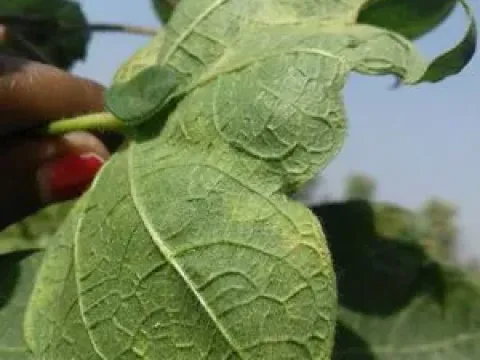
Cotton leaf curl virus
Begomovirus gossypiflavi
The Cotton leaf curl virus (CLCuV) is a complex of viruses belonging to the genus Begomovirus within the Geminiviridae family.
What the section contains
Cotton leaf curl virus
These viruses are characterized by a circular single-stranded DNA genome and require a specific biological vector for transmission between plants.
The primary vector responsible for the transmission of CLCuV is the cotton whitefly, Bemisia tabaci, which acquires the virus while feeding on infected phloem sap.
Once acquired, the virus circulates within the insect, and it can transmit the pathogen to healthy plants for the remainder of its lifespan.
The virus mainly colonizes the vascular tissue of the plant, significantly interfering with nutrient translocation and the plant's overall metabolic functions.
The hallmark of the disease is the downward or upward curling of leaves, often accompanied by the thickening of veins on the underside of the leaves.
Affected cotton plants typically show stunted growth, small leaf size, and a general yellowing (chlorosis) resulting from impaired photosynthetic activity.
In severe cases, plants develop a bushy appearance due to the proliferation of excessive branches and shortened internodes, significantly distorting the plant architecture.
Flower buds often drop prematurely, and if bolls are formed, they are usually malformed, small, and fail to produce high-quality lint.
- Downward leaf curling
- Vein thickening (enations)
- Stunted plant development
- Premature fruit shedding
The development of the virus is highly dependent on environmental conditions that favor the rapid proliferation and migration of the whitefly population.
Warm and humid environments are generally considered ideal for the vector's reproductive cycle, leading to high disease incidence during peak growing seasons.
The presence of alternative host plants, including various weeds and crops, provides a continuous reservoir for the virus to survive between cotton growing cycles.
Poor agricultural practices, such as excessive use of nitrogen fertilizers, can make plants more succulent and attractive to whiteflies, thus increasing infection rates.
Regional climate patterns that influence vector movement are the primary predictors for the timing and intensity of local viral outbreaks.
Cotton leaf curl virus is one of the most destructive diseases in cotton-growing regions, frequently causing significant yield losses, sometimes exceeding 50%.
The disease negatively impacts the lint quality, making the fiber shorter and weaker, which decreases its market value and industrial utility.
Early-season infections are particularly lethal to the crop, often preventing the plant from reaching its productive potential or leading to complete field failure.
The economic burden is worsened by the cost of intensive chemical control programs aimed at suppressing vector populations throughout the season.
Continuous infections pose a long-term threat to regional cotton production, potentially forcing farmers to switch to less profitable alternative crops.
Breeding and planting resistant or tolerant cotton cultivars remains the most sustainable and effective strategy for managing the virus.
Integrated Pest Management (IPM) practices, focusing on the timely control of whitefly populations with systemic insecticides, are essential to minimize transmission.
Sanitation practices, such as the removal and destruction of host weeds and infected crop debris, help reduce the local viral inoculum reservoir.
Spatial and temporal isolation of cotton fields can limit the spread of the disease by reducing the opportunities for whiteflies to move from infected to healthy plots.
Maintaining a healthy crop through optimal irrigation and balanced fertilization helps the plants withstand the stress caused by viral infection.