
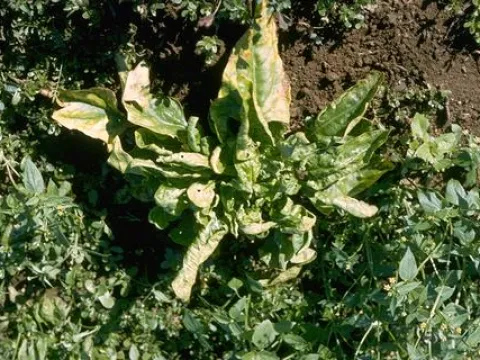
Spinach curly top
Becurtovirus spinaciae
The disease is caused by the Becurtovirus spinaciae, a member of the Geminiviridae family. It is a single-stranded DNA virus that invades the plant vascular system and causes severe physiological disorders.
What the section contains
Spinach curly top
This virus is a specialized pathogen that primarily targets spinach. It interrupts normal growth processes by disrupting nutrient transport and hormonal balance within the plant tissues.
The nature of the disease is a systemic viral infection. It cannot be transmitted mechanically through simple contact or sap contamination; it relies on an insect vector for dispersal.
Leafhoppers are the primary vectors responsible for transmitting the virus. When they feed on infected plants, they ingest the virus and subsequently transmit it to healthy spinach plants.
The virus cycle is deeply linked to the behavior and life cycle of the leafhopper population. The virus remains within the insect vector, ensuring its persistence in the environment.
Initial symptoms are characterized by chlorosis and yellowing of the younger leaves at the center of the spinach rosette. The leaf blades soon begin to deform and lose their symmetry.
A distinctive sign is the severe curling of the leaf margins, which causes the leaf surface to become wrinkled, puckered, and rough. The affected leaves often thicken and become brittle.
Plants exhibit significant stunting, resulting in a dwarf-like appearance. The internodes fail to elongate properly, leading to the formation of a dense, stunted cluster of deformed leaves.
Root system development is severely compromised due to the overall lack of nutrient flow. Affected plants lose turgor pressure rapidly, especially during peak sunlight hours.
The distribution of symptomatic plants in the field is usually patchy, corresponding to the movement and feeding patterns of the leafhopper population.
The spread of the disease is heavily influenced by the population dynamics of leafhoppers. Warm, dry weather conditions promote rapid insect reproduction and increased feeding activity.
The presence of weeds surrounding the field is a major risk factor. Many common weeds serve as asymptomatic reservoirs, allowing the virus to survive throughout the year.
Outbreaks often occur during periods of prolonged drought when leafhoppers migrate from drying wild vegetation onto succulent, irrigated spinach crops.
Optimal environmental conditions for both the insect vector and the virus's systemic colonization are typically found within the 20–28 degrees Celsius temperature range.
Inadequate field management, including the proximity of susceptible host crops, can significantly increase the risk of an epidemic on a spinach farm.
Spinach curly top causes substantial economic losses as the produce becomes commercially unmarketable. The leaves lose their freshness and visual appeal, rendering them useless for retail.
Yield loss can range from 50% to over 80% if the infection occurs early in the crop cycle, essentially destroying the potential harvest for the affected blocks.
Viral infection suppresses photosynthesis, drastically reducing the overall biomass of the crop. Even mildly infected plants fail to produce high-quality greens.
The reduced quality of infected plants means they cannot withstand post-harvest handling, storage, or transportation, leading to quick deterioration and decay.
High levels of disease pressure require significant labor for roguing and increased costs for field management to control the vector population.
Effective management focuses on controlling the leafhopper vector population using systemic insecticides applied at the first sign of insect activity.
Weed control is a critical prophylactic measure. Removing weeds from field margins reduces the potential virus reservoirs and limits the habitat for the insect vectors.
Implementing strategic crop rotation schemes helps break the life cycle of the leafhoppers and prevents the build-up of the virus in the local ecosystem.
Spatial isolation of new spinach plantings from older or susceptible crops is essential to prevent the cross-spread of the virus by migratory insects.
- Using insect-proof netting in greenhouses
- Rapid destruction of crop residues after harvesting
- Selecting tolerant or resistant varieties when available