
Pepper begomovirus
Begomovirus chillicapsici
Description
Symptoms
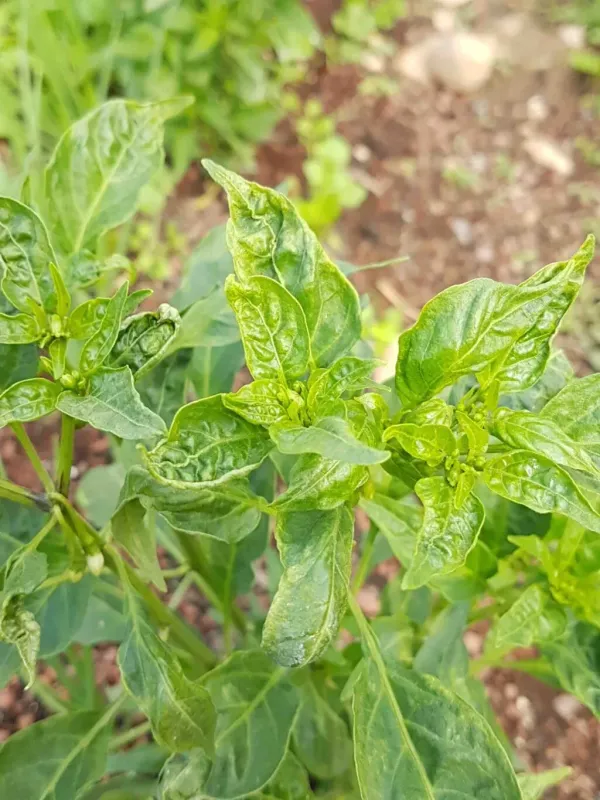
Characteristic symptoms include a pronounced mosaic pattern on the leaves, where light green and yellow chlorotic spots alternate with normal tissue.
The leaves exhibit severe curling, distortion, and wrinkling. They are often reduced in size, creating a stunted and unthrifty appearance for the plant.
Infected pepper plants show a significant decrease in height due to shortened internodes, leading to a dwarf-like habit that is easily identifiable.
Flowering is frequently disrupted; flower buds may drop prematurely, or if fruit does set, it is often deformed, small, and unmarketable.
Infected fruits may also show symptoms of mottling or necrosis, significantly lowering the overall grade and commercial value of the harvest.
Pathogen
The causal agent of this disease is a virus belonging to the genus Begomovirus (family Geminiviridae). These are circular single-stranded DNA viruses.
These viruses are known for their rapid evolution and high genetic diversity, which makes breeding resistant pepper varieties a significant challenge for researchers.
The primary vector for the transmission of the virus is the silverleaf whitefly, Bemisia tabaci. The virus is acquired by the fly while feeding on infected plant sap.
Once ingested, the virus moves through the insect's hemolymph to the salivary glands, remaining transmissible for the rest of the whitefly's lifespan.
This persistent and circulative mode of transmission means that a single infected insect can easily spread the virus across an entire field.
Conditions for development
The prevalence of Pepper Begomovirus is strictly correlated with the population density of the whitefly vector, which thrives in warm and dry conditions.
High ambient temperatures accelerate the life cycle of the whitefly, leading to rapid population explosions that increase the viral infection pressure.
Alternative hosts, such as various weed species found around the periphery of crop fields, serve as essential reservoirs for the virus during off-seasons.
Lack of proper field sanitation and failure to control weeds allow the virus to persist and move from surrounding vegetation into the main crop.
Poor coordination between greenhouse producers and field growers often results in overlapping cycles that facilitate the continuous spread of both the vector and the virus.
Why it matters
Pepper Begomovirus can be devastating, frequently resulting in yield losses ranging from 50% up to total crop failure under high infection pressure.
The virus disrupts the plant's metabolic processes, reducing photosynthesis and rendering the plant highly susceptible to other environmental stressors.
Economic impact is compounded by the high costs associated with repeated insecticide applications required to keep whitefly populations at manageable levels.
Infected fields often show uneven growth, forcing farmers to abandon plots that are too severely affected to reach maturity or provide a profitable yield.
The reduced quality of the produced peppers makes the product unsuitable for fresh market sale, severely impacting the farm's profitability.
Protection
Management focuses on controlling the whitefly vector using a combination of systemic and contact insecticides during the early growth stages.
Cultivating resistant or tolerant pepper hybrids is the most sustainable and effective method to mitigate the impact of the virus in endemic areas.
Sanitation practices, such as the removal of weeds and infected plant debris, are crucial to breaking the virus's survival cycle.
- Monitoring whitefly populations using yellow sticky traps.
- Maintaining spatial isolation between greenhouses and outdoor fields.
- Implementing strict quarantine protocols for new plant materials.
- Using fine-mesh insect nets for greenhouse protection.
- Rogueing and destroying symptomatic plants as soon as they are spotted.
An integrated pest management (IPM) approach is essential to balance chemical control with biological and cultural practices for long-term crop safety.
Discussion
No discussions yet — be the first.