
Tomato leaf curl virus
Begomovirus bemisiasexti
The causative agent of Tomato leaf curl disease belongs to the genus Begomovirus, family Geminiviridae. These are single-stranded DNA viruses that replicate within the nuclei of host plant cells, causing systemic infection.
What the section contains
Tomato leaf curl virus
The primary vector for the transmission of these viruses is the whitefly, specifically Bemisia tabaci. The insect acquires the virus by feeding on the phloem of an infected plant and retains the ability to transmit it for the remainder of its lifespan.
The disease is characterized as a systemic viral infection, meaning the pathogen spreads through the plant's vascular tissue, affecting roots, stems, leaves, and fruits shortly after inoculation.
Transmission occurs exclusively via the whitefly vector. While mechanical transmission (via tools) is not typical for begomoviruses, the virus's survival and spread are heavily dependent on the whitefly population density.
The virus has a very low environmental stability outside the host plant, meaning its persistence in agricultural ecosystems relies entirely on the continuous presence of vector insects or perennial weed hosts.
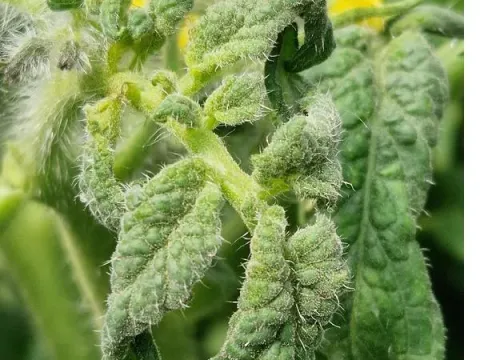
The most distinctive symptom is the upward curling of leaf margins, often giving leaves a cup-like appearance. The leaves become leathery, stiff, and brittle compared to healthy foliage.
Chlorosis, or yellowing, is a common indicator, often appearing along the leaf edges or as mosaic patterns. The severity of yellowing can range from mild mottling to intense bleaching of the leaf tissue.
Stunting is a hallmark of this disease. Affected plants show shortened internodes, leading to a compact, bushy, or rosette-like appearance that significantly limits the overall height of the plant.
Reproductive success is severely hampered. Inflorescences may fail to develop, or flowers may drop prematurely. Fruits that do manage to form are often small, misshapen, and commercially unacceptable.
- Upward leaf curling and deformation.
- Stunted plant growth and shortened internodes.
- Yellowing (chlorosis) of leaflets.
- Reduced fruit set and stunted fruit size.
- Leathery texture of affected leaves.
The development of the disease is strictly linked to whitefly activity. High temperatures and moderate humidity, typically found in greenhouse environments, create ideal conditions for the rapid multiplication of the vector.
The presence of reservoir hosts is critical for the virus's survival between cropping cycles. Numerous weed species surrounding greenhouse facilities or fields can harbor the virus indefinitely.
The spread of the infection is accelerated by the movement of whiteflies from older, infected crops to younger, susceptible seedlings. High wind speeds can also facilitate the long-distance dispersal of the vector.
Inadequate sanitation practices, such as failing to remove crop debris or weeds, provide a continuous bridge for the virus to move from one season to the next, sustaining the inoculum pressure.
Poor spatial management, where different ages of tomato crops are grown in close proximity, allows the virus to continuously cycle through the population, leading to severe outbreaks.
Tomato leaf curl virus is highly destructive, capable of causing yield losses of up to 100% in susceptible varieties, especially if infection occurs at the seedling stage.
Because the disease causes physiological collapse in the plant, there is no chemical cure once a plant is infected. The damage is irreversible and impacts both the quantity and quality of the harvest.
The economic impact on commercial greenhouses is severe, as infected plants become permanent sources of inoculum, necessitating the removal of the entire crop to save surrounding healthy plants.
Infected fruits lose their market value due to size reduction and poor coloration. Even if edible, they rarely meet quality standards, leading to significant financial losses for growers.
The burden of constant vector management adds significantly to the production costs, as whitefly resistance to common insecticides makes controlling the virus even more complex.
Integrated Pest Management (IPM) is essential for controlling the virus. The primary goal is to suppress the whitefly population through systematic insecticide application and biological control agents.
Monitoring the whitefly population using yellow sticky traps is a mandatory practice for early detection. This allows for timely intervention before the virus can reach a large portion of the crop.
Physical exclusion methods, such as installing fine mesh screens on greenhouse vents, are highly effective in preventing whiteflies from entering and introducing the pathogen to the crop.
The use of resistant or tolerant tomato varieties is the most sustainable approach. Genetic resistance can significantly mitigate the impact of the virus, even in regions with high vector pressure.
Strict sanitation protocols, including the immediate roguing (removal and destruction) of symptomatic plants and the elimination of weed hosts, are vital to breaking the viral transmission cycle.