
Tomato leaf curl virus
Begomovirus bemisiaprimi
Tomato leaf curl virus (ToLCV) is a destructive plant pathogen belonging to the genus Begomovirus within the Geminiviridae family. It primarily attacks tomatoes and several other solanaceous crops.
What the section contains
Tomato leaf curl virus
The virus is exclusively transmitted by the whitefly Bemisia tabaci. This insect vector acquires the virus while feeding on infected plant tissues and remains infectious for the rest of its life cycle.
Being a phloem-limited virus, it disrupts the translocation of nutrients throughout the plant. ToLCV does not transmit through mechanical contact or contaminated seeds, making the vector the central focus of control.
The genetic diversity of this virus is significant, with various strains identified globally. These strains differ in virulence and host range, making international trade and seed movement a concern for biosecurity.
Inside the host, the viral DNA replicates within the nuclei of infected cells. This process triggers significant developmental abnormalities by altering the host's hormonal signaling pathways.
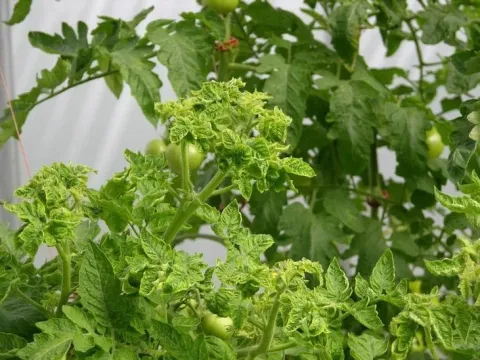
Symptoms of ToLCV are characterized by severe stunting of the plant and dramatic leaf curling. The apical leaves typically display upward curling and crinkling, forming a "cup-like" appearance.
Chlorosis is a common sign, where leaf margins and interveinal areas turn yellow. Leaves often become thickened, leathery, and significantly reduced in size compared to healthy foliage.
Internodal distances are drastically shortened, giving the plant a bushy or rosette-like habit. This dwarfism is a hallmark of severe infection, often preventing the plant from reaching normal maturity.
Flowering and fruit set are severely impaired. Infected plants may produce flowers that abort or, if fruit forms, it is usually small, malformed, and of poor quality for commercial market use.
- Apical leaf curling and upward cupping.
- Stunted plant growth and shortened internodes.
- Yellowing (chlorosis) of leaf margins.
- Flower abortion and fruit deformation.
- Overall bushy or dwarfed appearance.
The spread of ToLCV is heavily dependent on whitefly populations. Outbreaks often occur during warm and dry seasons when whitefly activity is at its peak across agricultural landscapes.
Greenhouses provide a stable, protected environment that allows whiteflies to thrive and reproduce year-round. If not properly screened, these structures can become reservoirs for the virus.
Temperature plays a crucial role; warm conditions accelerate the life cycle of the whitefly vector, leading to a faster turnover of generations and increased viral transmission rates.
Weed hosts serve as essential overwintering sites for the virus. These reservoirs allow the virus to persist in the absence of tomato crops, providing a source of inoculum for the next planting season.
High-density planting and continuous monoculture cropping encourage the movement of whiteflies between plants, facilitating the rapid expansion of the disease throughout the entire field.
Tomato leaf curl virus is one of the most economically damaging diseases for the tomato industry worldwide. It can lead to complete crop failure if infection occurs during early plant development.
Farmers face significant financial losses due to reduced yields and the lower quality of remaining produce. The market value of deformed, stunted fruit is negligible, making production unprofitable.
The cost of intensive insecticidal programs required to suppress the whitefly population adds a substantial burden to farming operations, often increasing the overall cost of production.
In regions where the virus has become endemic, it can force growers to abandon tomato cultivation in favor of less susceptible crops, causing long-term shifts in agricultural production patterns.
The requirement for frequent scouting and rapid destruction of infected plants demands extra labor, further impacting the operational efficiency and sustainability of horticultural enterprises.
Effective management begins with strict whitefly control. This involves the use of systematic insecticides and the rotation of active ingredients to avoid the development of insecticide resistance.
Physical exclusion is the most reliable strategy for greenhouse cultivation. Covering all vents and openings with fine mesh screening prevents the entry of adult whiteflies from the surrounding environment.
Sanitation practices, such as removing weeds around the field or greenhouse, are vital. Eliminating alternative hosts reduces the primary inoculum source for both the virus and the vector.
Cultivating resistant or tolerant tomato varieties is the most sustainable approach. Genetic resistance provides a reliable layer of defense that reduces the need for heavy chemical applications.
Early detection and rogueing are essential; removing infected plants as soon as symptoms appear can significantly slow the spread of the virus within the crop stand. Yellow sticky traps should be used for monitoring pest pressure.