
Stereocaulon vesuvianum
Stereocaulon vesuvianum
Stereocaulon vesuvianum is not a plant disease but a species of lichen, a symbiotic organism composed of a fungus and a photosynthetic partner (algae or cyanobacteria).
What the section contains
Stereocaulon vesuvianum
In agronomic terms, this organism is harmless to crops, as it does not possess any pathogenic traits and does not infect agricultural or horticultural plant species.
This species is commonly found in mountainous or rocky environments, colonizing exposed stone surfaces, volcanic rocks, and rocky outcrops where no soil is present.
The lichen is a pioneer species that plays a crucial role in soil formation by slowly breaking down rock surfaces through biological processes.
Recognized by lichenologists for its distinct morphological features, it serves as a bioindicator for air quality and general environmental stability.
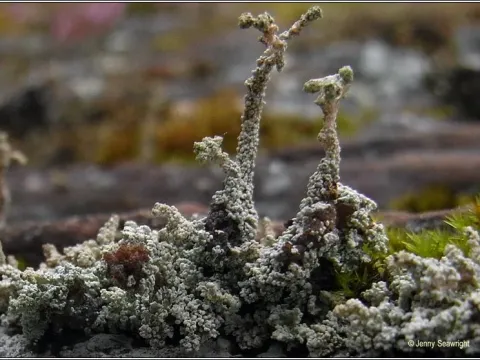
The organism appears as a shrubby, grey or brownish growth that adheres firmly to stone substrates via specialized attachment structures.
A primary diagnostic feature is the presence of numerous phyllocladia — small, granular, or scale-like outgrowths covering the pseudopodetia, giving it a rough, bumpy texture.
The color may shift depending on moisture levels, appearing grey when dry and taking on a more intense tone when hydrated by rain or dew.
Small, disc-like apothecia (fruiting bodies of the fungal component) can often be spotted on the ends of the branches in older, mature colonies.
The structure is brittle and fragile when dry, allowing the lichen to effectively survive the harsh, wind-exposed conditions of its natural rocky habitat.
Stereocaulon vesuvianum thrives in well-lit, exposed environments, requiring significant sunlight and airflow to sustain its metabolism.
It prefers surfaces that receive periodic moisture, allowing the lichen to absorb water and nutrients from atmospheric precipitation and airborne dust.
This species is highly resilient to extreme temperature fluctuations and can enter a dormant state during prolonged periods of drought.
Dissemination occurs via spores dispersed by wind, which enables the lichen to colonize new, barren stone environments over long distances.
The slow growth rate of the lichen is an adaptation to low-nutrient environments, where it competes effectively only in niches unsuitable for vascular plants.
Stereocaulon vesuvianum does not cause any harm to crops, vegetables, or ornamental plants, as it is an epilithic organism, not a parasite.
Its biological activity is restricted to the surface of rocks, where it may cause minimal weathering due to the secretion of organic acids over long periods.
The presence of this lichen on garden stones or masonry is not a sign of plant health issues and requires no intervention from an agronomic perspective.
Since it lacks a root system and is not photosynthetic in a way that competes with crops, it remains neutral in terms of agricultural impact.
No economic damage is associated with this species; instead, it is often valued for its ecological contribution to natural biodiversity.
There are no control measures for Stereocaulon vesuvianum as it is not a pest or a disease, and treating it with fungicides is entirely unnecessary.
If its removal from decorative stonework is desired, manual cleaning using a dry brush is the only recommended and safe method.
Preventative steps are limited to keeping stone surfaces dry and well-lit, which discourages the colonization and growth of lichen spores.
It is strongly advised against using chemical treatments, as they pose a risk to the surrounding soil chemistry and environmental health.
The best practice is to acknowledge and preserve these lichens as part of the local ecosystem, given their role as indicators of clean air and environmental health.