
Stereales fungi
Stereales
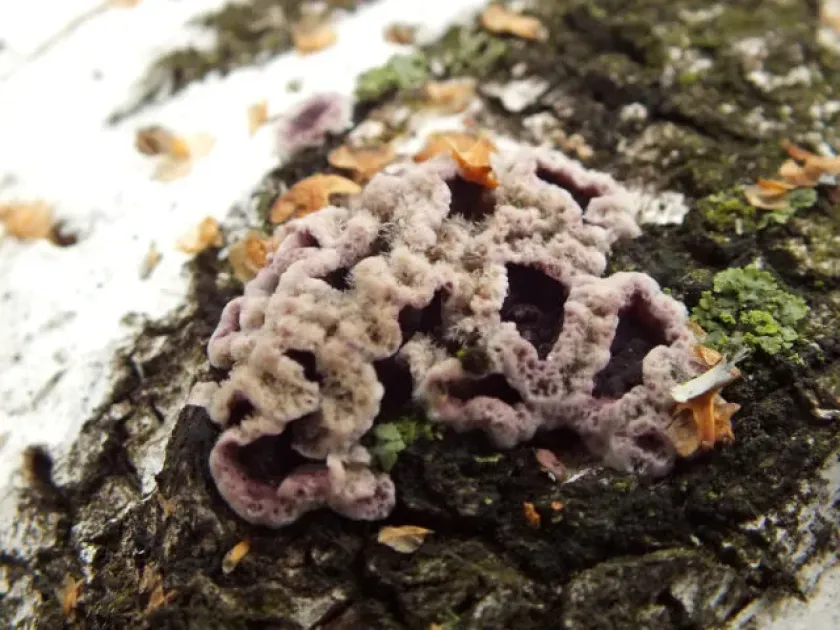
Description
Symptoms
The most visible symptom is the appearance of perennial fruiting bodies on the trunk or branches. These structures are often tough and leathery, sometimes forming tiered clusters.
Internal decay manifests as white rot, where the wood loses its density, becomes brittle, and turns a lighter, bleached color. Dark, irregular lines often appear within the decayed wood, marking the fungal front.
Trees infected with Stereales often exhibit crown thinning, premature yellowing of leaves, and dieback of specific branches. The foliage may appear sparse as the conducting vessels are destroyed.
In some cases, especially when cutting into fresh wood, a reddish-brown discoloration or exudate may be observed, which is a diagnostic feature for certain Stereum species.
Structural failure is a significant risk. As the heartwood and sapwood decay, the tree becomes prone to snapping during windstorms or under heavy snow loads, leading to complete collapse.
Pathogen
Stereales fungi represent a large order of basidiomycetes known primarily for their role in decaying woody tissue. The most common genus involved in plant pathology is Stereum, including species like Stereum hirsutum and Stereum sanguinolentum.
These fungi act as facultative parasites or saprotrophs. They predominantly infect hardwood trees, but many species are capable of colonizing conifers as well, depending on the environmental conditions.
The pathogen enters the host through wounds, broken branches, frost cracks, or improper pruning cuts. Once inside, the mycelium spreads through the xylem, breaking down lignin and cellulose components.
The fruiting bodies of these fungi are typically leathery, crust-like, or shelf-like structures that emerge from the bark of infected branches or trunks. They produce millions of basidiospores that facilitate further spread.
The development of the infection is often slow, taking several years to compromise the structural integrity of the tree. During this time, the fungus continues to extract nutrients from the wood tissue.
Conditions for development
High humidity and moderate temperatures provide optimal conditions for spore germination and mycelial growth. Dense planting or areas with poor air circulation are particularly vulnerable to infestation.
Mechanical injuries are the primary catalyst for disease onset. Any breach in the bark provides an entry point, especially during moist spring weather when spore density in the air is highest.
Trees under stress—whether from drought, nutrient deficiency, or prior damage from pests—show decreased resistance to fungal colonization, allowing the pathogen to establish itself more rapidly.
Periods of prolonged rain create a moist microclimate around the bark, which is essential for the activation of fungal spores and the development of new fruiting structures.
Neglected orchards with accumulated deadwood serve as massive reservoirs for fungal spores, facilitating a rapid spread of the disease to healthy neighboring trees.
Why it matters
The primary harm caused by Stereales fungi is the progressive wood decay that leads to the eventual death of the tree. This process is irreversible once established deep within the trunk.
Significant economic losses occur in agriculture as orchard productivity drops sharply. Eventually, the trees become non-productive and present a safety hazard that requires removal.
The reduction in the tree’s vitality compromises its ability to resist secondary pests and environmental stresses, further accelerating the decline of the plant.
Managing an infestation is labor-intensive, requiring specialized equipment and consistent sanitation to prevent the spread of spores throughout the entire plantation.
In forestry and landscape settings, the presence of these fungi renders timber useless and creates significant risks for property and human safety due to the threat of falling branches.
Protection
Effective management begins with strict adherence to good pruning practices. Always use sharp, sterilized tools and avoid leaving large, untreated wounds on the tree structure.
Apply protective wound sealants, oil-based paints, or horticultural wax to all cuts larger than 2 centimeters in diameter to create an immediate physical barrier against spores.
- Regular sanitation: remove and destroy all deadwood and infected branches.
- Proper nutrition: maintain tree health to bolster natural defenses.
- Stump removal: eliminate potential breeding grounds for fungal spores.
If a valuable tree is infected, surgical excision of the decayed tissue down to healthy wood followed by disinfection and sealing can sometimes prolong its life.
For large-scale control, apply copper-based fungicides during the dormant season to disinfect the bark and protect potential infection sites on the trunk.
Discussion
No discussions yet — be the first.