
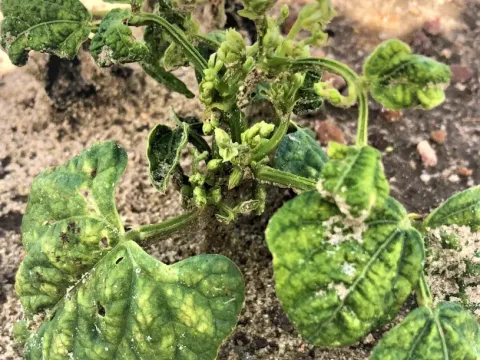
Sida golden mosaic
Sida golden
The disease is caused by the Sida golden mosaic virus (SGMV), which is a member of the Geminiviridae family and the Begomovirus genus.
What the section contains
Sida golden mosaic
This virus contains a single-stranded circular DNA genome, which is characteristic of begomoviruses that infect various dicotyledonous plants.
The primary vector for the transmission of SGMV is the tobacco whitefly, Bemisia tabaci, which acquires the virus while feeding on infected sap.
The virus persists in infected host plants and weeds, acting as a reservoir throughout the growing season and in between crop cycles.
Understanding the biology of the virus is crucial because it creates a persistent threat in tropical and subtropical agricultural environments.
The characteristic sign of the disease is a bright golden or yellow mosaic pattern that appears on the leaf surface, often resulting in complex variegated designs.
Leaves exhibit severe curling, deformation, and crinkling, which disrupts the normal expansion and physiological functions of the foliage.
Stunting is a very common symptom, where the affected plants stop growing or develop at a significantly reduced rate compared to healthy plants.
Flower formation is often reduced or completely inhibited, leading to a significant decrease in potential fruit set and overall plant vitality.
In severe cases, the entire plant architecture becomes disorganized, making it susceptible to further environmental stress and secondary pathogen infections.
The development of the disease is heavily dictated by the presence and density of whitefly populations, which thrive in warm and humid conditions.
Optimal weather conditions for the vector accelerate the spread of the virus across fields, particularly during the peak of the growing season.
Migration of whiteflies from surrounding wild flora and weeds into agricultural fields serves as a primary driver for new infection outbreaks.
High temperatures promote both the multiplication of the virus within the host and the rapid life cycle of the insect vector.
Lack of proper field sanitation allows the virus to persist in host weeds, providing a constant source of inoculum for subsequent crop plantings.
Sida golden mosaic causes extensive damage by reducing the photosynthetic capacity of the plant, which leads to significant yield losses in affected crops.
The infection negatively impacts the quality of the harvest, rendering the produce unmarketable due to aesthetic and developmental abnormalities.
Because there is no cure for established viral infections in plants, the disease often leads to total crop failure within the affected localized areas.
The economic burden is substantial, as farmers must invest in intensive pest control programs to prevent the virus from spreading throughout the entire field.
Energy reserves in infected plants are depleted, making them unable to recover even if the insect vectors are eventually managed or eliminated.
Effective management focuses on Integrated Pest Management (IPM) strategies, prioritizing the reduction of whitefly populations through systemic insecticides.
Sanitation practices such as rogueing and destroying infected plants early are essential to prevent further spread within and between fields.
Managing host weed populations, particularly those belonging to the Malvaceae family, is vital for reducing the reservoir of the virus.
Implementing crop rotation and selecting resistant or tolerant varieties can help minimize the impact and incidence of the mosaic disease.
- Regular monitoring of vector population density.
- Use of reflective mulches to deter whitefly landings.
- Application of biological control agents where appropriate.