
Jujube witches broom
Jujube witches
The causative agent of this disease is a phytoplasma known as Candidatus Phytoplasma ziziphi. It is a specialized, wall-less bacterium that strictly parasitizes the phloem tissues of the jujube tree.
What the section contains
Jujube witches broom
As an obligate parasite, the phytoplasma hijacks the host's metabolic resources to survive and multiply. It disrupts the translocation of sugars and nutrients, eventually causing systemic collapse of the tree's health.
The disease is primarily transmitted in nature by sap-sucking insects, such as leafhoppers or planthoppers. These insects act as vectors, acquiring the pathogen from infected plants and inoculating healthy trees during feeding.
Human activity is a major secondary transmission route, particularly through the use of infected grafting scions. This highlights the critical need for strict quarantine and nursery inspection protocols.
Once inside the plant, the phytoplasma spreads systemically throughout the vascular network. Because it resides deep within the phloem, the infection is extremely difficult to eradicate with conventional surface chemicals.
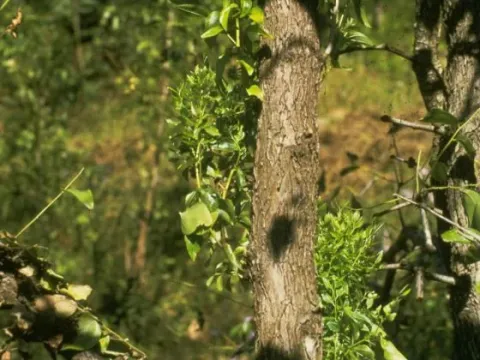
The most distinctive symptom is the proliferation of thin, weak, and stunted shoots that emerge in dense clusters, resembling a "witches' broom." These shoots have significantly shortened internodes.
Leaves on infected branches are typically smaller than normal, chlorotic, or exhibit yellowish discoloration along the margins. Premature leaf drop is a common observation in trees suffering from advanced infection.
The disease severely disrupts floral development. Flowers often become deformed, turning into leaf-like structures (phyllody) or failing to bloom entirely, which results in a complete loss of fruit production.
The root system of an infected jujube tree undergoes progressive decline, losing its ability to support the canopy. This often leads to secondary issues, including root rot and decreased nutrient uptake.
The overall appearance of the tree becomes unthrifty and distorted. Over time, the systemic infection causes branch dieback starting from the tips and eventually leading to the death of the entire plant.
The disease thrives in regions where vector populations are highly active. Warm climates provide an ideal environment for the multiplication and migration of leafhoppers between jujube trees.
Trees that are poorly maintained, stressed by drought, or grown in nutrient-depleted soil are more susceptible to infection. Optimal horticultural practices are essential for keeping trees resilient against pathogens.
Proximity to wild jujube thickets or neglected orchards increases the risk of infection, as these areas often serve as reservoirs for both the phytoplasma and its insect vectors.
Poor sanitation during pruning is a significant factor in disease spread. If pruning shears are not disinfected between trees, the tools can easily transfer the phytoplasma from an infected tree to a healthy one.
The spread of the disease is generally persistent throughout the growing season, provided that environmental conditions remain favorable for vector movement and plant phloem activity.
Jujube witches broom is a devastating disease that renders infected trees unproductive. It is considered one of the most significant threats to jujube cultivation worldwide due to the lack of effective curative treatments.
The economic impact on the orchard industry is profound. Once a tree is infected, it can no longer produce fruit, and it serves as a persistent source of inoculum that threatens all neighboring healthy plants.
Due to its systemic nature, the infection is often irreversible. Farmers are typically forced to remove and destroy symptomatic trees to save the rest of the orchard from becoming entirely infected.
The presence of this disease can limit the expansion of jujube plantations and impose strict regulations on the movement of nursery stock between regions to prevent wider outbreaks.
The inability to control the disease chemically forces growers to rely entirely on preventative measures and strict orchard management, which adds significant operational costs to jujube production.
The most effective strategy is the immediate removal and destruction of infected trees. Burning or deeply burying the plant material is essential to eliminate the source of the pathogen.
Aggressive vector control is vital. Implementing regular insecticide programs aimed at reducing leafhopper populations can significantly slow down the rate of disease transmission within an orchard.
Preventative sourcing is paramount. Only acquire planting stock from reputable, certified nurseries that practice rigorous screening for phytoplasma-related diseases to ensure a clean start.
Strict disinfection protocols for all pruning equipment must be followed. Using alcohol or bleach solutions between trees during pruning helps prevent mechanical transmission of the phytoplasma.
- Monitor the orchard regularly for early signs of broom-like growth.
- Clear surrounding wild brush to reduce vector habitats.
- Promote overall tree vigor through balanced fertilization and irrigation.