

Disease
Especially harmful
Fusarium wilt race 0
Fusarium wilt race 0
Description
Symptoms
The initial symptoms often appear as yellowing of the lower leaves, which is frequently unilateral, affecting one side of a leaflet or plant before spreading to the rest of the foliage.
Plants often exhibit characteristic wilting during the hottest parts of the day. While the plants may regain turgor at night, this wilting becomes permanent as the disease progresses.
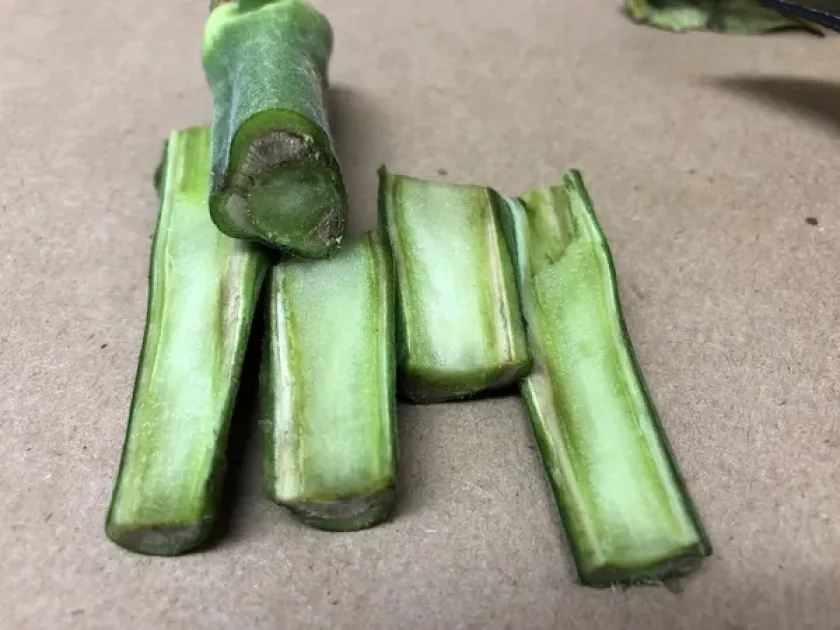
A diagnostic sign can be seen by cutting the stem near the base: the vascular tissue will show distinct brown or reddish-brown discoloration due to the fungal infection.
Under conditions of high humidity, a delicate pinkish-white mycelial growth may appear on the surface of the stem near the soil line, indicating the production of fungal spores.
- Chlorosis and yellowing of lower leaves.
- Wilting of leaves during the day with nightly recovery.
- Brown vascular discoloration in stem cross-sections.
- Stunted growth and reduced vigor.
- Complete plant death in advanced infection stages.
Pathogen
The causative agent of the disease is a specialized form of the fungus Fusarium oxysporum f. sp. lycopersici (race 0). This is a soilborne pathogen that persists in the environment as chlamydospores for many years.
The fungus invades the plant through the root system, typically via small wounds. Once inside, the mycelium colonizes the vascular bundles, physically blocking the movement of water and nutrients throughout the plant.
It is classified as a systemic vascular wilt disease (tracheomycosis). The pathogen produces harmful toxins, including fusaric acid, which degrade the plant's internal tissues and cause systemic failure.
Race 0 is highly specific and targets tomato varieties that lack the resistance gene I. Without this genetic protection, plants are highly vulnerable to the fungal colonization.
The fungus can be spread through contaminated soil, infected seed lots, agricultural tools, and even through the air via spore dissemination, making it a persistent agricultural challenge.
Conditions for development
The pathogen thrives under warm conditions, with optimal temperatures for infection and development ranging between +24°C and +28°C (75°F to 82°F).
While the fungus requires soil moisture to infect, excessively saturated soil may actually hinder rapid development compared to moderate moisture levels which facilitate disease spread.
Soil pH plays a critical role in the severity of the infection, with the fungus favoring slightly acidic to neutral soil environments for its maximum activity.
Poor ventilation, high plant density, and high relative humidity in greenhouses create an ideal microclimate for the fungus to spread rapidly from plant to plant.
Plant stress, often caused by root injury during cultivation or improper transplanting, significantly increases the likelihood of fungal colonization through the damaged root system.
Why it matters
The damage caused by Fusarium wilt race 0 is severe, as the fungus effectively destroys the plant's plumbing, leading to total starvation and dehydration of the plant organs.
In cases of severe infestation, yield losses can range from 30% to 80%. In highly contaminated fields, the entire crop may be lost, making the land unsuitable for tomato production for several seasons.
Even if the plant survives, fruit quality and size are severely compromised, leading to significant economic losses for commercial growers and home gardeners alike.
The pathogen’s longevity in the soil means that once a field is infected, the risk of disease remains for many years, limiting the ability to rotate tomato crops in that specific area.
The infection undermines the overall vitality of the root system, rendering other agricultural inputs such as fertilizers and irrigation largely ineffective once symptoms appear.
Protection
The most effective strategy is the use of resistant tomato cultivars, which are clearly labeled with resistance to race 0 (often marked as "F" or "Fol:0" on seed packaging).
Strict crop rotation is essential; tomato crops should not be grown in the same soil for at least 3 to 4 years to allow for a reduction in soilborne inoculum levels.
Sanitation practices, including the removal and destruction of infected plant debris and the disinfection of tools and greenhouse structures, are vital for disease management.
Biological control agents, such as beneficial fungi like Trichoderma, can be applied to the soil to compete with the pathogen and provide a protective barrier around the roots.
Early identification and immediate rogueing of symptomatic plants, including the removal of the surrounding soil, are necessary to prevent the localized spread of the fungus.
Content graph
Connections · Fusarium wilt race 0
Most often together:
Marketplace
Products · 2
Community
Discussion
No discussions yet — be the first.