
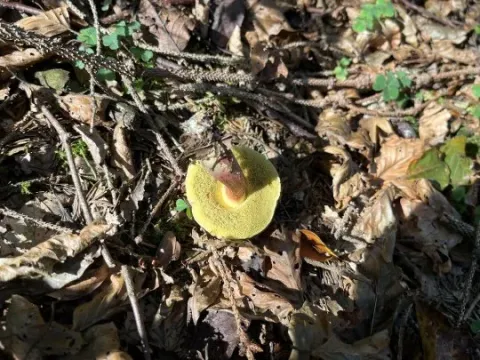
Xerocomus communis
Xerocomus communis
It is crucial to clarify that Xerocomus communis, commonly known as the red cracking bolete, is not a plant disease or a pathogen. It is a wild mushroom belonging to the Boletaceae family.
What the section contains
Xerocomus communis
Biologically, this fungus acts as a saprotroph or a mycorrhizal partner. It forms symbiotic relationships with trees and does not infiltrate or kill living plant tissue.
The misconception that this mushroom is a disease arises from its presence near trees. However, it does not cause rot, necrosis, or any form of physical plant damage.
Pathogenic fungi responsible for plant diseases operate differently, usually by invading the host's vascular system, which is not the case for this species.
As a forest fungus, it contributes to the decomposition of organic matter, acting as a recycler in the ecosystem rather than a biological threat to plants.
The primary sign of its presence is the appearance of fruiting bodies with a brownish-red or olive cap. The tubes under the cap turn blue when bruised.
Unlike true pathogens, this fungus does not produce leaf spots, wilting, or stem lesions. The plants near the mushroom remain unaffected and healthy.
Its presence is often a indicator of high moisture levels and rich soil composition, which is generally beneficial for garden health.
- Fruiting bodies with characteristic cracked caps.
- Blue staining of the flesh upon pressure.
- Mycelium growth within leaf litter or decaying woody mulch.
If you observe signs of decay on your plants, you should investigate other causes, as this mushroom is merely an inhabitant of the surrounding environment.
The growth of Xerocomus communis requires high humidity and damp soil conditions, typically following rainfall in late summer or autumn.
This fungus thrives in shaded areas where organic debris, such as leaves or wood chips, is abundant and provides a steady nutrient source.
Moderate temperatures, generally ranging from 15°C to 22°C, create the ideal environment for the mushroom to produce spores and fruit.
Acidic to neutral soil profiles are preferred by this species, which is why it is often found in gardens that use pine-based or woody mulching techniques.
Improved irrigation systems can inadvertently create localized spots where this fungus may emerge, though this does not impact plant safety.
This species causes no harm to agricultural or ornamental crops. It is not a parasitic organism and does not compete for resources at a harmful scale.
In gardening ecosystems, its activity is considered beneficial as it helps break down complex organic matter into bioavailable nutrients.
There is no impact on crop yield, plant development, or fruit quality, as the fungus does not interact with the plant's metabolic functions.
Economic risks associated with this fungus are non-existent, making it an ecological ally rather than an agricultural enemy.
Fear of this species usually stems from a misunderstanding of garden microbiology and a lack of distinction between beneficial fungi and pathogens.
No control measures are necessary, as Xerocomus communis is not a disease. The use of fungicides to eliminate it is counterproductive and environmentally unsound.
If the visual appearance of mushrooms in a flower bed is unwanted, simple manual removal of the fruiting bodies is the only recommended action.
Improving soil aeration and thinning out dense mulch layers can limit the moisture retention that supports the fungus.
Focusing on plant health through proper fertilization and pruning will ensure that crops remain resistant to actual diseases, should they ever occur.
Gardeners should view the presence of such fungi as a sign of a healthy, functioning soil ecosystem rather than a symptom of a pest infestation.