
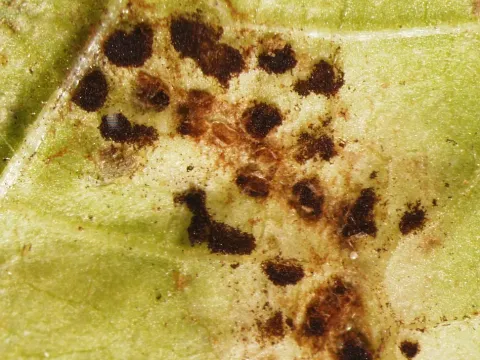
Vigna rust
Uromyces vignae
The disease is caused by the obligate fungal parasite Uromyces vignae, which specifically targets cowpea and related Vigna species.
What the section contains
Vigna rust
This pathogen requires living plant tissue to survive, absorbing nutrients through specialized structures called haustoria.
The life cycle involves the production of urediniospores, which spread rapidly during the growing season, and teliospores for overwintering.
It penetrates the host through natural openings, such as stomata, rapidly establishing its mycelium within the leaf tissue.
Due to its high level of host specificity, this fungus can cause severe damage when environmental conditions are conducive to its development.
Initial symptoms include the appearance of small, chlorotic flecks on the lower surfaces of leaves.
These spots eventually erupt into characteristic reddish-brown, powdery pustules known as uredinia.
As the infection progresses, the pustules may rupture the epidermis, releasing mass quantities of rusty-colored spores.
Severe infestations cause leaves to turn yellow, dry out, and drop prematurely, leading to significant defoliation.
In advanced stages, pustules can appear on petioles, stems, and even the pods, severely affecting the plant's overall architecture.
The development of Vigna rust is heavily dependent on high relative humidity, typically above 85%.
The optimal temperature for spore germination and infection lies between 18 and 25 degrees Celsius.
Extended periods of leaf wetness, such as those caused by dew, mist, or frequent rainfall, are essential for widespread infection.
Poor ventilation in dense or overly crowded plantings creates a stagnant microclimate that encourages rapid fungal proliferation.
In regions with fluctuating temperatures and high humidity, the disease can transition from localized spots to a field-wide epidemic quickly.
The primary damage is caused by the disruption of the photosynthetic process, which stunts plant growth and pod development.
Premature leaf drop leads to a reduction in the plant's ability to fill pods, resulting in lower yields and poorer seed quality.
The disease weakens the host plant, making it significantly more susceptible to opportunistic pathogens and environmental stresses.
In highly susceptible varieties, yield losses can range from minor to catastrophic, depending on the timing and severity of the outbreak.
The economic impact includes both the loss of yield and the increased costs associated with repeated fungicide applications.
The most sustainable strategy is the cultivation of resistant or tolerant cultivars specifically bred for resistance against Uromyces vignae.
Sanitation practices, including the removal and destruction of crop debris, are critical to reducing the primary inoculum source.
Fungicide programs utilizing systemic agents, such as triazoles or strobilurins, should be implemented preventively or upon early detection.
Maintaining adequate plant spacing improves air circulation and helps to reduce the duration of leaf wetness.
- Crop rotation with non-legume species.
- Avoidance of sprinkler irrigation that wets the leaves.
- Early scouting to identify the onset of the disease.
- Integrated pest management to maintain plant vigor.