
Violet calocybe
Calocybe ionides
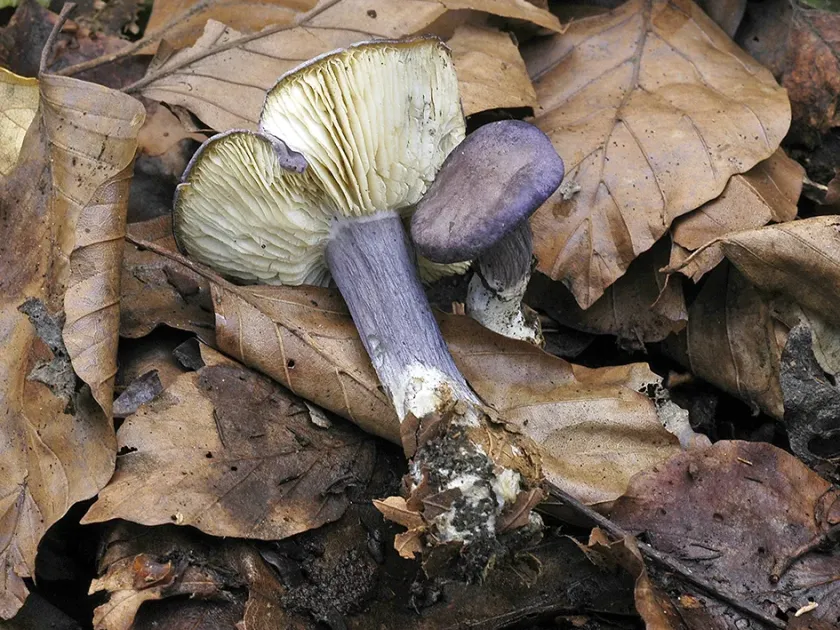
Description
Pathogen
Calocybe ionides, commonly known as the violet calocybe, is a basidiomycete fungus in the family Lyophyllaceae. It is crucial to clarify that this fungus is not a plant pathogen and does not cause diseases in cultivated crops.
The organism is classified as a saprotroph, meaning it derives its nutrition solely from decaying organic matter such as leaf litter and forest debris.
It lacks the physiological mechanisms required to parasitize living plant tissues. Its mycelium remains confined to the soil surface layer and does not interact with the vascular systems of agricultural crops.
Ecologically, the fungus contributes to the mineralization of organic compounds, assisting in the nutrient cycling processes within forest ecosystems.
From an agronomical perspective, this species is completely harmless. No protection or eradication measures are necessary, as it poses no threat to agricultural productivity.
Conditions for development
The fungus typically inhabits broad-leaved or mixed forests, thriving in environments characterized by high humidity and consistent shade provided by tree canopies.
Fruit bodies appear mainly during the autumn months when moisture levels are sufficient to support the reproduction and vegetative growth of the fungal network.
Its natural habitat requires a rich layer of leaf mould, which is not available in managed agricultural fields due to regular tillage and chemical maintenance.
Like many macrofungi, it is highly sensitive to soil disturbance and the application of synthetic fungicides, which effectively exclude it from intensive farming systems.
The presence of Calocybe ionides near farmland indicates healthy, undisturbed soil in nearby forested zones rather than any risk of crop infection.
Discussion
No discussions yet — be the first.