
Description
Symptoms
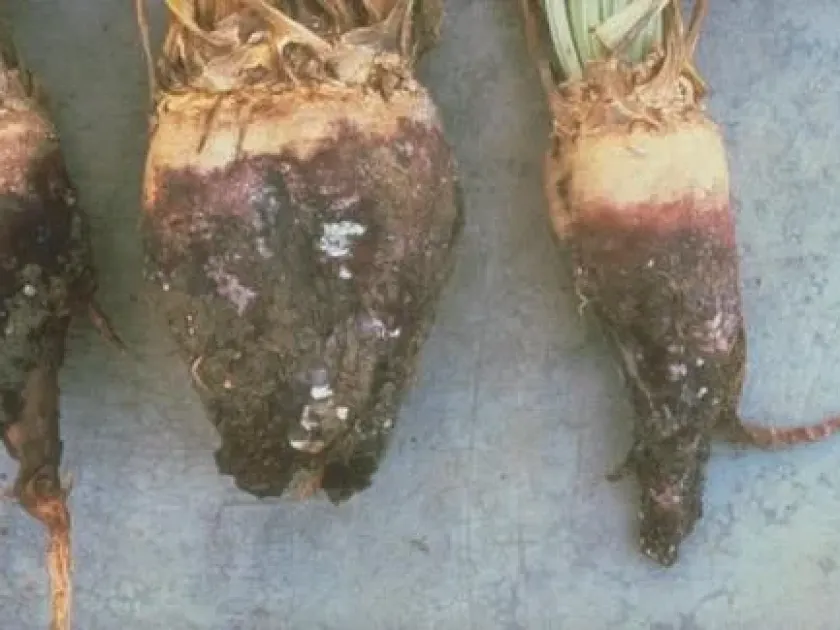
Initial symptoms often appear as sudden wilting of the plant, frequently mistaken for drought stress. Upon examination of the root system, a characteristic violet-colored fungal web is visible.
Infected root tissues soften, darken, and eventually disintegrate. In severe cases, the rot girdles the root crown, leading to the total death of the plant.
In fields, the disease manifests as irregular patches where plants die in clusters, reflecting the soil-borne, slow-spreading nature of the pathogen.
For large-fruited cranberry, symptoms include leaf chlorosis and premature leaf drop, accompanied by a noticeable purple discoloration of the stem base and primary roots.
Accurate diagnosis involves checking for the specific color of the mycelium; distinguishing it from other root rot pathogens is crucial for selecting appropriate management strategies.
Pathogen
The disease is caused by the soil-borne fungus Helicobasidium purpureum (anamorph: Rhizoctonia crocorum). This pathogen has a wide host range, affecting various berries, vegetables, and ornamentals.
The fungus persists in the soil as sclerotia or mycelium on plant debris. It thrives in the root zone, invading host tissues through direct penetration of roots or through wounds in the epidermis.
This is classified as a soil-borne root rot. A diagnostic feature is the development of a dense violet or reddish-purple fungal mat covering the surface of the infected roots.
Dissemination occurs via contaminated soil particles, irrigation water, and the movement of infected nursery stock. It is particularly persistent in areas with high organic matter content.
The pathogen's ability to survive as a saprophyte on dead organic matter makes it a formidable long-term resident in the soil, complicating standard eradication efforts.
Conditions for development
Disease development is favored by wet, poorly aerated, and heavy soils. Soil saturation prevents root oxygenation and promotes the rapid expansion of the fungal mycelium.
The fungus is most aggressive in a temperature range of 18–25°C. These conditions maximize the growth rate and infectivity of the pathogen against the root systems of susceptible plants.
Soil pH plays a significant role in the pathogen's longevity, as it prefers neutral to slightly alkaline environments, though it can survive under a wide range of soil conditions.
Continuous cropping of susceptible species without adequate rotation is a primary factor in the build-up of the pathogen's inoculum density in the soil.
Poor field hygiene, including leaving harvest residues in the soil or using tools contaminated with infected soil, creates ideal opportunities for the pathogen to spread.
Why it matters
The economic impact of the disease is severe, causing significant yield losses and the total destruction of perennial plantations, requiring costly replanting efforts.
Root system damage impairs nutrient and water uptake, resulting in stunted growth and poor fruit quality, which renders the produce unmarketable.
Because the pathogen can persist in the soil for years, it severely limits land use, often forcing growers to abandon the cultivation of susceptible crops on infested sites.
For industrial cranberry growers, this pathogen poses a catastrophic threat that can decimate large areas of production if not managed via quarantine and sanitation.
Control costs, including soil fumigation and long-term site decontamination, often exceed the potential revenue from producing susceptible crops on infested land.
Protection
Crop rotation is the most effective cultural practice; it is recommended to avoid planting susceptible crops in infested fields for at least four to five years.
Site management should prioritize improving soil drainage and aeration. Deep plowing can help bury organic debris and disrupt the life cycle of the pathogen.
Only use clean, certified, and pathogen-free planting material. Quarantine protocols should be strictly enforced to prevent the introduction of the disease to new sites.
Infected plants should be carefully removed, including their root system and a significant amount of surrounding soil, and disposed of away from production areas.
Integrated management should include the use of targeted fungicides or biological control agents, applied to the soil before planting to reduce the initial pathogen load.
Pathogens and affected parts
Affects crops · 1
Discussion
No discussions yet — be the first.