
Violet ramularia leaf spot
Ramularia lactea
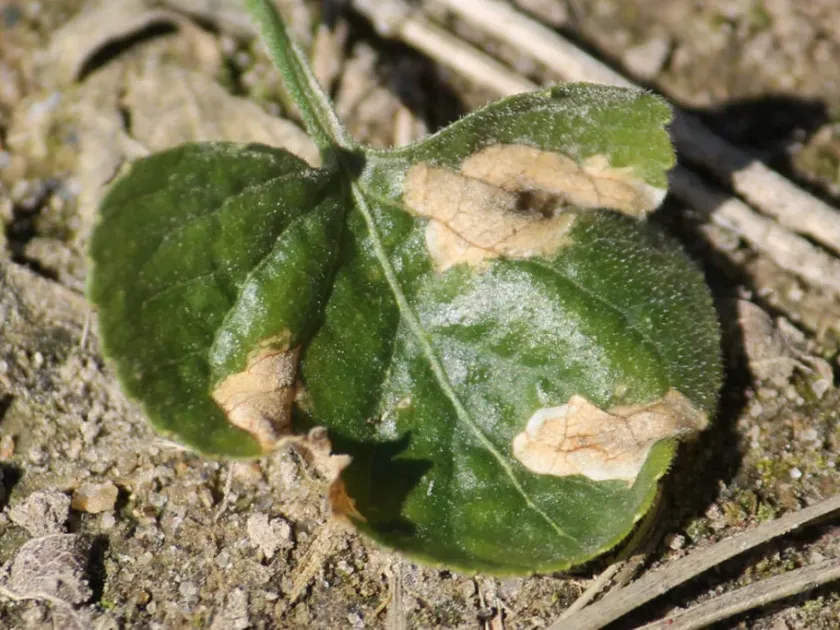
Description
Symptoms
The infection begins with the appearance of small, irregular spots on the leaves of the African violet.
Initial spots are typically brownish and may develop a faint halo as the fungus grows within the leaf tissue.
A distinctive white or grayish powdery growth often develops on the underside of the leaves in the center of the lesions.
As the disease advances, the infected areas become dry, necrotic, and brittle, often resulting in small holes where the tissue has died.
Severe infestations cause leaves to turn yellow, wither, and drop prematurely, significantly weakening the plant.
Pathogen
The disease is caused by the fungus Ramularia lactea, a member of the Hyphomycetes group, which acts as a plant pathogen.
The fungus produces conidia, which are asexual spores that spread via water splashes or air currents within the indoor environment.
It colonizes the plant by entering through stomata or wounds, subsequently developing a mycelial network that degrades cells.
The pathogen can survive in soil, on plant debris, and on contaminated surfaces, making it a persistent threat to indoor collections.
The lifecycle of the fungus is highly dependent on the availability of moisture and susceptible host plant tissues.
Conditions for development
High relative humidity levels, consistently above 70 percent, are the primary driver for the rapid proliferation of the disease.
Poor air circulation in the growing space prevents leaf surfaces from drying, fostering an ideal environment for spore germination.
Temperatures ranging from +18 to +25 degrees Celsius promote optimal fungal activity and development rate.
Overhead watering that leaves the foliage wet for extended periods significantly increases the risk of infection spread.
Crowded plant arrangements facilitate the movement of spores from one plant to another, leading to rapid outbreaks.
Why it matters
The primary impact is the loss of aesthetic value, as the spots render the violet unsuitable for display or competition.
Damage to the leaf surface disrupts photosynthesis, depriving the plant of the energy needed for healthy growth and blooming.
Weakened plants are highly susceptible to secondary pathogens, such as bacterial soft rot, which can kill a plant quickly.
If left unmanaged, the infection can spread throughout an entire collection, resulting in the loss of rare or expensive cultivars.
The economic burden includes the need for frequent fungicide applications and the potential disposal of infected stock.
Protection
Immediately remove infected plants from the collection to prevent the spores from settling on healthy foliage.
Prune and dispose of all affected leaves, ensuring that tools are sterilized with alcohol after every cut to avoid cross-contamination.
Apply appropriate fungicides labeled for indoor ornamentals, ensuring thorough coverage of both leaf surfaces.
Improve environmental management by increasing airflow, reducing humidity, and switching to bottom-up watering methods.
- Quarantine new plants before adding them to the collection.
- Maintain consistent sanitation of pots and tools.
- Use sterilized potting media for all repotting tasks.
- Regularly monitor foliage for early signs of lesions.
Discussion
No discussions yet — be the first.