
Violet anthracnose
Elsinoë violae
Description
Symptoms
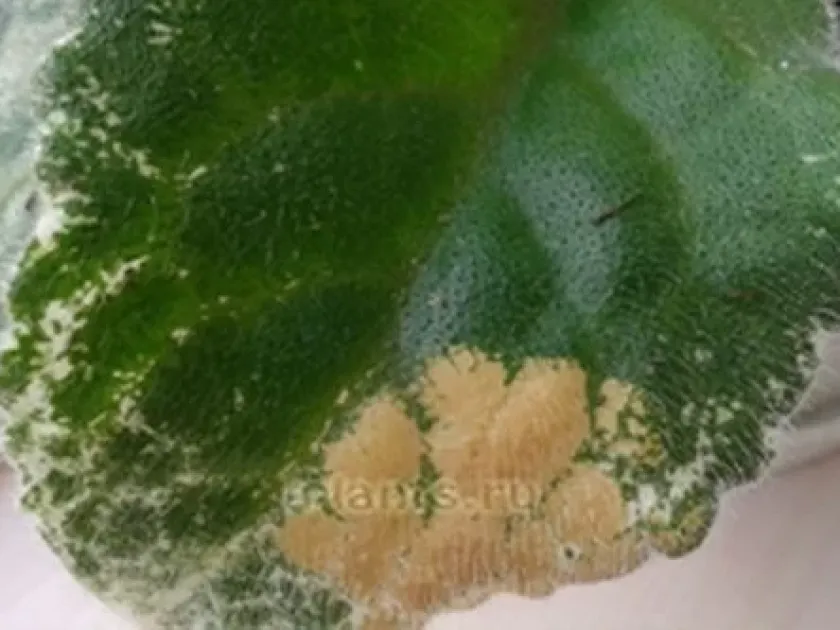
The first signs of violet anthracnose are small, circular, grayish-brown or tan spots appearing on the leaves of the plant.
As the infection progresses, these spots expand in size, and the centers often become lighter in color while maintaining a distinct dark border.
The necrotic tissue in the center of the spots eventually dries out and becomes brittle, which often leads to the development of holes in the foliage.
On the undersides of the leaves, tiny raised structures may appear, representing the fruiting bodies (acervuli) of the Elsinoë violae fungus.
As the disease advances, affected leaves may turn yellow, deform, and eventually wither, which severely hampers the plant's overall growth and aesthetics.
Pathogen
The pathogen responsible for this condition is Elsinoë violae, an ascomycete fungus that specifically targets species of the Viola genus.
The fungus overwinters as mycelium or fruiting bodies on plant debris and within the potting substrate, surviving until conditions become favorable.
The primary method of transmission is through conidia, which are easily spread by water splashes during irrigation or by movement of contaminated tools.
The fungus colonizes the host tissue by penetrating through the stomata or wounds caused by insect feeding or mechanical handling of the plant.
Given its reproductive nature, the fungus can rapidly multiply under conducive environmental conditions, leading to widespread infection in a collection.
Conditions for development
High humidity levels combined with poor air circulation are the primary environmental drivers for the development and spread of violet anthracnose.
Optimal growth temperatures for the pathogen range from 20°C to 25°C, making indoor environments highly susceptible if humidity is not managed.
Overhead watering or splashing water onto the leaves provides the necessary moisture film for the fungal spores to germinate and infect the leaf surface.
Crowding plants together reduces airflow, which prevents leaves from drying out quickly after watering, thus creating a perfect microclimate for the disease.
Inadequate light exposure and nutritional imbalances, particularly an excess of nitrogen, can weaken the plant's defense mechanisms against fungal attacks.
Why it matters
Anthracnose is a highly destructive disease for violets, as it interferes with photosynthesis by damaging healthy leaf surface area.
If left unmanaged, the infection can spread to petioles and the crown, potentially causing the complete collapse and death of the plant.
Flowering is significantly impacted, as diseased plants lack the energy resources to develop buds, or they produce deformed and sickly blooms.
The disease is difficult to eradicate once it establishes a foothold, and it poses a constant risk to all nearby susceptible plants in the collection.
Total loss of individual specimens or entire collections can occur if appropriate fungicide applications and hygiene measures are not implemented promptly.
Protection
Isolation of infected plants is the most critical first step to prevent the spread of the fungus to the rest of your plant collection.
Carefully prune and remove all diseased foliage, ensuring that your tools are disinfected with alcohol between each cut to prevent cross-contamination.
Systemic fungicides are recommended to treat the infection, as they can be absorbed by the plant to inhibit further fungal mycelium growth.
- Ensure adequate spacing between plants.
- Water directly at the base of the plant.
- Keep the foliage dry at all times.
- Use clean, pasteurized soil mixes.
Proactive care involves maintaining a steady, moderate humidity level and regular inspection to catch the disease in its earliest stages of development.
Discussion
No discussions yet — be the first.