
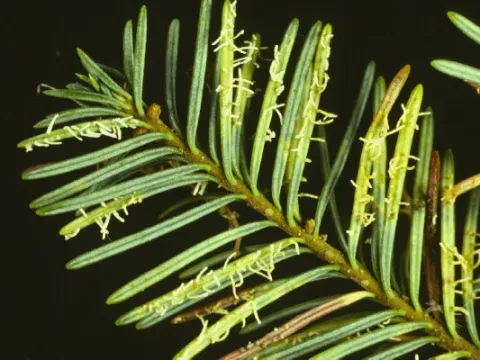
Fern rust
Uredinopsis mirabilis
The causative agent of this disease is the basidiomycete fungus Uredinopsis mirabilis, a specialized rust pathogen.
What the section contains
Fern rust
As an obligate parasite, this fungus relies entirely on the tissues of living fern hosts to complete its complex biological life cycle.
The fungus is often heteroecious, meaning it requires different host species, specifically fir trees (genus Abies), to undergo sexual reproduction.
During the spring, the fungus develops in the needles of fir trees before releasing spores that infect nearby susceptible fern fronds.
Throughout the summer, the pathogen spreads rapidly across fern populations through the production of urediniospores on the undersides of leaves.
The first noticeable symptoms appear as small, pale yellow or white spots on the underside of the fern fronds.
As the infection progresses, these spots develop into pustules that eventually release masses of dusty, rusty-colored fungal spores.
Affected leaves often exhibit chlorosis, leading to a visible yellowing that significantly diminishes the aesthetic value of the plant.
In cases of heavy infestation, the fronds may become distorted, curled, and brittle, making the foliage appear sickly and neglected.
Premature senescence occurs as the fungal infection causes the leaves to dry out and die long before the natural dormancy period.
The development of Uredinopsis mirabilis is highly dependent on periods of high humidity, frequent rainfall, and mild temperatures.
Leaf surface moisture is critical for the germination of spores, allowing the fungal hyphae to penetrate the epidermal layer of the fern frond.
Poor air circulation within crowded plantings creates a stagnant, humid microclimate that significantly accelerates the spread of the fungus.
Inadequate sanitation, such as leaving infected plant debris on the ground, provides an overwintering site for the pathogen's spores.
Proximity to susceptible coniferous hosts, particularly balsam fir or other Abies species, increases the likelihood of annual outbreaks.
Fern rust primarily destroys the visual appeal of ferns, causing unsightly spots and browning that ruin the display of ornamental gardens.
By hijacking the host's nutrients for its own growth, the fungus weakens the plant, reducing its vigor and overall health.
The reduction in photosynthetic area negatively impacts the plant's ability to store energy in rhizomes, leading to long-term decline.
Severely infected ferns are less capable of surviving stressful environmental conditions, such as extreme cold or summer drought.
Continuous annual infections can lead to the thinning and eventual loss of entire fern colonies if left unmanaged over several years.
Strict sanitation is the most effective preventative measure; all infected fronds should be removed and destroyed at the end of the season.
Maintaining adequate spacing between ferns improves airflow and helps foliage dry out more quickly after rain or irrigation.
Avoid overhead watering to keep the leaves dry, utilizing drip irrigation or soil-level watering instead to limit fungal spore germination.
Fungicidal treatments containing copper or other systemic fungicides can be applied preventatively or upon the first sign of symptoms.
If possible, site fern plantings away from fir trees to break the fungus's host cycle and reduce the local inoculum pressure.