
Fern rhopographiosis
Rhopographus filicinus
Description
Symptoms
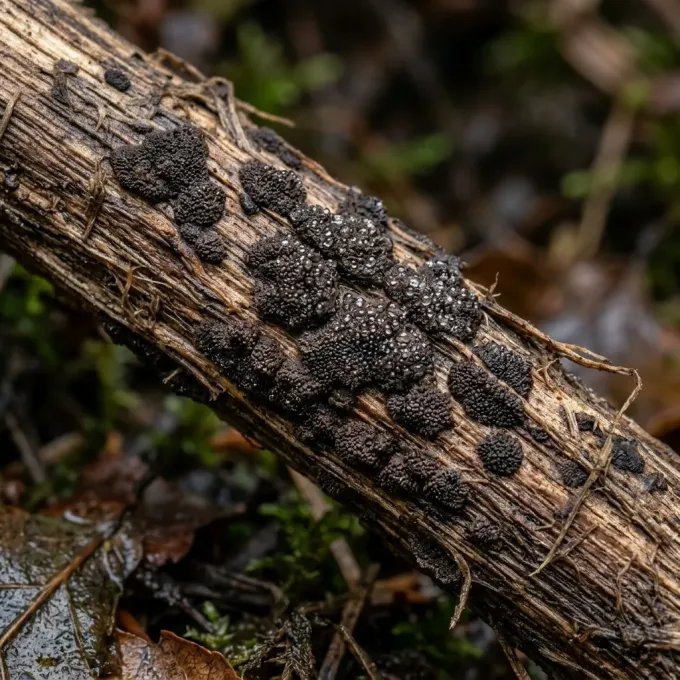
The main visual sign of fern rhopographiosis is the appearance of characteristic black, slightly raised fungal fruiting bodies (apothecia) on dead or weakened fronds.
Lesions on petioles and leaf blades often appear elongated, which is due to the way the mycelium develops along the plant's vascular tissues.
As the infection progresses, the plant tissue loses turgor pressure, gradually turns gray or brown, and eventually becomes brittle and necrotic.
The disease is easily identified by the presence of small dark dots scattered over the plant, which are the sites of spore maturation for further dispersal.
Affected fronds lose their aesthetic appeal and architectural structure, becoming unsightly and unsuitable for floral arrangements or garden displays.
Pathogen
The causative agent of this disease is the ascomycete fungus Rhopographus filicinus, which belongs to the order Pleosporales.
This fungus acts primarily as a saprotroph or a weak parasite, colonizing the tissues of various fern species, most notably bracken (Pteridium).
The life cycle of the pathogen includes an active phase during the summer and autumn months, when ascospores are formed on the infected tissues.
Spore dispersal occurs through wind currents and water droplets, allowing the fungus to quickly colonize new hosts within the plant population.
During the winter, the fungus survives inside plant debris in a dormant state, ready to resume its infectious cycle once temperatures rise in the spring.
Conditions for development
High relative humidity in the fern's environment is the most critical factor for the activation and spread of Rhopographus filicinus.
Overcrowded plantings hinder air circulation and create a microclimate that is highly favorable for the germination of fungal spores.
Frequent rainfall or overhead irrigation speeds up the infection process by ensuring that the fronds remain wet for extended periods.
Plants with weakened immune systems due to poor light conditions or nutrient deficiencies are significantly more susceptible to this fungal attack.
Significant temperature fluctuations that lead to condensation on the foliage provide additional moisture, which triggers the development of new necroses.
Why it matters
The primary damage caused by rhopographiosis is the progressive decline of the plant's aerial parts, leading to a complete loss of ornamental value.
Under severe infection pressure, the fungus can damage the rhizome, which negatively impacts the fern's vegetative regeneration capacity in subsequent seasons.
The disease reduces the overall vigor of the fern, making it vulnerable to secondary pathogens and pests that typically target stressed specimens.
In landscaping, this disease threatens the visual integrity of garden compositions, often necessitating drastic pruning or even full plant removal.
While Rhopographus filicinus assists in the decomposition of dead organic matter in nature, it becomes a major pest in horticultural settings.
Protection
The primary control measure is rigorous sanitary pruning, which involves the immediate removal and destruction of all infected fronds away from the garden.
Gardeners must avoid soil waterlogging and ensure proper watering practices that prevent moisture from accumulating on the plant foliage.
It is essential to maintain proper spacing between ferns to promote airflow, which helps keep the foliage dry and suppresses fungal growth.
If initial symptoms are observed, the application of broad-spectrum fungicides known to be effective against ascomycete fungi is recommended.
Regular fertilization, particularly with phosphorus and potassium, helps strengthen cell walls, thereby increasing the plant's natural resistance to infection.
Discussion
No discussions yet — be the first.