
Fennel ochraceocephala
Ochraceocephala foeniculi
Description
Symptoms
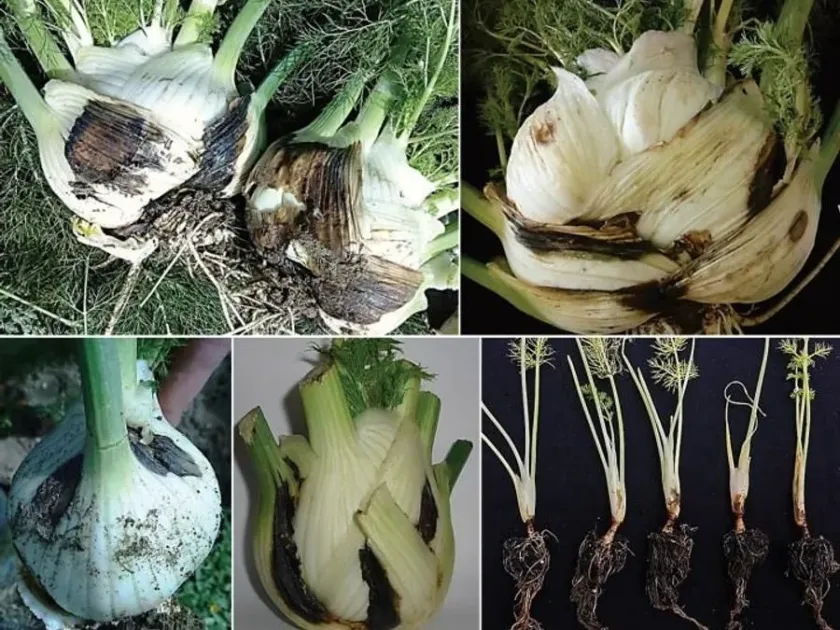
The primary symptom of the disease is a change in the color of fennel stems, which acquire a characteristic ochre or brownish hue. As the infection progresses, plant tissues lose turgor, become soft, and are prone to lodging.
A specific coating consisting of conidiophores and pathogen spores often forms on the affected areas of the epidermis. Under high humidity, this coating may acquire a dusty consistency, which impedes photosynthesis and slows the growth of the crop.
Cross-sections of the stems reveal signs of vascular browning, indicating systemic spread of the fungal mycelium within the plant's vascular system. This disrupts water and nutrient transport, leading to the premature wilting of the entire plant.
In the late stages of infection, the root neck becomes a focal point for necrosis, making the plant extremely vulnerable to physical damage. Visually, the field may appear patchy as infection foci often spread in clumps.
Unlike many bacterial diseases, fennel ochraceocephala is rarely accompanied by an unpleasant odor, which helps agronomists distinguish this infection from bacterial soft rots.
Pathogen
The disease is caused by the microscopic fungus Ochraceocephala foeniculi, belonging to the group of deuteromycetes. This pathogen specializes in infecting plants of the Apiaceae family, causing specific morphological changes.
The fungus reproduces via conidia, which are easily disseminated by air currents, rain splashes, and agricultural equipment. The incubation period varies depending on environmental conditions, but the pathogen remains viable in the soil and plant debris.
Fungal structures exhibit high resistance to temporary adverse conditions, allowing it to overwinter as mycelium or dormant structures. The biology of the species involves a complex life cycle closely linked to the fennel growing season.
The pathogen primarily infects the plant through micro-cracks or natural openings in the epidermis, after which the mycelium rapidly colonizes the intercellular space. Active mycelial growth occurs at moderate temperatures and high humidity.
Studies indicate that the fungus possesses enzymatic activity that allows it to degrade host cell walls, facilitating the penetration of hyphae deeper into plant tissues.
Conditions for development
A critical factor in the development of the disease is high relative humidity during the active growth period. Prolonged rainfall or excessive irrigation creates an ideal microclimate for spore germination on stem surfaces.
The temperature range between 18°C and 25°C is most favorable for aggressive mycelial spread. Under these conditions, the pathogen can cover significant areas of the field within just a few weeks.
Dense fennel stands promote stagnant air, preventing the foliage from drying quickly after rain or irrigation. This significantly increases the risk of mass infection across the plantation.
The presence of undecomposed plant debris from the previous harvest is the primary reservoir of the infection. Failure to practice proper crop rotation leads to the accumulation of high spore titers in the topsoil, making infection almost inevitable.
Poor soil drainage and waterlogged zones weaken the plant's natural immunity, making it susceptible to infection even when the initial inoculum level is low.
Why it matters
The main damage consists of a sharp decline in the commercial quality of essential oil products. Affected plants are virtually unsuitable for the fresh market due to the loss of aesthetic value and biological quality.
The disease leads to a significant decrease in the overall vegetative mass of the plant, which directly correlates with lower yields of the target raw material. Economic losses can reach 30-50% in the absence of timely control measures.
The disruption of essential oil accumulation in stems and seeds renders the production low-grade. Fungal metabolites can negatively impact the composition of aromatic compounds, further reducing product quality.
In seed crops, germination rates drop significantly as the mycelium may penetrate the embryo or coat the surface of the seeds, transmitting the infection to the next generation.
The long-term persistence of the pathogen in the soil makes it impossible to grow susceptible crops on the same plot for several years, complicating long-term crop planning.
Protection
Effective management begins with strict adherence to crop rotation, ensuring that fennel is not replanted on the same field for at least 3-4 years. This interrupts the fungal life cycle by depriving it of its host.
Deep plowing of crop residues is an essential agronomic practice that promotes rapid organic matter mineralization and the destruction of the pathogen's mycelium. It is also crucial to use only healthy seed material that has undergone prior disinfection.
Reducing planting density improves field ventilation, which is vital for preventing disease development. It is necessary to avoid waterlogging and monitor irrigation carefully during active growth stages.
Under high risk of disease spread, prophylactic fungicide applications based on copper or specific systemic active ingredients permitted for use on spice and aromatic crops should be employed.
- Timely removal of weeds belonging to the Apiaceae family.
- Ensuring agricultural equipment is clean before moving to a new field.
- Monitoring field edges for the first signs of symptoms.
Discussion
No discussions yet — be the first.