
Description
Symptoms
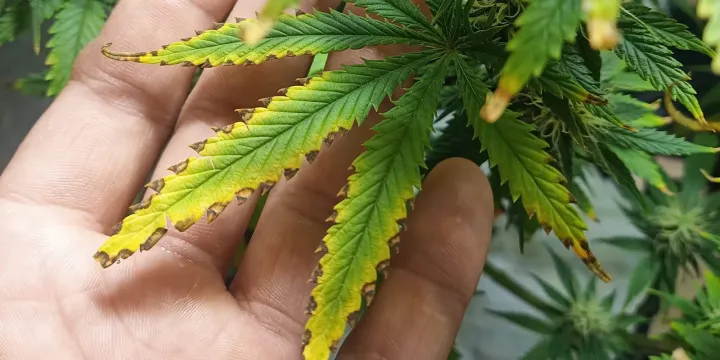
The most characteristic sign is marginal leaf necrosis, where the edges of leaves turn yellow and then brown. The damaged tissue eventually becomes brittle and necrotic.
In maize crops, nutrient toxicity often presents as light-colored or white stripes along the leaf veins, which can be mistakenly identified as nutrient deficiency. However, the margins of these burns are usually sharper and drier.
Root systems often show signs of severe distress: tips turn brown or black, and the growth of secondary roots is stunted. In extreme cases, the root system fails to develop altogether.
Foliar burn, caused by incorrect spraying, manifests as scorched spots on the leaves. These spots occur where fertilizer solution droplets have evaporated, leaving behind highly concentrated mineral salts.
Stunting and poor overall plant vigor are also key indicators. Plants experiencing chemical burns often fail to recover their growth potential even after the stressor is removed.
Pathogen
Fertilizer burn, or nutrient toxicity, is a physiological disorder caused by an excess of mineral salts in the soil or on plant tissues. It is not an infectious disease but a consequence of excessive osmotic pressure.
The primary driver of this issue is high concentrations of nitrogen, phosphorus, or potassium compounds. These substances absorb water from the plant cells through osmosis, causing plasmolysis and dehydration.
This condition acts as a chemical stressor that disrupts the plant's ability to maintain homeostasis. It is widely considered a human-induced agricultural problem rather than a biological infection.
Maize is particularly susceptible to fertilizer burn during the early stages of development. When fertilizers are placed too close to the seeds at planting, the resulting high salt concentration can kill the germinating seedlings.
The severity of the toxicity is determined by the specific chemical composition of the fertilizer and its availability in the root zone. High levels of ammonia-based fertilizers are notorious for causing such damage.
Conditions for development
The primary condition for fertilizer burn is the application of excessive amounts of fertilizer. This creates a hypertonic environment that prevents roots from absorbing necessary water.
Drought stress significantly exacerbates the issue. In dry conditions, there is insufficient soil moisture to dilute the mineral salts, leading to a rapid spike in salt concentration around the root zone.
Poor placement of fertilizers during planting is a major factor. If the fertilizer band is placed too close to the seed furrow, the proximity allows for direct chemical injury to the developing radical.
Soil type plays a crucial role; sandy soils with low buffering capacity are much more prone to nutrient toxicity because they cannot hold or diffuse the nutrients effectively as well as clay soils.
High temperatures during application increase the rate of evaporation, which can lead to a rapid increase in salt concentration on the leaf surface, causing foliage burns.
Why it matters
The direct harm of fertilizer burn is the loss of plant stands. Reduced density leads to significant yield losses before the growing season has even fully commenced.
Stunted plants that survive the initial toxicity often have compromised vascular systems, which affects their ability to transport water and nutrients efficiently throughout the season.
Damaged roots become entry points for soil-borne pathogens, leading to secondary infections such as root rot or seedling blight. This increases the total economic damage to the field.
Nutrient toxicity forces the plant to divert its energy from biomass production to stress repair, resulting in smaller harvests and lower quality of the final agricultural product.
Economic losses include the costs of potential replanting, loss of inputs used in the failed application, and the overall reduction in crop productivity per hectare.
Protection
The most effective strategy is the precise calculation and placement of fertilizers. Keeping a sufficient buffer zone between fertilizer bands and seeds is critical for seedling health.
Monitoring soil moisture levels before application is essential. If the soil is too dry, it is often advisable to postpone fertilization until adequate moisture is available to prevent salt buildup.
Irrigation is a vital recovery tool. If toxicity is detected, deep watering can help leach excess salts out of the root zone and normalize the soil solution concentration.
For foliar applications, always adhere to recommended concentrations and avoid spraying during the hottest parts of the day to minimize rapid evaporation and potential damage.
- Utilizing controlled-release fertilizers to prevent salt spikes.
- Regular soil testing to optimize nutrient management.
- Using precision equipment for uniform and accurate fertilizer distribution.
Pathogens and affected parts
Affects crops · 1
Discussion
No discussions yet — be the first.