
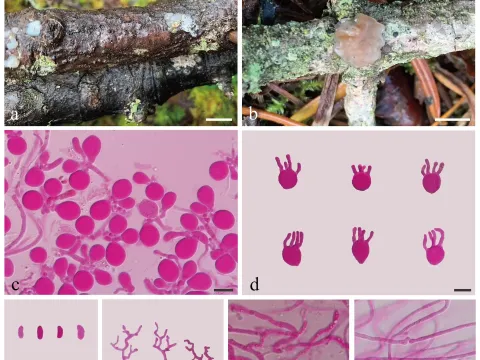
Fibulobasidium
Fibulobasidium
Fibulobasidium is a genus of fungi belonging to the class of Tremellomycetes (Basidiomycota). In an agronomic context, these microorganisms are often identified as pathogens affecting the tissues of various agricultural crops.
What the section contains
Fibulobasidium
Biologically, this genus is characterized by the presence of specific clamps (fibulae) on the hyphae, which gave the group its name. These structures ensure the stable transmission of genetic material during fungal cell division.
The pathogen spreads mainly through spores carried by air currents or raindrops. The mycelium of the fungus can penetrate the intercellular space of plant tissues, causing profound physiological changes.
Fungi of this genus have a complex life cycle, including both a yeast-like stage and the formation of basidiospores. This allows them to survive successfully in various ecological niches, including infected plant debris.
The study of the pathogen is complicated by its ability to engage in symbiotic or saprotrophic interactions, making it a dangerous hidden component of the mycobiota in agricultural fields.
A key sign of infection is the appearance of characteristic spots on leaves and stems, which over time may acquire a specific shade typical of basidial fungal infections.
In the affected areas, a loss of tissue turgor is often observed, leading to premature wilting of certain parts of the plant. Leaf blades may curl and change color due to the disruption of photosynthetic processes.
Under conditions of high humidity, a barely visible bloom consisting of the fungus's reproductive structures may form on the surface of the infected areas. This bloom often has a whitish or grayish color.
In advanced cases, the infection spreads to the reproductive organs of plants, causing deformation. This leads to a reduction in the quality of grain or fruits, as well as a loss of their commercial value.
Visual diagnosis is difficult because symptoms may resemble other fungal diseases; therefore, laboratory analysis of tissue samples is required for accurate identification.
The main factor stimulating the development of Fibulobasidium is high humidity persisting for a long period.
The optimal temperatures for the active spread of the fungus vary in the moderate range typical of the spring-autumn period. Sudden temperature fluctuations can trigger spore release.
The presence of liquid moisture on leaves (dew, fog) creates an ideal environment for spore germination and the subsequent penetration of the pathogen into the plant epidermis.
Dense crop stands, where aeration is hampered, contribute to moisture accumulation and create a favorable microclimate for the multiplication of fungal colonies.
Violations of crop rotation and leaving unharvested plant debris on the soil surface lead to the accumulation of infectious inoculum in the field.
The harmfulness of Fibulobasidium lies in a significant reduction in agricultural crop yields due to the suppression of plant growth processes.
The pathogen disrupts the metabolism in plant tissues, leading to the accumulation of toxic metabolites and a decrease in the general immunity of the crop.
Infection of grain crops with this fungus negatively affects the filling of the ear, which directly reflects on the 1000-kernel weight and overall grain quality.
In the case of vegetable or berry crops, product spoilage occurs during storage, leading to massive economic losses.
In cases of widespread development, the death of young plants is possible, which requires reseeding and incurs additional agronomic costs.
The basis of protection is the strict adherence to crop rotation, which allows for the interruption of the pathogen's development cycle and reduces the infectious background of the soil.
It is necessary to conduct quality incorporation of crop residues into the soil to accelerate their decomposition and the death of fungal spores under natural conditions.
The use of systemic fungicides is effective in the early stages of symptom appearance, allowing for the halting of mycelium spread.
- Use of resistant plant varieties.
- Regular monitoring of crop health.
- Ensuring optimal plant density.
- Timely chemical treatment with copper-based preparations.
An important element of prevention is the control of weeds, which can act as alternative hosts for the fungus during the off-season.