
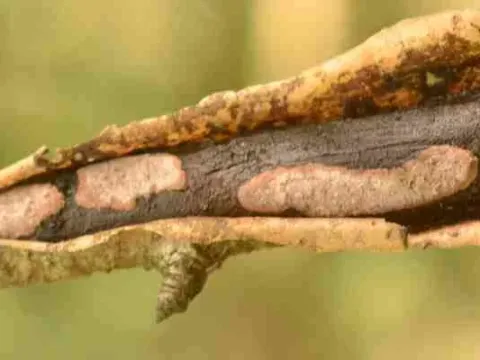
Tomentella sublilacina
Tomentella sublilacina
The pathogen Tomentella sublilacina is a basidiomycetous fungus often classified as a soil-inhabiting saprotroph.
What the section contains
Tomentella sublilacina
Under specific environmental stressors or favorable host conditions, this fungus can behave as a facultative parasite.
Its mycelium typically develops as a thin, crust-like layer which can appear lilac or brownish, often found on decaying matter or the base of plant stems.
The biology of this fungus is linked to the decomposition of lignocellulosic material within the soil profile.
It spreads through the soil using specialized hyphal strands, allowing it to bridge gaps and reach healthy root systems of susceptible plants.
The primary symptom is the appearance of a distinct, thin, purplish or lilac-colored fungal mat forming around the root collar.
Affected plants often show stunted growth and a general lack of vigor, which can escalate into permanent wilting during peak sunlight hours.
Below the soil line, the roots exhibit darkening, tissue decay, and a loss of fine root hairs essential for nutrient uptake.
In advanced cases, the fungal mycelium can cause localized necrosis at the base of the stem, often leading to lodging.
- Lilac-colored mycelial crust on the stem base.
- Chlorosis and premature yellowing of lower foliage.
- Significant reduction in root system biomass.
High soil moisture levels and poor drainage are the most critical factors for the rapid development of this fungus.
Cool to moderate soil temperatures are preferred by Tomentella sublilacina, making it problematic during wet spring seasons.
High organic matter content in the soil, if not fully decomposed, provides a substrate that supports rapid fungal colonization.
Low soil pH levels often correlate with increased disease incidence, as this fungus thrives in slightly acidic environments.
Poor soil aeration prevents the host plant from recovering, allowing the pathogen to gain a stronger foothold in the root zone.
The damage caused by this pathogen mainly involves the destruction of the root cortex, which severely impairs water and nutrient absorption.
Crop yields are significantly reduced due to the systemic weakening of plants, leading to reduced flower and fruit set.
In nursery settings, it can cause damping-off symptoms, resulting in high mortality rates among young seedlings.
Persistent infestations can render soil unsuitable for sensitive crops, necessitating long-term remediation efforts.
The fungus lowers the overall plant resistance, creating entry points for opportunistic bacterial and secondary fungal invaders.
Improving soil structure through mechanical aeration and proper drainage is the most effective cultural control method.
Sanitation practices, such as the removal of crop residues and avoiding excess irrigation, limit the spread of the mycelium.
The application of soil fungicides targeted at basidiomycetes can provide suppression in high-value ornamental or crop sectors.
Adjusting soil pH by adding lime can shift the soil chemistry, making it less hospitable to Tomentella sublilacina.
Rotating crops with non-host species helps break the pathogen's life cycle and reduces the inoculum density in the field.