
Tomentose fungus
Onnia tomentosa
Description
Symptoms
Initial indicators of infection often involve subtle changes in the canopy, such as reduced needle growth, chlorosis, and a thinning appearance of the foliage.
Infected trees may exhibit stunted growth rates and premature needle drop, which eventually leads to a decline in overall tree vitality and crown dieback.
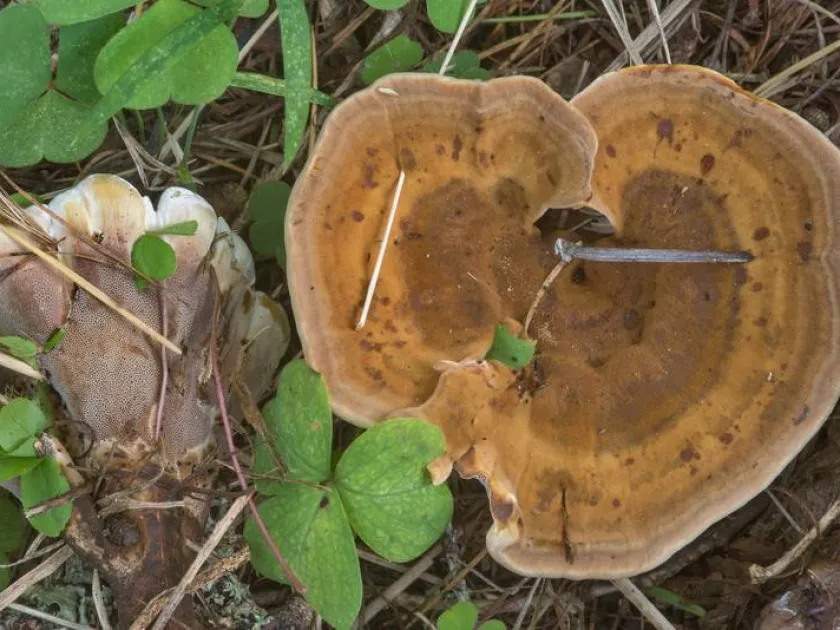
During the late summer and autumn, small, funnel-shaped or bracket-like fruiting bodies with a velvety, tomentose surface appear near the base of the host tree.
Cross-section analysis of the roots reveals extensive decay, characterized by white, spongy tissue interspersed with distinct black lines or zones.
A major symptom is the increased susceptibility to windthrow, as the structural integrity of the root system is compromised by advanced wood decay.
Pathogen
The causal agent of this disease is the wood-decaying fungus Onnia tomentosa, a basidiomycete that specifically targets the root systems of conifer species.
The fungus functions as a pathogen by colonizing the living roots of healthy trees, slowly spreading through the soil via mycelial contact between adjacent root systems.
Reproduction occurs primarily through basidiospores produced in the fruiting bodies, which typically emerge at the base of the infected tree or directly from roots.
This pathogen exhibits remarkable persistence, as it can remain viable within buried wood, stumps, and root remnants for decades, ensuring its presence in the forest soil.
By producing extracellular enzymes, the fungus breaks down complex woody tissues, leading to the development of a specific type of white pocket rot.
Conditions for development
The disease thrives in dense, monoculture conifer plantations where root grafts facilitate rapid transmission of the pathogen from infected to healthy trees.
Sites with poor drainage or compacted soil often exacerbate the stress on tree roots, making them significantly more vulnerable to colonization by Onnia tomentosa.
High levels of forest debris, specifically large stumps from previous harvests, serve as primary reservoirs for the fungus to establish and persist.
Environmental conditions characterized by consistent moisture and moderate temperatures are ideal for the germination of spores and the spread of fungal mycelium.
Trees stressed by drought, insect infestations, or mechanical injuries to the root flare are at a much higher risk of succumbing to the infection.
Why it matters
The primary damage caused by this fungus is the significant reduction in timber volume and quality, leading to substantial economic losses in forest industries.
The disease creates expanding mortality centers within forest stands, where the progression of rot leads to the eventual collapse of entire groups of trees.
Infrastructure risks increase significantly as infected trees become unstable and prone to falling, which complicates forest management and recreational access.
The loss of root stability not only kills trees but also impacts the long-term ecological balance of the forest, as it leaves gaps in the forest canopy.
Furthermore, the persistent nature of the pathogen in the soil complicates future reforestation efforts, often necessitating soil treatment or species changes.
Protection
Integrated forest management strategies should prioritize the maintenance of stand vigor to minimize the vulnerability of trees to root rot pathogens.
Preventive measures include careful logging practices to avoid physical damage to the roots of residual trees, which act as entry points for the fungus.
In high-risk areas, reforestation efforts should focus on planting diverse species compositions to break the chain of root-to-root contact for the pathogen.
Sanitation efforts, such as the systematic removal of infected trees and their stump systems, are effective in limiting the spread of the disease within an established stand.
Implementing isolation barriers or trenches can be considered in high-value areas to restrict the subterranean movement of the fungus across the site.
Discussion
No discussions yet — be the first.