
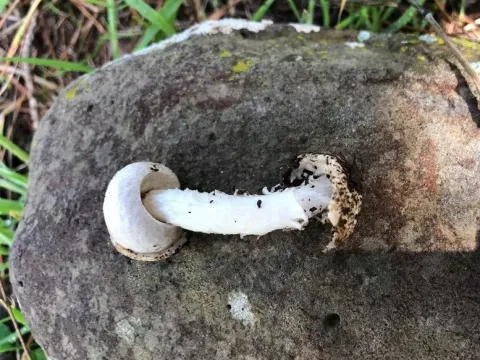
Torrendia pulchella
Torrendia pulchella
Torrendia pulchella is a rare species of gasteromycete fungus that often goes unnoticed due to its subterranean or semi-subterranean lifestyle.
What the section contains
Torrendia pulchella
The fruit bodies of this fungus possess specific morphology, typically appearing as small, elongated, or club-shaped white to cream-colored structures.
The upper part of the fungus may be covered with a characteristic cap, beneath which the gleba—the spore-forming tissue—develops upon maturation.
When inspecting the substrate in areas where it grows, one might observe loose soil or leaf litter being slightly pushed up by the developing fruit body.
Unlike classic plant pathogens, signs of this fungus are not associated with leaf necrosis, wilting, or other visible signs of plant disease.
The biological object is a basidiomycete fungus, Torrendia pulchella, belonging to the Agaricales order.
Scientific research classifies this organism as a secotioid fungus, occupying an evolutionary position between gasteromycetes and agaric fungi.
The fungal mycelium develops primarily within the soil layer, interacting with the root systems of higher plants within forest ecosystems.
Biologically, this object is not an obligate parasite causing plant death, but rather functions as a saprotroph or a potential symbiont.
The life cycle includes the formation of basidiospores within the enclosed cavity of the fruit body, which are released upon physical degradation.
The development of Torrendia pulchella depends directly on soil composition and the availability of sufficient organic matter.
Optimal conditions for fruit body formation are periods characterized by high humidity and moderate air temperatures.
The fungus prefers sandy or loamy soils typical of pine forests or areas with a specific type of vegetation cover.
The mycelium maintains viability for long periods, awaiting favorable weather conditions to initiate active spore production.
The ecological niche of this species is restricted to specific microclimatic zones, making it quite rare for widespread distribution.
From the perspective of agronomy and forestry, Torrendia pulchella is not classified as a dangerous pathogen causing diseases in crops.
Damage to agricultural plants is virtually non-existent, as this fungal species lacks phytopathogenic activity.
In rare instances, the fungus may compete for nutrients within the soil, but this process does not carry any industrial or economic significance.
The presence of this organism in the ecosystem is more indicative of biological diversity than a threat to the health of agricultural plantings.
The absence of chemical aggression toward plant roots allows this species to be considered a neutral element of the soil biota.
No special control measures are required for this fungus, as it does not damage harvests and is not considered a pest.
If the appearance of these fungi in a field causes concern, basic agrotechnical measures to improve soil aeration are sufficient.
Adhering to crop rotation and monitoring soil moisture levels naturally limits the development of any soil-borne saprotrophic fungi.
The use of fungicides is impractical and discouraged, as it would disrupt the balance of beneficial microflora essential for crop nutrition.
It is recommended to view the appearance of rare fungal species as an indicator of a healthy soil profile and a lack of excessive chemical use.