
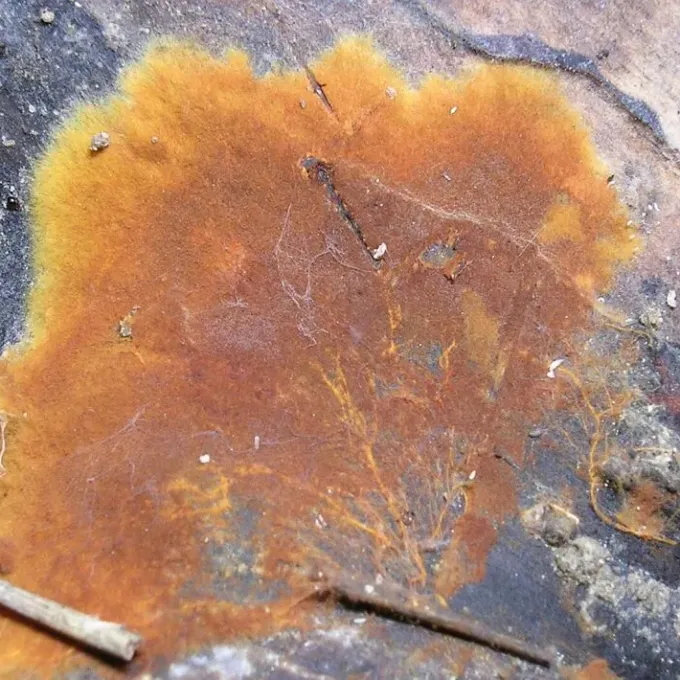
Tomentella umbrinospora
Tomentella umbrinospora
Description
Symptoms
The primary symptom of infection is stunted growth and an overall decline in plant vigor. Leaves may turn chlorotic and yellow prematurely due to the disruption of root function and nutrient uptake.
Examination of the root system reveals characteristic browning and tissue necrosis. A loss of turgor pressure is frequently observed, leading to progressive wilting, especially during periods of high evapotranspiration.
Using a magnifying lens, one can observe thin, spiderweb-like brownish mycelial mats on the root surface or adjacent soil particles. This presence is a definitive diagnostic indicator of the fungus.
In severe cases, the root system becomes brittle and easily detaches from the stem when plants are pulled from the soil. Decay processes under high humidity are often accompanied by a distinct, unpleasant odor.
The symptoms often appear in patches, reflecting the localized nature of the mycelial spread within the soil profile of the field.
Pathogen
Tomentella umbrinospora is a soil-borne fungus belonging to the Basidiomycota phylum. In agronomy, it is classified as a facultative parasite, capable of surviving as a saprotroph in the soil profile when living hosts are unavailable.
The fungus develops fine, often translucent hyphae that colonize the rhizosphere and plant root systems. Its biological structure is adapted for survival in the upper soil layers, allowing it to maintain close contact with the root epidermis.
The pathogen's life cycle involves the formation of basidiospores, which facilitate its dispersal to new areas. Due to its capacity to persist on plant debris, the fungus maintains virulence over multiple growing seasons.
The pathogen's biology is intrinsically linked to the availability of organic matter in the soil. It effectively transitions between consuming dead organic tissue and aggressively attacking weakened living plants.
Taxonomically, it belongs to the Thelephorales order, and its role within the soil microbiome often remains hidden until environmental conditions trigger an outbreak.
Conditions for development
Disease progression is directly correlated with high soil moisture and ambient humidity. Ideal conditions for spore germination and active hyphal growth occur during periods of prolonged rainfall or excessive irrigation.
The fungus thrives in moderate temperature ranges, making it a persistent threat during spring and autumn seasons. Sudden temperature fluctuations cause physiological stress in plants, increasing their susceptibility.
Poor agronomic management, specifically inadequate drainage, creates an environment favorable for the accumulation and spread of the pathogen. High planting density facilitates the rapid contact between infected and healthy root systems.
The presence of undecomposed crop residues in the soil provides an ideal medium for the pathogen to thrive. The fungus prefers soils with a neutral or slightly acidic pH level.
The most critical window for infection is during the active root-development phase, as young tissues are highly vulnerable to fungal penetration.
Why it matters
The primary economic impact is a significant yield reduction due to impaired nutrient and water transport within the plant. Root destruction leads to reduced biomass, which is particularly devastating for cereal and vegetable crops.
Infected plants exhibit increased sensitivity to secondary soil pathogens and pests. Compound infections often lead to seedling death and poor stand establishment.
Root rot reduces the marketability of root crops and diminishes grain quality, severely affecting overall crop value. Economic losses include both direct yield failure and increased expenditure on mitigation measures.
The pathogen's ability to persist in the soil for years complicates crop rotation strategies. The recurring nature of this disease disrupts production cycles and requires long-term soil health management.
In intensive agriculture, the presence of the fungus necessitates a transition toward rigorous protection strategies and investment in soil biological recovery.
Protection
The fundamental control measure is a diversified crop rotation plan, avoiding species that serve as hosts for the fungus. Changing crops disrupts the pathogen's life cycle effectively.
Improving soil drainage is critical to prevent waterlogging, which minimizes conditions for fungal spread. Deep tillage helps mineralize plant residues, depriving the fungus of its nutritional source.
Using healthy, treated seed material minimizes early-season infection risks. Selecting resistant crop varieties or hybrids remains the most economically sustainable long-term protection strategy.
Applying biological fungicides containing Trichoderma spp. helps suppress the pathogen via competitive exclusion. These beneficial antagonists establish a protective shield around the root system.
- Optimization of soil pH through liming where necessary.
- Rigorous sanitation and cleaning of agricultural machinery.
- Timely removal and composting of crop debris post-harvest.
- Balanced nutrient management to bolster plant immune system responses.
Discussion
No discussions yet — be the first.